

Garage Door Making Loud Noise? Troubleshooting and Fixes for Melbourne Homes
It is 6 am on a quiet Tuesday in Craigieburn, and as you hit the remote, a screeching sound echoes through the street, surely waking the neighbours and leaving you wondering if the door is about to crash down. We understand the frustration of a garage door making loud noise, especially when that unsettling clatter makes you worry about your family's safety or the possibility of a total mechanical failure. It is a common headache for Melbourne homeowners, but that racket is actually a helpful "cry for help" from your door's mechanical components.
In this article, we promise to help you decode exactly what those alarming sounds mean, allowing you to identify which issues need a simple bit of maintenance and which ones require a professional touch. We will explore the difference between a minor squeak and a major safety risk, ensuring you have total peace of mind every time you leave for work. You will learn the correct lubricants to use for Australian conditions and discover when it is best to call a Northern Suburbs technician to restore that smooth, silent operation your home deserves.
Table of Contents
Identifying the Sound: What is Your Garage Door Telling You?
Your garage door is the largest moving part of your home, and like any complex machine, it uses sound to signal its health. When you hear a garage door making loud noise, it is rarely a random occurrence. Instead, it is a specific mechanical symptom that points directly to a failing or neglected component. Recognising these sounds early can be the difference between a simple ten minute fix and an expensive emergency repair that leaves your car trapped inside.
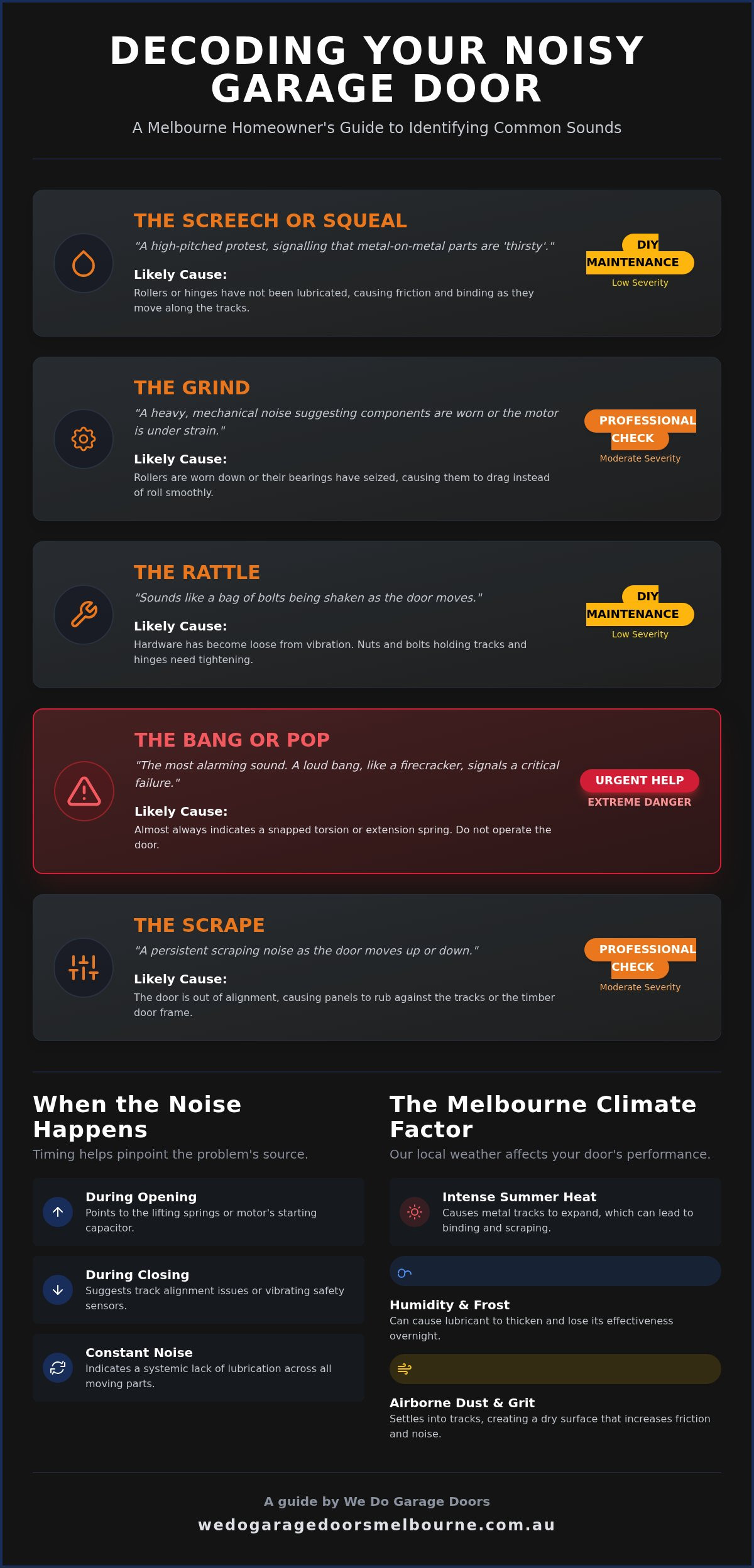
The Screech or Squeal: This high-pitched protest usually means your metal-on-metal parts are "thirsty." It often occurs when the rollers or hinges haven't seen a drop of lubricant in years, causing them to bind as they move.
The Grind: A heavy, mechanical grinding sound often suggests that the rollers are worn down or the motor is under immense strain. If the bearings inside the rollers have seized, they will drag along the track rather than rolling smoothly.
The Rattle: If it sounds like a bag of bolts is being shaken, you likely have loose hardware. Over time, the constant vibration of the door can loosen the nuts and bolts that hold the tracks and hinges together.
The Bang or Pop: This is the most alarming sound of all. A loud bang, similar to a firecracker or a gunshot, almost always indicates a snapped torsion or extension spring. Do not attempt to operate the door if you hear this.
The Scrape: A persistent scraping sound usually means the door is out of alignment, causing the panels to rub against the tracks or the timber door frame.
The Anatomy of a Garage Door Noise
Understanding how these sounds travel is vital for effective troubleshooting. The steel tracks act like a megaphone, vibrating and amplifying even the smallest friction point until it sounds like a major disaster. It is important to distinguish between motor noise, which is a consistent hum or whir, and hardware noise, which is often rhythmic or clunky. If you ignore a hardware issue, the extra resistance forces the opener to work twice as hard. Eventually, this leads to a premature garage door motor replacement Melbourne families could have easily avoided with a bit of foresight. Various Garage door components like cables, drums, and bearings all play a role in this acoustic profile, and keeping them in harmony is the secret to a quiet home.
When the Noise Happens Matters
Timing is everything when diagnosing a garage door making loud noise. If the racket only occurs while the door is opening, the lifting springs or the motor’s starting capacitor are likely the culprits. Conversely, noise heard only during closing often points to track alignment issues or the safety sensors vibrating in their brackets. A constant noise throughout the entire cycle suggests a systemic lack of lubrication across all moving hinges and roller stems. By paying attention to the "when" and the "what," you can provide your local technician with the clues they need to solve the problem quickly and efficiently, restoring the peace and quiet your household expects.
Common Causes of Noisy Garage Doors in Melbourne
A garage door making loud noise is often the result of several overlapping factors, ranging from basic maintenance gaps to environmental stressors. While modern systems are designed for durability, the repetitive motion of opening and closing multiple times a day eventually takes its toll on the hardware. If you notice a sudden change in the "voice" of your door, it's usually because a specific component is no longer moving as freely as it once did. Identifying the root cause is the first step toward restoring that silent, effortless operation your home deserves.
The Melbourne Weather Factor
Our local climate plays a surprisingly significant role in how your garage door behaves. In northern suburbs like Craigieburn and Mickleham, the summer sun can be particularly intense. This extreme heat causes metal tracks to expand slightly, which often leads to the door binding or scraping against the frame. Conversely, the morning frost and high humidity common in the outer corridors can cause lubricant to thicken and lose its effectiveness. In dusty areas like Wollert, airborne grit often settles into the tracks, creating a "dry" surface that increases friction and noise. This environmental wear and tear is why regular checks are so vital for Melbourne homes.
Worn Rollers and Hinges
Standard metal rollers are notorious for becoming noisy as they age. Once the internal bearings begin to fail, the rollers stop spinning and start "skidding" through the track curve, creating a harsh grinding sound. Upgrading to high-quality nylon rollers is a popular solution because they operate with far less friction and don't require the same heavy lubrication as their metal counterparts. Similarly, the hinges that hold your door panels together can develop fine cracks over time. When these hinges lose their structural integrity, they create a distinct "popping" sound as the panels bend and navigate the tracks. Keeping these parts in top condition is essential for meeting modern garage door safety standards and ensuring your motor isn't overworked.
Another frequent culprit is an unbalanced door. If your springs have lost their tension, the automatic opener has to lift significantly more weight than it was designed for. This causes the motor to groan and strain, which is a leading cause of premature failure. If you suspect your door is out of balance or simply want to eliminate that annoying clatter, booking a customer service call with a local expert can prevent a minor squeak from turning into a major repair bill. Loose mounting hardware, caused by years of operational vibration, can also be easily tightened to stop the tracks from rattling against your garage walls.
DIY Maintenance: How to Quiet Your Door Safely
A garage door making loud noise doesn't always signal a trip to the bank for major repairs. In many cases, that irritating clatter is simply your door's way of asking for a bit of basic attention. By spending thirty minutes on a weekend to perform a few simple maintenance tasks, you can often silence minor rattles and prevent small friction points from developing into costly mechanical failures. Safety is the absolute priority here, so always ensure the motor is unplugged before you begin working near the moving parts.
Start with a simple visual inspection of the entire system. Look for frayed cables, gaps in the weather seal, or any debris caught in the tracks. Grab a socket wrench and check the mounting bolts along the tracks and the hinges. Years of operational vibration can cause these to back out slightly, leading to a rhythmic clicking or rattling sound. You don't need to over-tighten them; just ensure they are snug. While you are there, use a damp cloth to wipe out the inside of the tracks. It's a common mistake to apply grease inside the track itself, but this actually attracts dust and grit, creating a thick paste that will eventually cause the rollers to seize.
The Homeowner Maintenance Kit
To keep your door running smoothly, you need the right tools for the job. Following industry best practices means avoiding standard WD-40, which acts as a degreaser rather than a long-term lubricant. Instead, invest in a high-quality silicone or white lithium spray. Apply a small amount to the top of each hinge, the roller stems, and the full length of the torsion spring. For the spring, you only need enough to penetrate between the coils to prevent them from binding against each other. Don't forget to wipe the "eye" of the safety sensors with a dry microfibre cloth; even a small cobweb here can cause the system to jitter and vibrate during operation.
The "Don’t Touch" List for DIYers
While basic lubrication is safe for most homeowners, certain components are under extreme tension and can be incredibly dangerous if mishandled. Never attempt to adjust the bottom brackets, the red-coloured bolts, or the high-tension lifting cables. These parts support the full weight of the door and can cause severe injury if they snap. Most importantly, if you suspect your springs are the source of the racket, do not try to "wind" or tighten them yourself without specialised professional tools. For these high-risk tasks, it is essential to consult a guide on garage door spring replacement Melbourne to understand why professional intervention is the only safe choice. Keeping your DIY efforts limited to cleaning and basic lubrication ensures your garage door making loud noise is handled without putting your safety at risk.
The Danger Zone: Noises That Require Urgent Professional Help
A garage door making loud noise isn't just an annoyance; sometimes, it is an urgent warning that a catastrophic failure is imminent. While a bit of squeaking might be fixed with a spray can, certain sounds indicate that your door has entered the "Danger Zone." If you hear a sound like a gunshot or a loud firecracker, your torsion spring has likely snapped. This spring is under immense tension, and once it breaks, the door becomes a dead weight that can easily exceed 100kg. Attempting to lift it or use the motor in this state is incredibly dangerous and can lead to severe injury or a crushed vehicle.
Heavy grinding from the motor unit is another red flag you cannot afford to ignore. This often signals that the internal drive gears are stripping. If you look inside the motor casing and see white shavings, often called "plastic snow," your gears are literally disintegrating. Similarly, if the motor groans or strains every time it moves, the door is likely out of balance. An unbalanced door doesn't just sound bad; it is a safety hazard that may fall unexpectedly without warning. Metal-on-metal screeching suggests that your tracks are bent or that the lifting cables are about to jump off the drum. If a cable snaps, the door will plummet instantly, causing significant damage.
Why a Loud Door is a Security Risk
A noisy door can be a beacon for potential intruders. In Melbourne's northern suburbs, security is a priority for many families, and a door that screeches or rattles signals that the hardware is neglected and potentially easy to bypass. Beyond the sound itself, a malfunctioning door often gets stuck halfway through its cycle. This leaves your home completely exposed while you are at work or asleep. If your door has failed in a way that compromises your home's safety, you should contact a specialist for emergency garage door repair Melbourne to secure your property immediately.
Preventing Total System Failure
A noisy door is often the final warning before a complete mechanical seizure. You can perform a simple "Balance Test" by safely disconnecting the motor and trying to lift the door halfway by hand. If it doesn't stay in place, your motor is being tortured every single day. Ignoring a relatively affordable repair now almost always leads to a much larger bill later, as a struggling motor will eventually burn out completely. If your door is sounding the alarm, it is time to act before the situation worsens. We recommend booking a professional garage door repair today to ensure your system remains safe, secure, and whisper-quiet for years to come.
Professional Solutions: Restoring Peace to Your Melbourne Home
When a garage door making loud noise persists despite your best maintenance efforts, it is usually because the issue lies deep within the mechanical alignment or component tension. A professional annual garage door service Melbourne homeowners trust involves more than just a quick spray of oil. It is a comprehensive health check where every bolt is inspected and every moving part is calibrated to millimetre precision. Our master technicians focus on precision track alignment and spring tensioning, which are two critical tasks that ensure the door travels in a perfectly straight line without the friction that causes that dreaded clatter.
Upgrading to modern technology is another highly effective way to silence a noisy home. Older chain-driven openers are inherently loud, but switching to a modern belt-drive system can make your door virtually whisper-quiet. These smart motors also integrate seamlessly with your home's Wi-Fi, allowing you to monitor and control access from your smartphone. This combination of silent operation and enhanced security provides the ultimate peace of mind for families in Greenvale, Craigieburn, and throughout the Northern Melbourne suburbs.
The We Do Garage Doors Difference
We believe in a service-first model that prioritises your needs over a quick sale. Our brand is built on a foundation of calm competence and transparent pricing, ensuring you never feel pressured into unnecessary full replacements. We take great pride in our technical mastery, particularly with Merlin and B&D systems, which are the gold standard for Australian homes. By focusing on high-quality component upgrades and expert repairs, we can often breathe new life into an ageing door, saving you money while restoring that smooth, premium feel to your daily routine. Our technicians are masters of their craft who value the human connection behind every service call.
Book Your Service Call Today
We understand how a malfunctioning door can disrupt your day, which is why we offer a rapid response for residents in Mickleham, Roxburgh Park, and Wollert. A single, well-timed service call can extend the life of your door by years, preventing the gradual wear that leads to motor burnout or snapped cables. Don't let a garage door making loud noise wake the neighbours for another morning. Our friendly team is ready to help you transition from the stress of a clunky door to the ease and security of a perfectly functioning home. Contact our master technicians for a quiet door today.
Restore the Silence to Your Morning Routine
A noisy door is more than just an early morning wake-up call for your neighbours; it is a clear signal that your home's largest moving part needs attention. By understanding the difference between a simple lack of lubrication and the dangerous "gunshot" sound of a snapped spring, you can take the right steps to protect your family and your vehicle. Addressing a garage door making loud noise today prevents the long-term strain that eventually leads to expensive motor burnouts and total mechanical failure.
Our master technicians have been providing calm competence and expert repairs across Melbourne since 2018. Whether you need a 24/7 emergency response for a dangerous door failure or you're interested in whisper-quiet smart motor upgrades, we're here to help. We specialise in Merlin and B&D systems, ensuring every spring, cable, and track is perfectly tensioned for effortless, reliable operation. Our team is dedicated to restoring your peace of mind through technical mastery and friendly, local service.
Get your quiet garage door back with a professional service call and enjoy the effortless security that comes with a masterfully maintained home.
Frequently Asked Questions
Why is my garage door making a loud grinding noise when it opens?
A loud grinding noise is usually the result of seized roller bearings or a failing drive gear inside the motor unit. If the rollers stop spinning, they drag along the steel tracks, creating a harsh metal-on-metal sound that puts immense pressure on your opener. In many cases, this indicates the motor is struggling to lift an unbalanced door, which can lead to a total mechanical failure if not addressed by a local technician.
Can I use WD-40 to quiet my noisy garage door?
You should avoid using standard WD-40 because it is a solvent and degreaser rather than a long-term lubricant. While it might provide temporary relief, it eventually strips away the essential grease your hinges and springs need to operate smoothly. For a garage door making loud noise, it is best to use a silicone-based spray or white lithium grease. However, the WD-40 Specialist line of lubricants is a suitable choice for Australian homeowners.
How often should I lubricate my garage door to keep it quiet?
We recommend lubricating all moving parts of your garage door every 6 to 12 months, depending on how often you use it. Regular maintenance is particularly important in Melbourne's northern suburbs, where dust and variable humidity can cause lubricants to dry out or become gummy. Keeping a consistent schedule ensures your springs, hinges, and rollers remain whisper-quiet and prevents the friction that leads to premature wear and tear.
Is a noisy garage door dangerous for my family?
Yes, a noisy door can definitely be a sign of a significant safety risk for your family. Unusual sounds often point to an unbalanced door or a failing spring, both of which can cause the door to fall unexpectedly. If you hear persistent clattering or groaning, it's a clear signal that the safety mechanisms are under strain and a professional audit is required to ensure the entire system is secure and operational.
What does it mean if my garage door makes a loud banging sound?
A loud banging sound, often described as a gunshot, almost always means a high-tension torsion spring has snapped. This is a critical failure that makes the door incredibly heavy and dangerous to move. If you hear this sound, you should stop using the door immediately and avoid touching any cables or brackets, as the remaining tension in the system can cause serious injury if mishandled.
How much does it cost to fix a noisy garage door in Melbourne?
The cost to fix a garage door making loud noise in Melbourne depends entirely on the root cause, such as whether you need a simple lubrication service or a full spring replacement. While basic maintenance is a proactive preventative measure, identifying the specific issue early can save you from the much higher expense of a complete motor failure. A professional technician can provide a clear assessment of the required parts and labour.
Will a new motor make my garage door quieter?
Upgrading to a modern motor will significantly reduce the noise level of your garage door, especially if you choose a belt-drive system. Older chain-driven models are inherently clunky and loud, whereas newer units feature vibration-dampening technology and smoother start-stop cycles. Many Melbourne homeowners find that a smart motor upgrade not only silences the door but also adds a modern layer of security and convenience to their daily routine.
Why does my garage door rattle when the wind blows in Melbourne?
If your door rattles during Melbourne's gusty weather, it's likely due to loose mounting hardware or an ageing weather seal. Over time, the vibration from daily use can loosen the nuts and bolts on the tracks, allowing them to vibrate against the garage frame. Replacing a worn bottom seal or tightening the track brackets can often eliminate these annoying rattles and improve your home's insulation against the elements.


Comments