

Garage Door Motor Making a Humming Noise? Causes and Safe Next Steps
A garage door motor making humming noise does not automatically mean the motor has failed. If the door stays still, the opener may have a fault, but a jammed or unbalanced door can also stop it moving. The sound is a clue, not a confirmed diagnosis.
It’s frustrating when the door won’t open or close, especially when it’s hard to tell whether the problem is the motor or the door itself. Repeatedly pressing the remote or trying to force the door could make matters worse, so pause and observe what’s happening.
This guide covers common reasons a garage door may hum without moving, what you can safely check, and which work is best left to a technician. You’ll also learn how an inspection can help identify whether the opener or door mechanism needs attention, and what to consider when weighing repair against motor replacement. For homeowners in Melbourne, a technician can assess the system and help clarify the next step without guessing at the cause.
Table of Contents
Why is your garage door motor making humming noise?
A humming garage door motor can be concerning, especially if the door stays put, but the sound alone doesn’t prove the motor has failed. The opener’s motor may be trying to run while the door is held back by resistance. The issue could also relate to the power supply or controls. A technician needs to assess the system to confirm the cause.
Compare what you hear with what the door does. A humming opener makes a steady or brief electrical sounding noise, often after you press the remote. A moving door responds to the opener, although a change in speed, sound or smoothness is worth noting. A silent opener makes no noticeable sound when you try to operate it. That can point towards a different issue, such as the power supply or control signal. For background on the system’s components, see this overview of the garage door opener.
Notice when the noise happens: during opening, during closing, or while the door is at rest. Note whether the door moves at all and whether the sound is new or has changed. These observations can help a technician narrow down what needs inspection, but they can’t confirm a particular fault.
Quick safety step: If the door doesn’t move normally, stop operating it. Don’t keep pressing the remote or try to force the door.
What does a humming garage door opener sound like?
A steady hum may continue while you hold the control, while a brief buzz may happen just after activation. In some cases, the opener hums but the door doesn’t move. Note whether it happens during opening, closing or standby, and whether the door shifts, hesitates or remains still. Sound alone can’t confirm a failed motor or identify a specific component.
Is a humming motor always a sign it needs replacing?
No. A motor fault is one possibility, but resistance in the door mechanism, an electrical supply issue or a control problem may also need checking. Avoid opening the motor housing or attempting electrical repairs. A technician inspection can help establish whether the opener or door mechanism needs attention before repair or replacement is considered.
A hum is a symptom, not a diagnosis. The cause needs to be checked before deciding what to repair or replace. If the door is stuck or behaving unusually, leave further operation to a professional.
What can cause a garage door motor to hum but not move?
A garage door motor making humming noise without moving the door can have several possible causes. The opener may be trying to operate against resistance, an opener component may be worn or damaged, or there may be an issue with the controls or power supply. Treat these as possibilities to be assessed, not as a DIY diagnosis. The same sound can have different causes depending on the opener model, door type and installation.
Could the garage door itself be creating resistance?
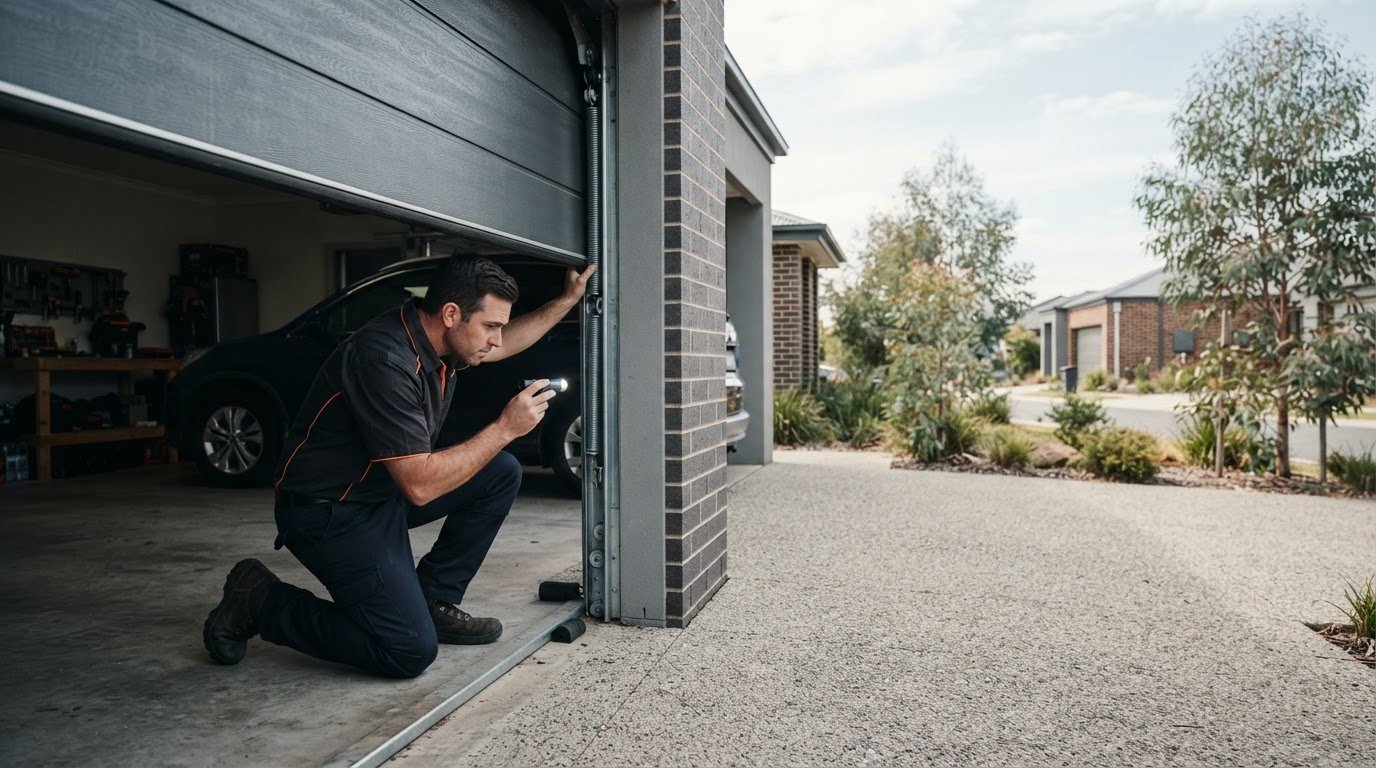
From a safe distance, look for an obvious obstruction in the track, uneven movement or a door that appears crooked. A damaged spring or cable can also affect how the door moves and place extra strain on the opener. Don’t adjust tracks, springs, cables or door tension yourself. If the door looks unbalanced, is difficult to move or has a visibly damaged component, stop using it and arrange professional attention.
Could the opener, controls or power supply be involved?
If the door looks aligned but the opener hums without moving it, the issue may be within the opener or its controls. Wear, control settings, a remote problem or an interrupted power supply are all possibilities. Check the opener’s manual and, without touching exposed wiring, look for an obvious issue with the visible power connection. Don’t open the motor housing. An inspection is needed to assess internal electrical or mechanical faults.
The timing and movement provide useful context. A hum that starts only after you press the remote points towards the opener, controls or resistance from the door. A silent unit may suggest a different power or control issue. A hum followed by no movement can occur when the opener is working but the door is obstructed or unbalanced, or when an opener component isn’t transmitting movement. Unusual movement or a crooked door shifts attention towards the door mechanism. None of these observations confirms the fault.
For general upkeep, Family Handyman’s guide to simple garage door maintenance covers basic checks such as clearing tracks. Keep any inspection visual and don’t attempt adjustments to spring loaded parts. If you’re unsure whether the problem is in the opener or door, a technician can assess both before recommending a repair. We Do Garage Doors provides residential motor and spring repairs across Melbourne and nearby northern suburbs. Learn more about garage door repair and motor assessment.
How can you tell whether the hum is a motor issue or a door problem?
Start by comparing the sound with the door’s movement. If the opener hums while the door stays still, the opener may be trying to operate without moving the door. If the door moves unevenly, binds or makes a new noise, the door mechanism may need attention. These clues can guide an inspection, but symptoms can overlap and don’t confirm the underlying fault.
What clues point towards the opener rather than the door?
Note whether the opener hums while the door stays stationary, and whether the remote or wall control responds. Don’t keep activating the opener to test it. These observations can help a technician narrow down what to inspect, but they don’t prove the motor itself is faulty. A humming opener can still be reacting to resistance elsewhere in the system.
What signs suggest the door mechanism needs attention?
From a safe distance, look for uneven travel, binding, a crooked door or visible damage. Springs and cables are under high tension, so don’t touch, adjust or attempt to release them. If you notice a possible spring issue, read the garage door spring replacement safety guide and leave hands on work to a technician.
A hum doesn’t automatically mean the complete motor needs replacing. The technician should identify whether the fault lies with the opener, controls or door mechanism before recommending a repair or replacement. If replacement is being considered, ask the technician what factors apply to your door and opener setup.
What should you do when a garage door motor hums?
If the opener hums but the door doesn’t move normally, pause before trying again. Repeatedly running a stalled opener or forcing the door can put extra strain on the system and may create a safety risk. Follow this sequence to keep your observations useful and your next steps safe:
Stop repeated operation. Don’t keep pressing the remote or wall control to see if the door will eventually move.
Observe from a safe position. Stay clear of the door’s travel path and look for an obvious obstruction or visible damage.
Record what happens. Note whether the opener hums, whether the door moves, which control you used and any indicator light or displayed code.
Arrange an assessment. Share these details with a technician rather than trying to diagnose or repair internal components yourself.
For a garage door motor making humming noise, the aim of these checks is to collect information, not to confirm a fault. The manufacturer’s instructions are the right reference for any user level checks specific to your opener.
Which checks are safe for a homeowner?
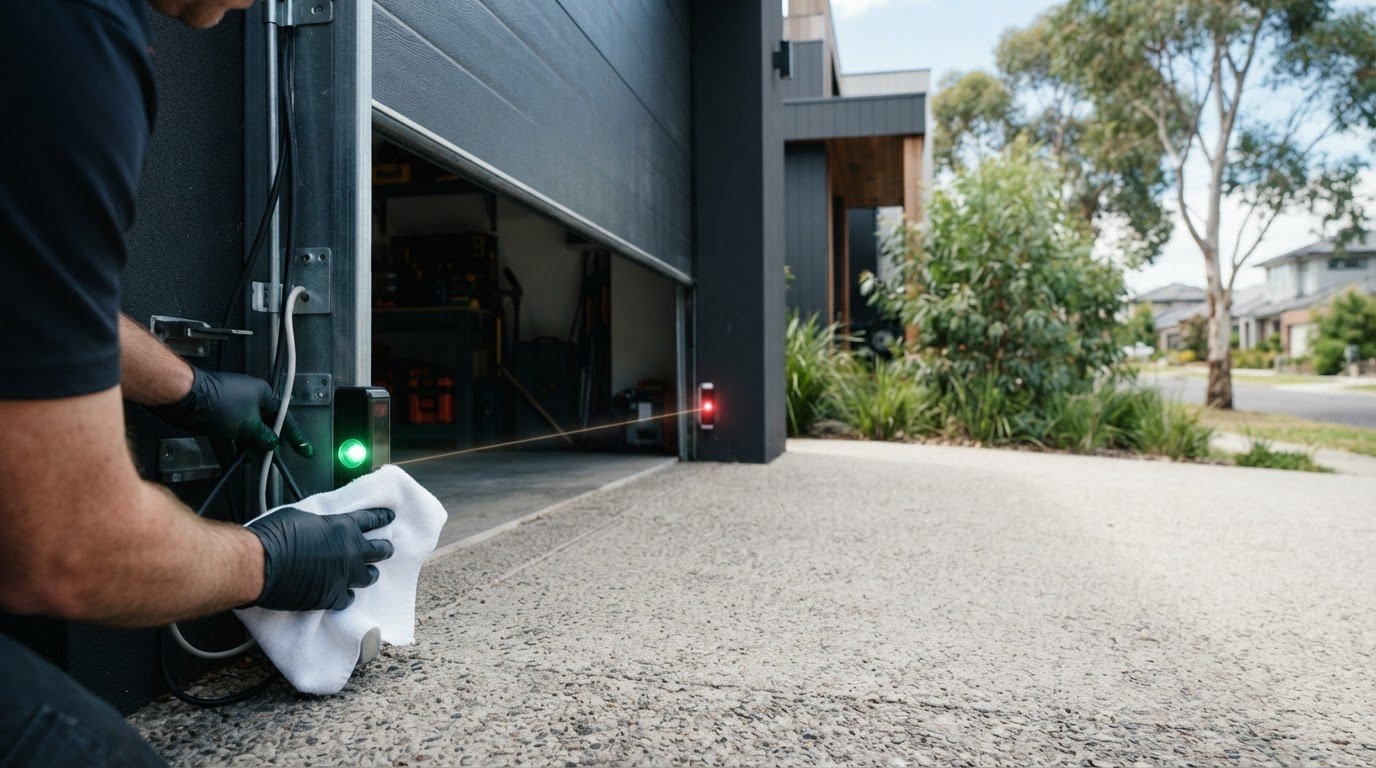
From outside the door’s travel path, check for an obvious obstruction. If the opener displays an indicator light or code, note it and consult the manual for its meaning. You can also look at the visible power connection without touching wiring. Don’t touch moving parts or disconnect components unless the manufacturer’s instructions clearly describe a safe user action.
When should you stop using the door and call a technician?
Stop if the door is stuck, uneven, visibly damaged or behaving unpredictably. Exposed wiring, a burning smell, or visible spring or cable damage are also reasons to leave the system alone and seek professional help. Springs, cables, wiring and motor internals aren’t DIY tasks. See this garage door motor failure signs guide for other symptoms to watch for.
A technician can inspect the opener and door mechanism to work out what needs attention before recommending a repair or replacement. If you’re in Melbourne or nearby and need an assessment, arrange a garage door inspection with We Do Garage Doors.
Repair or replace a humming garage door motor in Melbourne?
If your garage door motor is humming, don’t decide on a repair or replacement based on the noise alone. A technician should first identify whether the fault is in the opener, the door mechanism or another part of the system. That assessment can help avoid replacing a motor when the issue may be elsewhere, or repairing an opener when a replacement may be more practical.
The recommendation should take the whole setup into account, including:
Age and condition: The motor’s age matters, as do its overall condition and history of faults.
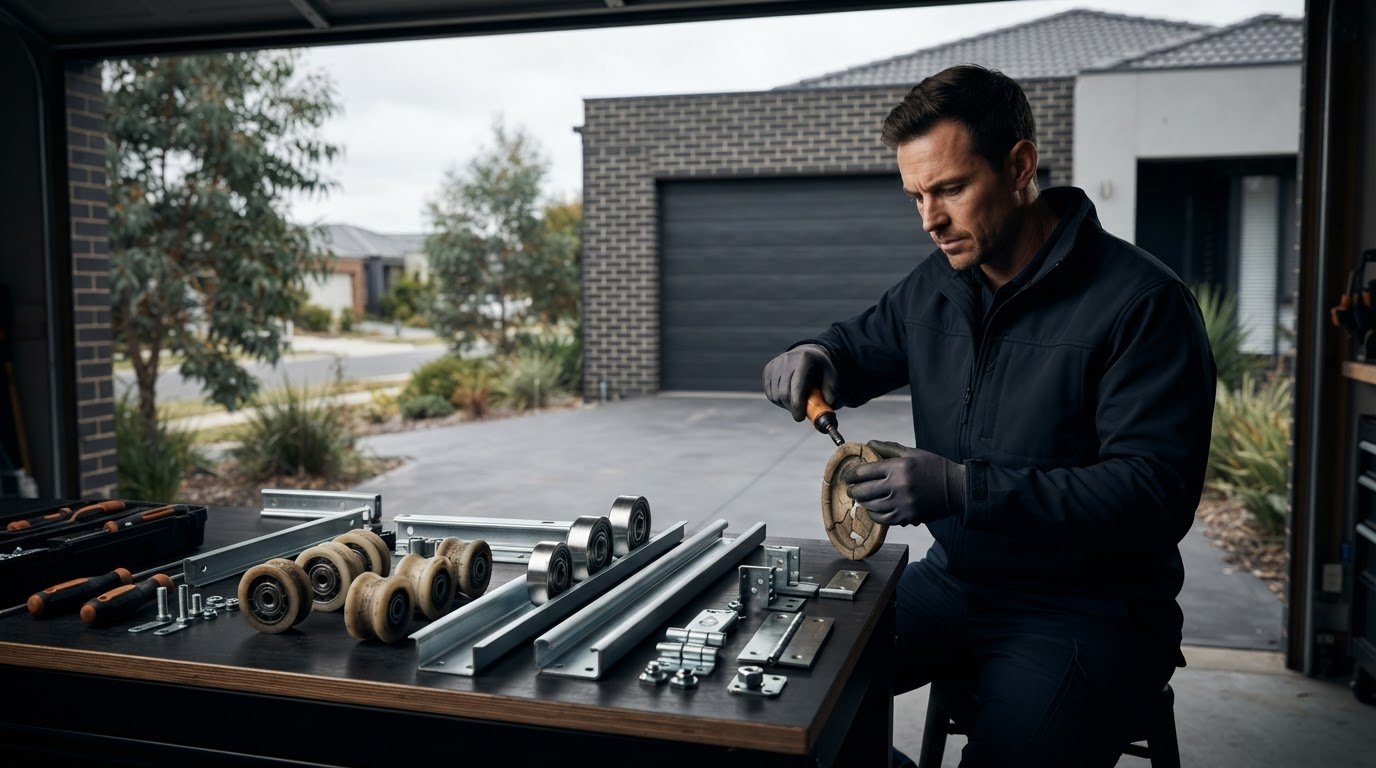
Parts availability: A technician can check whether suitable parts can be sourced for a repair.
Reliability: Repeated problems may affect whether another repair is a sensible option.
Compatibility: Any replacement needs to suit the existing door and opener arrangement.
Household use: How the garage is used can help inform what type of solution is appropriate.
Consider these factors after an inspection rather than guessing from the sound. The door itself should be assessed too, since resistance or a mechanical fault can put extra strain on an otherwise serviceable opener.
When might repairing the existing opener be considered?
Repair may be worth considering if inspection identifies a fault that can be serviced and the opener is otherwise in suitable condition. The technician should check the door system as well as the opener so the underlying cause isn’t missed. Parts availability and the condition of the unit can influence the options. The outcome can’t be confirmed before assessment.
When might motor replacement be the more practical option?
A replacement assessment may make sense if faults keep recurring, the existing unit is in poor condition, or a suitable repair isn’t practical. The recommendation should account for compatibility with the door and the way your household uses the garage. Ask the technician to explain what they found and why they’re recommending repair or replacement before deciding.
We Do Garage Doors provides residential garage door repairs and motor replacement across Melbourne, Greenvale, Craigieburn, Mickleham, Roxburgh Park and Wollert. If you’d like a technician to assess the opener and door mechanism, arrange a garage door service call.
Take the next step with confidence
A garage door motor making humming noise doesn’t automatically need replacing. The sound is a symptom, and the cause could lie with the opener, its controls or the door mechanism. If the door is stuck, uneven or behaving unpredictably, stop using it and leave springs, cables and motor internals to a technician.
Noting when the hum happens and whether the door moves can help inform an inspection. A technician can assess both the opener and door, then explain whether repair or motor replacement is the more practical option for your system.
We Do Garage Doors is an independent local business operated by master garage door technicians. It provides residential garage door repairs and motor replacement across Melbourne, including Greenvale, Craigieburn, Mickleham, Roxburgh Park and Wollert. For a professional assessment, arrange a garage door inspection.
With the cause properly identified, you can make your next decision with greater confidence. Contact We Do Garage Doors to arrange an assessment of your garage door motor and door mechanism.
Frequently Asked Questions
Why is my garage door motor humming but the door not opening?
The opener may be running against resistance, or there may be a fault with the opener, controls or power supply. A humming sound doesn’t identify the cause on its own. From a safe position, note whether the door is completely still, moves unevenly or appears obstructed. Stop trying to operate it if it won’t move normally, and arrange an inspection to check both the opener and door mechanism.
Is it safe to keep using a garage door motor that is humming?
If the door isn’t moving normally, stop using the opener rather than repeatedly pressing the remote or wall control. Continued attempts may put extra strain on the system, and a stuck or uneven door can pose a hazard. Keep clear of the door and don’t try to force it. If it’s behaving unpredictably, appears damaged or won’t move, have a technician assess it before using it again.
Can a broken garage door spring make the motor hum?
Yes, a damaged or broken spring can stop the door moving correctly and may leave the opener humming without lifting it. You might also notice that the door looks uneven or moves differently than usual. Don’t touch the spring or try to adjust the door, as springs and cables are under high tension. Stop operating the door and arrange professional attention to identify the fault safely.
What should I check if my garage door opener hums but does not move?
First, stop repeated operation. From outside the door’s travel path, look for an obvious obstruction and note whether the door is crooked or visibly damaged. Check for indicator lights or a displayed code, then consult the opener manual. You can look at the visible power connection, but don’t touch wiring, open the motor housing or disconnect components unless the manual describes a safe user action.
Does a humming garage door motor need to be replaced?
Not necessarily. A humming motor is a symptom, not proof that the complete motor has failed. The issue could involve the opener, its controls or resistance in the door mechanism. A technician should inspect the system before recommending repair or replacement. The decision can depend on the opener’s condition, whether a repair is practical, parts availability and whether a replacement would suit the door.
Can I fix a humming garage door motor myself?
Limit DIY checks to safe observations and user level steps described in the manufacturer’s manual. You can note the sound, look for an obvious obstruction from a safe position and record indicator lights or codes. Don’t attempt to repair motor internals, wiring, springs or cables, or adjust door tension. These components can present serious risks, so leave diagnosis and hands on repairs to a garage door technician.
When should I call a garage door technician in Melbourne about a humming motor?
Arrange an assessment if the opener hums but the door won’t move, or if the door is stuck, uneven, damaged or unpredictable. Seek professional help if you see spring or cable damage, exposed wiring or notice a burning smell. We Do Garage Doors provides residential garage door repairs and motor replacement across Melbourne, Greenvale, Craigieburn, Mickleham, Roxburgh Park and Wollert. A technician can assess whether the opener or door mechanism needs attention.
Comments