

Garage Door Running Slow? Causes, Safe Checks and Solutions
What if a garage door running slow is warning you about the door itself, not just the motor? When opening or closing suddenly takes longer, it’s natural to wonder whether the opener is losing power or the door is sticking. The cause could be as simple as an obstruction, or it could involve worn hardware or a spring that’s no longer supporting the door properly.
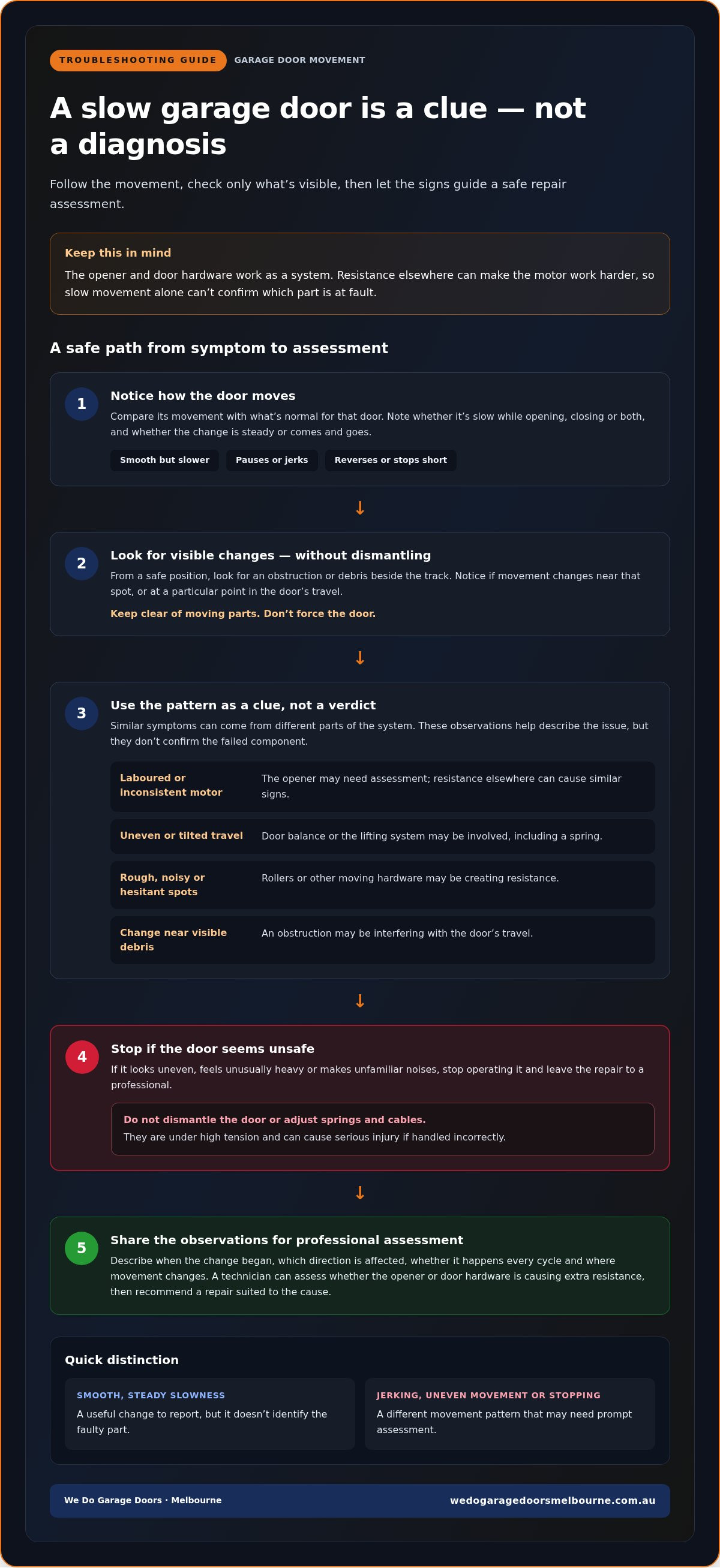
Treat slow movement as a symptom to investigate, not a reason to adjust parts blindly. You can make a few simple visual checks without dismantling the door, but springs and cables are under high tension and can cause serious injury if handled incorrectly. If the door looks uneven, feels unusually heavy or makes unfamiliar noises, stop operating it and leave the repair to a professional.
This guide covers common reasons a garage door moves slowly, which checks are safe to try and when a technician can assess the issue. The right repair may involve the motor or the door hardware, depending on what’s causing the delay.
Table of Contents
Garage door running slow: what the symptom can tell you
A change in how your garage door moves is often the first clue that it needs attention. It may take longer to open or close than it used to, travel unevenly or seem to labour through part of its cycle. A garage door running slow is a symptom, not a diagnosis: the opener may be struggling, or resistance elsewhere in the door system may be placing extra demand on it.
Pay attention to a new change even if the door still completes its journey. Continued operation can put strain on the opener if the door is meeting resistance. Jerking or incomplete travel may also need prompt assessment. Note whether the change happens while opening, closing or both, and whether it’s steady or comes and goes.
What counts as a garage door running slowly?
There’s no single opening or closing time that applies to every garage door. Compare its current movement with what’s normal for that door. If each cycle now takes noticeably longer but the door travels smoothly from end to end, that’s different from a door that pauses, jerks, reverses unexpectedly or stops short. These details help describe the symptom, but they don’t identify the faulty part.
Make a note of which direction is affected and whether the movement changes at a particular point. For example, the door might move normally at first, then slow as it nears the ground. A consistent change during both opening and closing is also useful information to share during a repair assessment.
Why the opener and the door need to be considered together
The opener’s motor moves the door, but it doesn’t work in isolation. Springs help balance the door’s weight, while rollers and tracks guide its travel. A problem with one part can affect how the whole system moves. If the door meets resistance, the opener may have to work harder, so a slow door doesn’t automatically mean the motor has failed.
For a straightforward overview of garage door components, including openers and springs, see Wikipedia’s guide. The key point is that the opener and door hardware operate as a system. Similar symptoms can have different causes, and speed alone can’t confirm which part is at fault.
In short: steady, smooth slowness is different from jerking, uneven movement or stopping. Each pattern is a useful clue, not a do-it-yourself diagnosis.
Why a garage door runs slowly: motor, springs or moving hardware?
A garage door running slow doesn’t automatically mean the opener needs replacing. The motor moves a larger system, and resistance or imbalance elsewhere can make it work harder. The signs below can help you describe what’s happening, but they can’t confirm the cause on their own.
The same slow movement can come from different parts of the system, so the symptom alone can’t identify the failed component. A technician can assess whether the opener is at fault or whether the door’s hardware is creating extra resistance, then recommend a repair suited to the cause.
Could the opener be struggling?
A motor that labours, runs inconsistently or seems less effective than before may be a clue, particularly if the door otherwise appears to move smoothly. It’s not proof that the opener has failed: resistance elsewhere can affect its performance too. An ageing or faulty unit may need assessment and, if appropriate, replacement. Read more about garage door motor replacement.
Could springs, rollers or tracks be affecting movement?
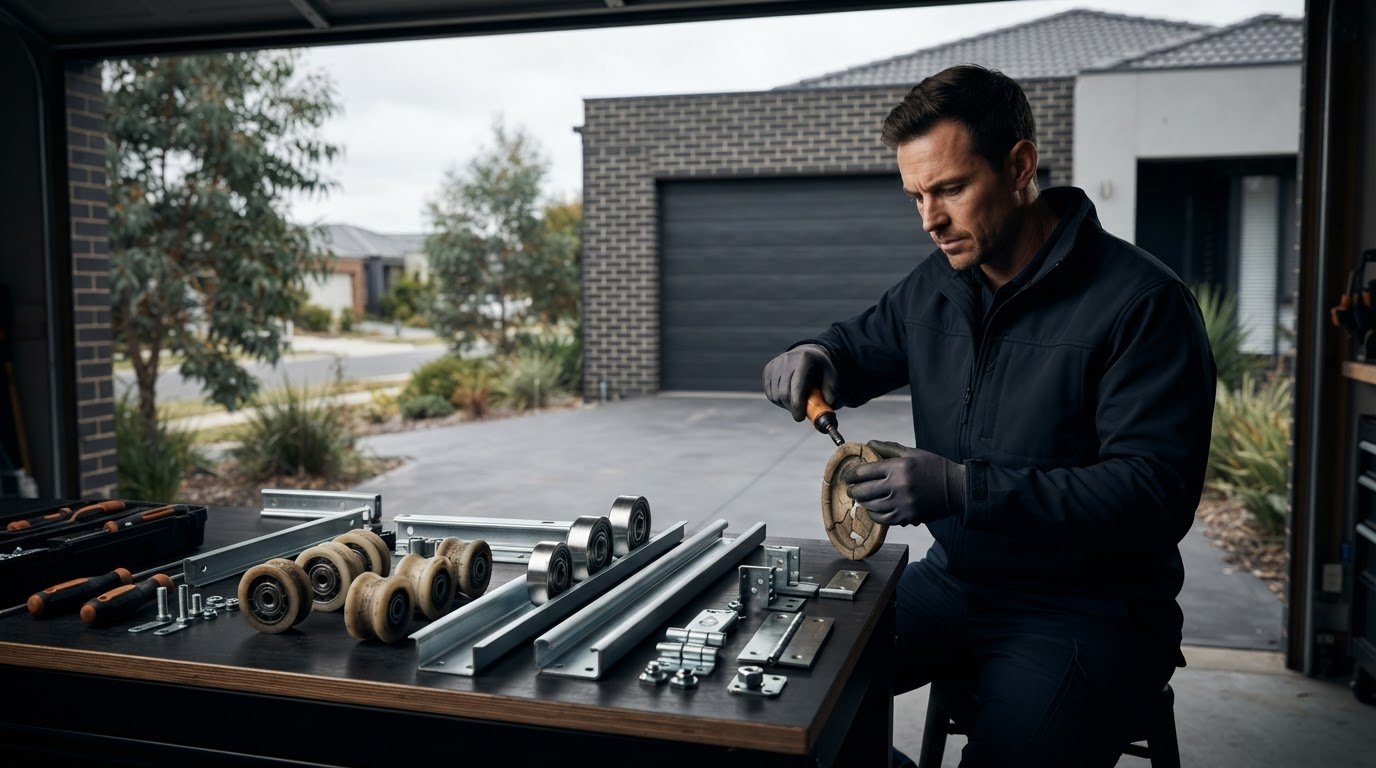
A door that travels unevenly or meets resistance may have an issue with its balance or moving hardware. Look only for visible obstructions and changes in movement. Don’t handle springs or cables, which are under high tension. Leave spring concerns to a technician.
If there’s no obvious obstruction, local garage door repair support can help identify whether the issue involves the opener or door hardware and determine the next repair step.
How to compare the likely causes before arranging a repair
A few clear observations can help you describe the problem without trying to diagnose it yourself. Note what the door does, when the change began and whether it happens on every cycle. A visible object near the track is different from resistance inside the system, and neither observation alone confirms which part needs repair.
Which symptoms point towards the door rather than the opener?
Uneven travel, a visible obstruction or apparent effort from one side can suggest that the door or its hardware needs attention. A clear obstruction is something you can see; internal friction or a mechanical fault may not be visible from outside. Don’t test the door by forcing it or handling its springs. If it looks unstable, stops unpredictably or moves in a way that seems unsafe, stop using it and arrange a professional assessment.
Which observations may point towards an opener issue?
Consider whether the door moves slowly in both directions or only while opening or closing, and whether the behaviour changes from one cycle to the next. Note unusual motor sounds, but don’t remove covers or attempt repairs. If the remote fails to trigger movement, that’s different from the door responding and then travelling slowly. These details help a technician assess the opener alongside the door system rather than assuming the motor is at fault.
If your garage door is running slow, keep a brief record of when you first noticed the change, whether it occurs every time and what you observed in each direction. A short description is more useful than a guess about which part has failed, and can help a technician focus the assessment.
Safe checks for a garage door running slow, and what to avoid
A few careful observations can help you describe the problem, but they won’t replace a mechanical assessment. Keep every check external and non-invasive. If anything looks unsafe, don’t try to make the door complete another cycle.
What can you safely check without dismantling anything?
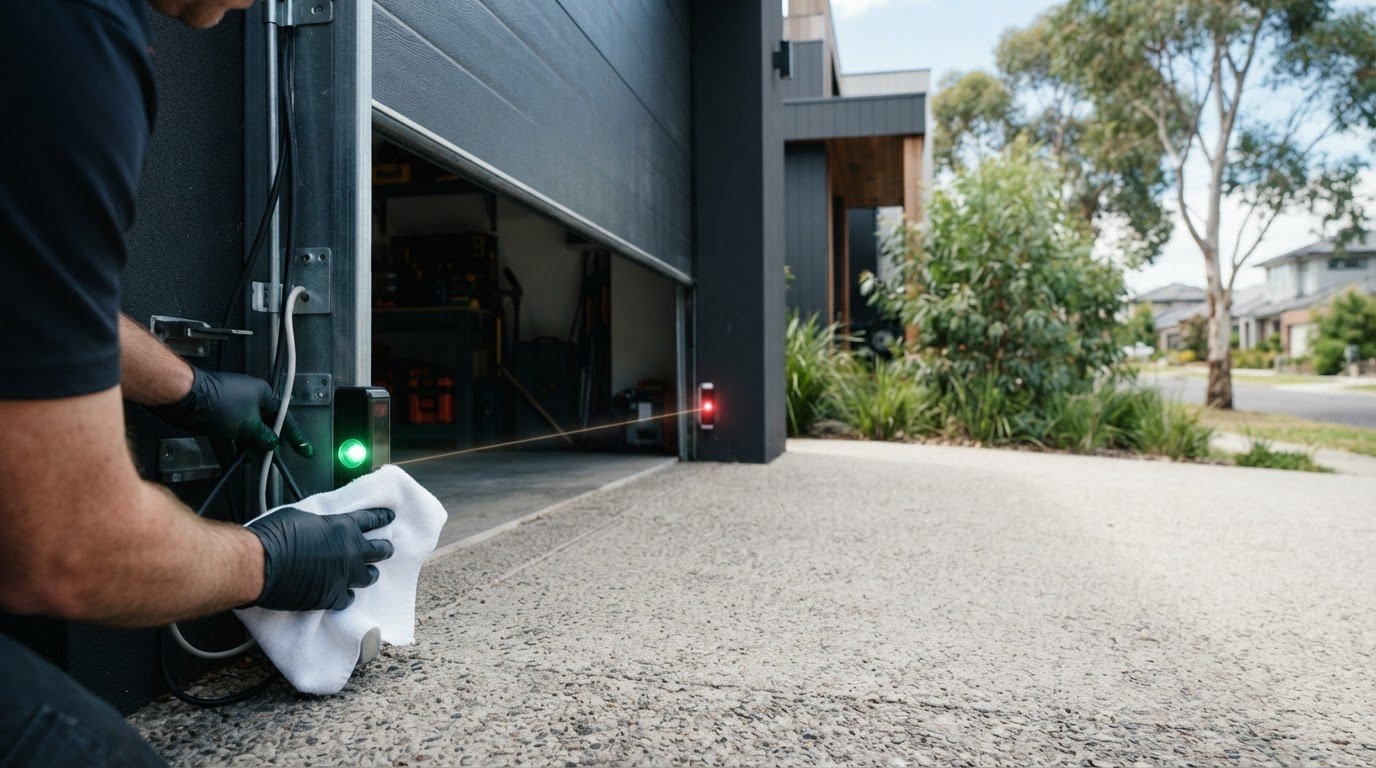
Stand clear of the door and watch its normal operation only if it appears stable. Note whether it moves steadily, pauses, jerks or makes a new sound. Check the visible travel area for objects or debris, but don’t reach near moving parts or into the tracks. If an obstruction isn’t safely reachable, leave it in place for a technician to assess.
Record whether the slowdown happens during opening, closing or both, and whether it occurs every time. Check the manufacturer’s user instructions for any basic external checks specific to your opener and door. Don’t remove covers or attempt adjustments based on general online advice.
When should you stop and leave the repair to a technician?
Stop operating the door if it looks crooked, unstable or unusually heavy, or if its movement is erratic or unpredictable. Don’t keep cycling it to see whether the problem clears. Repeated operation can put further strain on a system that isn’t moving normally.
Leave mechanical adjustments to a professional. Never handle or adjust high-tension springs or cables. Don’t realign tracks, alter opener force settings or access internal opener components. These jobs can affect how the door is supported and controlled, and an incorrect adjustment may make the situation more dangerous.
Safe checks are limited to watching, noting and looking for visible obstructions. They aren’t a reason to dismantle the system or test its balance. If the door is still running slow after an external check, or shows signs of imbalance, a technician can assess whether the issue involves the opener or door hardware. For broader upkeep between faults, use an annual garage door service checklist as a reminder of maintenance tasks, while leaving adjustments and repairs to a professional.
If the door is straining or behaving unpredictably, arrange a professional garage door repair assessment rather than continuing to operate it. Arrange garage door repair support with We Do Garage Doors for residential service across Melbourne and nearby suburbs.
Professional help for a slow garage door in Melbourne
If safe external checks haven’t explained the change, a professional assessment is the sensible next step. A slow door may involve the opener, but resistance or imbalance elsewhere in the system can make the motor work harder. A technician can assess how the door travels and consider the opener and relevant hardware together, rather than replacing a part based on one symptom alone.
What happens during a professional assessment?
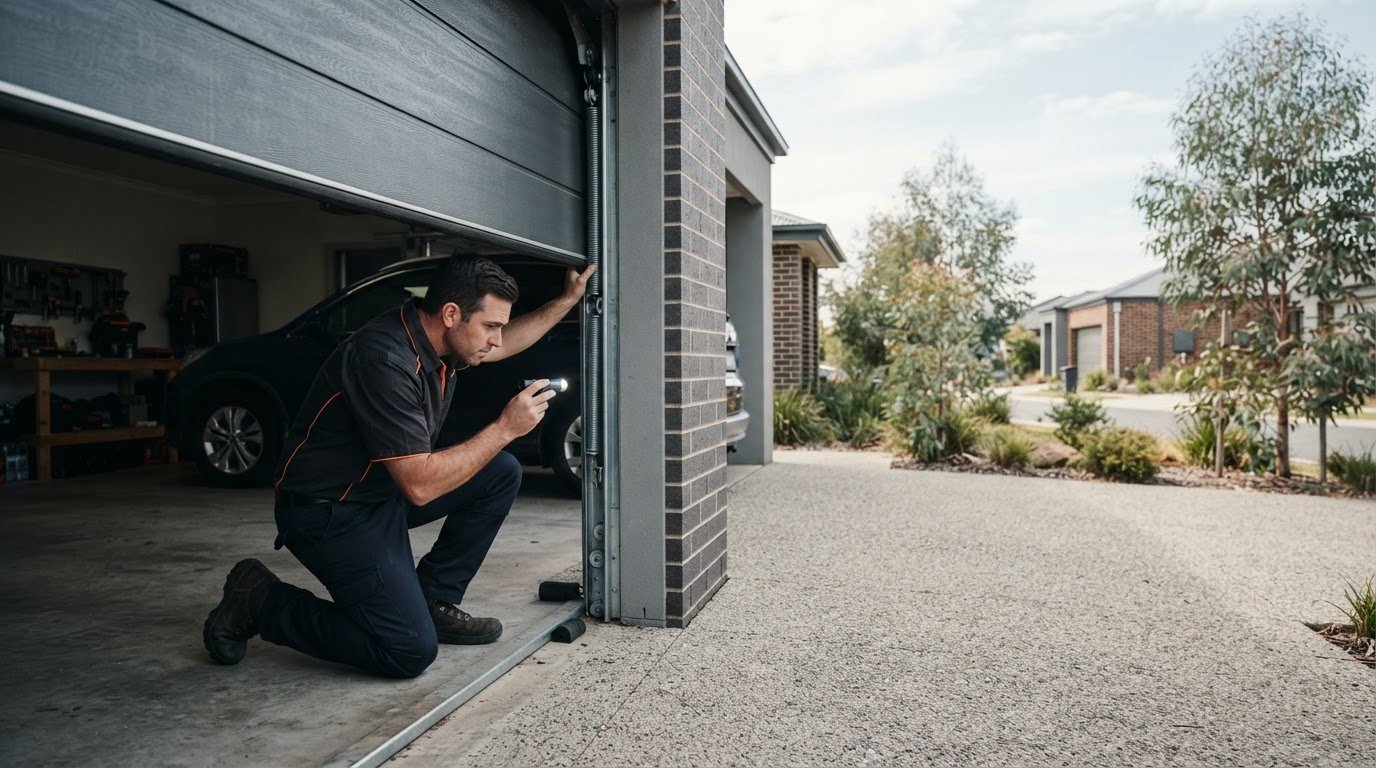
The assessment focuses on the door’s movement and the symptoms you’ve noticed, including whether it slows while opening, closing or both. The technician can investigate whether the cause relates to the motor or resistance elsewhere in the door system. Once the issue is identified, the recommended repair depends on what the assessment finds. It may involve motor replacement or, where appropriate, spring replacement. The right repair is guided by the fault, not by the slow movement alone.
What to prepare before arranging garage door repairs
A few details can help explain what’s happening. Note when you first noticed the change, whether it affects one or both directions, and if it occurs on every cycle. Describe any visible unevenness, interruptions or unusual sounds. You don’t need to test the door, take anything apart or attempt a repair to provide useful information.
For Melbourne homeowners, We Do Garage Doors provides residential garage door repairs across Melbourne and nearby areas, including Greenvale, Craigieburn, Mickleham, Roxburgh Park and Wollert. If you’re considering a broader repair, the Melbourne garage door repair guide can help you understand the repair process.
A garage door running slow can be frustrating, but you don’t have to guess whether the opener or door hardware is responsible. Share what you’ve observed and arrange repair support with We Do Garage Doors for a professional assessment of your door.
Get your garage door moving smoothly again
A garage door running slow is a sign to pay attention, not a reason to start adjusting parts. The change may relate to the opener or to resistance elsewhere in the door system, so note what you observe and keep checks external. If the door looks unstable or moves unpredictably, stop using it and arrange a professional assessment.
We Do Garage Doors is an independent local business operated by master garage door technicians, providing residential garage door repairs and maintenance across Melbourne and nearby suburbs. A professional diagnosis can help identify whether the repair needs to address the motor, springs or other door hardware.
If your door still isn’t moving normally, arrange professional help for your slow garage door. Contact We Do Garage Doors to arrange an assessment and take the next step towards safe, reliable operation.
Frequently Asked Questions
Why is my garage door running slow?
A garage door may move slowly because the opener is struggling, the door is unbalanced, moving parts are worn or something is obstructing its travel. If the change began suddenly, note whether it affects opening, closing or both, and watch for uneven movement or unusual sounds. These clues can help describe the fault, but they can’t confirm which part is responsible. A technician can assess the opener and door hardware together.
Can I fix a slow garage door myself?
You can make simple, non-invasive checks, such as looking for visible obstructions from a safe distance and observing how the door moves. Follow the manufacturer’s user instructions for basic external checks. Don’t dismantle the opener, adjust tracks or force settings, or handle springs and cables. These components can be dangerous to work on, and an incorrect adjustment may worsen the problem. If the cause isn’t obvious, arrange a professional assessment.
Is it safe to keep using a garage door that moves slowly?
Stop using the door if it looks crooked or unstable, feels unusually heavy, jerks, stops unpredictably or fails to travel normally. Repeated operation can put extra strain on the system and may increase the risk of the door behaving unexpectedly. If it’s moving smoothly but noticeably slower than usual, don’t ignore the change. Limit use and arrange an assessment, especially if the movement worsens or new sounds appear.
Could a garage door motor cause slow operation?
Yes, an ageing or faulty motor can contribute to slow or inconsistent operation. A laboured sound or a change in performance may be a clue, but it doesn’t prove the opener is the cause. Resistance from the door or its hardware can also make the motor work harder. A technician can assess both the opener and door system, then recommend repair or motor replacement if the fault points to the motor.
Can worn springs make a garage door run slowly?
Yes. Springs help counterbalance a garage door, so a damaged or weakened spring can affect its balance and make movement slow, uneven or strained. The door may also appear crooked or unusually heavy. Springs are under high tension and can cause serious injury if handled incorrectly. Don’t touch, adjust or attempt to replace them yourself. Stop using an unstable door and leave spring assessment and replacement to a professional technician.
Should I lubricate a garage door that is running slow?
Lubrication may be part of routine care, but it won’t resolve every cause of slow movement, such as a failing motor, an unbalanced door or a mechanical fault. Check the door and opener manufacturer’s instructions for approved maintenance products and locations before applying anything. Don’t spray lubricant indiscriminately or use it as a substitute for diagnosis. If the door still moves slowly or behaves unevenly, arrange a professional assessment rather than adding more lubricant.
When should I call a garage door technician in Melbourne?
Arrange a technician’s assessment if the door remains slow after safe external checks, or if it looks uneven, strains, makes unusual sounds or behaves unpredictably. We Do Garage Doors is an independent local business operated by master garage door technicians, providing residential repair and maintenance across Melbourne and nearby suburbs, including Greenvale, Craigieburn, Mickleham, Roxburgh Park and Wollert. A professional diagnosis can identify whether the repair should address the opener or door hardware.
Comments