

How to Find and Fix a Garage Door That Won’t Move
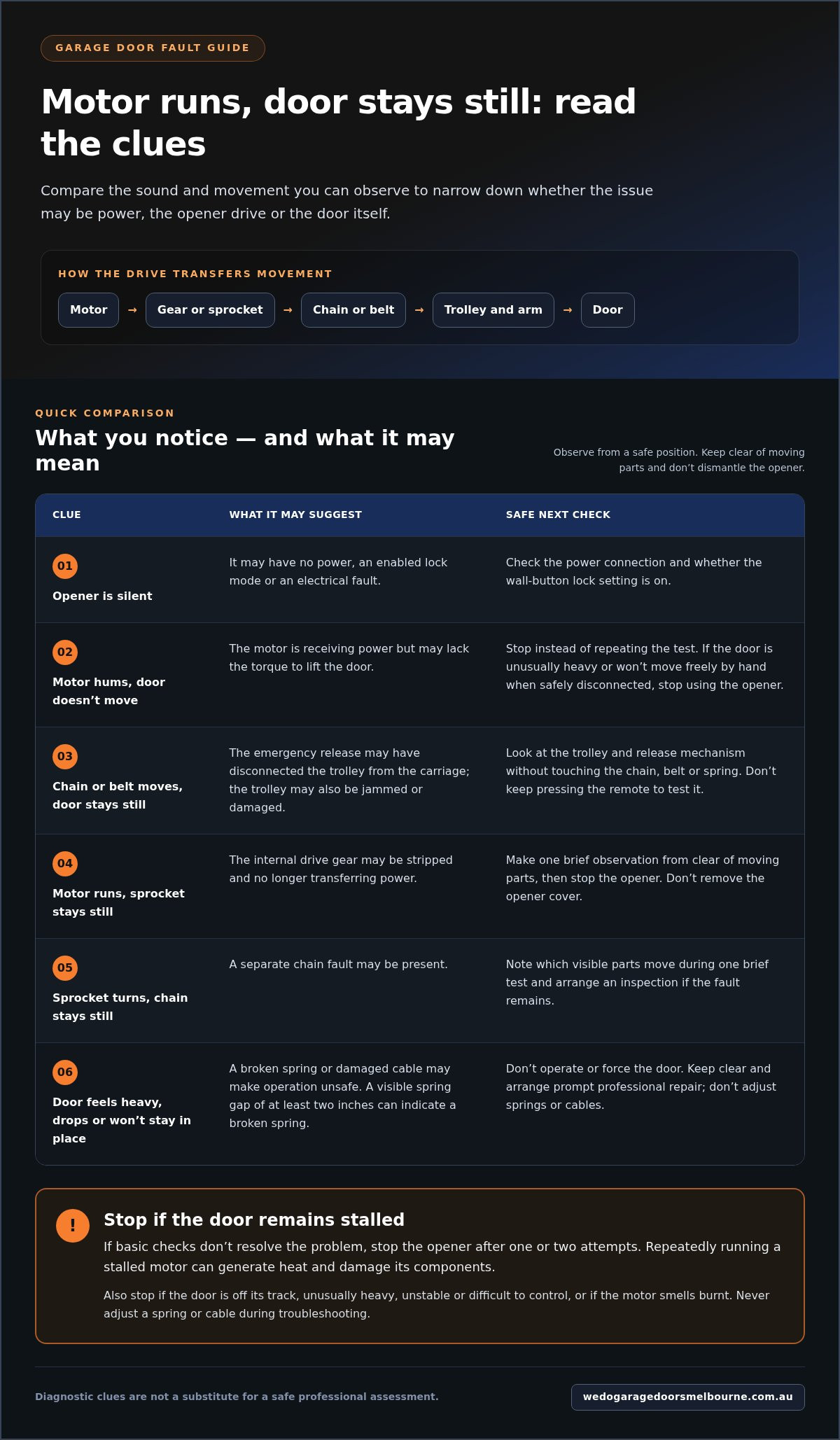
If your garage door motor is running but the door isn’t moving, stop the opener after one or two attempts if basic checks don’t resolve the problem. The emergency release may have disconnected the door, or the opener’s gears, chain or belt may have failed. Repeatedly running a stalled motor can generate heat and damage its components.
It’s frustrating when the motor sounds as though it’s working but the door stays put. A few careful checks can help narrow down the cause without putting extra strain on the opener.
This guide explains how to check whether the emergency release has disengaged, spot visible problems with the opener gears and chain or belt, and recognise when professional repair is needed. You’ll also learn when to stop troubleshooting, particularly if the door feels unusually heavy, has come off its track or the motor smells burnt. Start with checks that don’t involve dismantling the opener or handling high-tension parts.
Table of Contents
Disengaged trolley and emergency release
If the opener runs while the door stays still, check whether the emergency release has disconnected the drive. A disengaged trolley can leave the chain or belt moving without lifting the door.
Check the manual-release trolleyLook at the trolley and release mechanism without touching the chain, belt or spring. The release disconnects the opener’s drive so the door can be operated manually without power. If the chain or belt moves but the door remains still, the trolley may have separated from the carriage. Check whether the release appears disengaged, jammed or damaged. Don’t keep pressing the remote to test it.
Open and secure the door manuallyDuring a power outage, disconnect the opener using its manual release, then lift the door smoothly by hand. Keep control as it moves and stop if it feels unusually heavy, drops or won’t travel freely. Once open, don’t leave it unattended or walk beneath it. Lower it fully and secure it with a fitted manual lock, if available.
Before pulling the release, make sure the door is fully closed. A broken spring can leave the door unsupported and dangerously heavy. If it’s already open, unstable or difficult to control, don’t release the trolley or try to force the door. Keep clear of its path and arrange garage door repairs. Never adjust a spring or cable during this check.
When power returns, reconnect the trolley according to the opener’s instructions. On many systems, pulling the release and running the opener allows the carriage to catch the trolley. Watch from a safe position and listen for it to click into place. Keep clear of moving parts, and stop if the door still doesn’t move or the release fails to engage.
After reconnection, make one careful observation to see whether the release was the problem. If the chain or belt moves but the door stays still, the trolley may not have reset, or its mechanism may be jammed or broken. Stop after one or two attempts if the door remains stalled. Repeatedly running the motor can generate heat and damage components.
If the motor runs while the door stays still, the manual release may be disengaged. Re-engage it by pulling the release and running the opener until it clicks back into place.
Why is my garage door not opening?
Work out whether the problem is with power or controls, the motor or drive, or the door itself. The sound, movement and visible condition of the door offer useful clues.
Compare humming and dead openersPress the wall control once and listen from a safe position. A humming motor is receiving power but may lack the torque to lift the door; a silent opener may have no power, an enabled lock mode or an electrical fault. Check the power connection and wall-button lock setting. If the motor hums without movement, stop instead of repeating the test.
Review opener drive-system operationWatch the opener’s visible drive components during one brief test, keeping clear of moving parts. The motor turns a gear or sprocket, which moves a chain or belt and trolley; the trolley transfers movement through the arm to the door. If the trolley moves but the door doesn’t, visually inspect the door bracket and connecting arm. Don’t remove the opener cover.
Check opener and door compatibilityConsider whether the opener’s rating and setup suit the door type and its movement. A stiff, unbalanced or excessively heavy door puts extra load on the opener, while the opener’s force or travel settings may not suit the door. Don’t increase force settings to compensate for a door that binds. If the door won’t move freely by hand when safely disconnected, arrange a professional assessment.
Assess spring or cable damage safelyFrom a distance, look for a gap in a torsion spring above the door, or a stretched or separated extension spring beside an upper track. A visible gap of at least two inches can indicate a broken spring. A broken spring or frayed cable makes operation unsafe because the door may become too heavy, slam or fall. Don’t operate it; arrange prompt repair.
Check the door’s behaviour without forcing it. If it feels unusually heavy, won’t stay in position, or drops unexpectedly, stop using the opener. A broken spring can leave the opener struggling against the door’s full weight. Springs store substantial tension, so don’t attempt to adjust or replace them yourself.
Decide whether repair or replacement is appropriate by considering the fault and the opener’s condition. A failed capacitor, gear or other replaceable component may be repairable; an opener more than 10-15 years old with multiple worn components may be a replacement candidate. If the motor runs but the drive fails, or the gears are stripped, arrange professional opener repair. Garage door repairs can address faults that basic checks don’t resolve.
Stripped opener drive gears
Check the opener’s visible drive behaviour before assuming the door itself is jammed. If the motor runs but the sprocket doesn’t turn, the gear inside the opener head may be stripped.
Watch the sprocket during one brief opener test, standing clear of the door and moving parts. If you hear the motor but the sprocket stays still, the internal drive gear may no longer transfer power. Stop the opener after that observation. Repeated tests won’t restore worn teeth and can put extra strain on the motor.
Compare the sprocket’s movement with the chain or belt. A turning sprocket should move the drive along its track; if it turns while the chain remains still, suspect a separate chain fault. If neither moves while the motor runs, an internal gear fault is more likely. Note exactly what moves before arranging an inspection.
Look for visible clues around the opener head without removing its cover. Grinding or clicking during operation, loose debris beneath the unit, or a sprocket that fails to turn can help describe the fault. These signs don’t prove which component has failed. Don’t reach inside the housing or try to turn exposed mechanisms by hand.
Switch off the opener before any external inspection. If the motor is hot, smells electrically burnt or repeatedly trips the power, unplug it immediately and leave it switched off. Keep children and household members away from the stalled door. A door still connected to its drive may move unexpectedly if the opener activates.
Record the opener’s brand and model from its external label, along with what happened during the test. For example, note whether the motor ran, the sprocket turned and the chain moved. This helps a technician distinguish stripped opener gears from a disconnected trolley or failed drive component without repeatedly operating the door.
Arrange professional repair if the motor runs but the sprocket doesn’t turn, or the opener gears appear stripped. The gear assembly sits inside the opener head, so diagnosis and repair require access to internal components. Don’t force the door or alter the opener’s force settings to overcome the fault. A technician can assess whether repairing the drive or replacing the opener is appropriate.
Keep the door out of powered use until the drive fault is addressed. If it’s closed, leave it closed rather than repeatedly testing the remote. If it’s open or unstable, keep clear of its path and avoid working beneath it. A stalled opener needs a clear diagnosis, not more button presses.
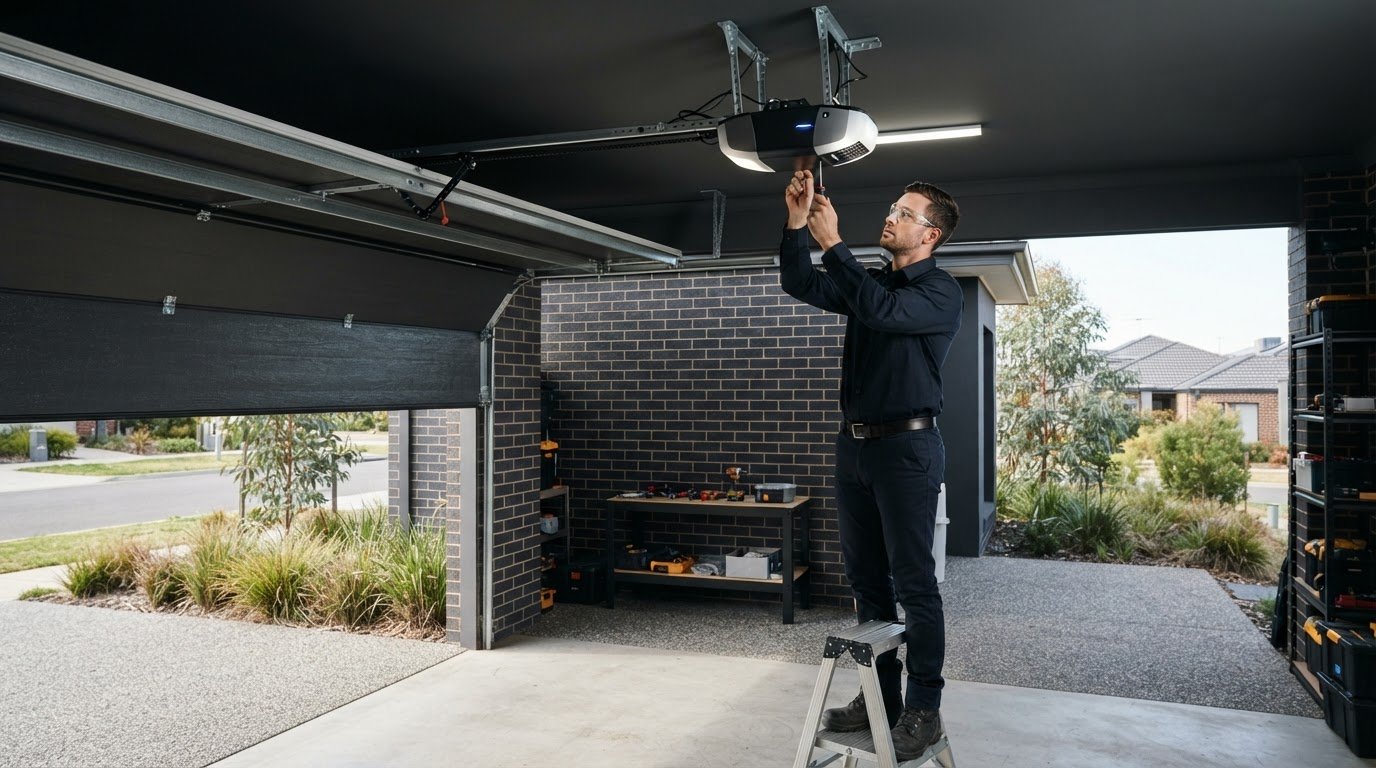
Checking the chain or belt for visible breaks
With the power off, inspect the opener’s drive path for a broken chain, slipping belt or disconnected carriage. A visible fault can explain why the motor runs without moving the door.
Switch off the opener and isolate its power before inspecting the drive. Stand clear of the door and keep hands away from springs, cables and moving parts. Use a torch to view the full chain or belt from the opener sprocket to the trolley, without pulling or adjusting anything.
Trace the chain along its rail and look for a break, loose section or chain that has jumped off the sprocket. If the sprocket turns but the chain stays still, the chain may be broken or displaced. Don’t reach near the sprocket to test its movement.
Check the belt’s visible length for a split, separation or section hanging away from its normal path. A broken or slipping belt can let the motor run without transferring movement to the trolley. Don’t tug the belt or try to reseat it, as the drive may move unexpectedly.
Look at the drive carriage and the arm connecting it to the door. If the chain or belt moves but the carriage stays still, the drive may have slipped or failed. If the carriage moves but the door doesn’t, visually inspect the door bracket and connecting arm for separation or damage.
Compare the sprocket, drive and trolley without removing the opener cover. A turning sprocket with a stationary chain points to a chain problem; a moving chain with a stationary door can indicate a disconnected carriage. These observations help distinguish a drive fault from a disengaged manual release.
Before restoring power, record what you see: whether the chain or belt is intact, the carriage is connected and the door bracket appears attached. For example, report “sprocket turns, chain does not” rather than simply saying the opener is faulty. That detail can help pinpoint the failed link.
Don’t run the opener again if the chain is broken, the belt is visibly damaged or the drive has come off its track. Another attempt can strain the motor or cause parts to move unpredictably. Keep the door stationary and arrange garage door repairs for the damaged drive component.
After a professional repair, test the opener from a safe position and watch one complete movement. The chain or belt should travel with the trolley, and the trolley should move the door along its normal path. Stop the test if the drive slips again, makes grinding noises or leaves the door stationary.
Risks of repeatedly running a stalled motor
A stalled opener isn’t simply failing to complete a cycle. Each extra attempt can keep the motor under electrical load without moving the door, adding heat instead of resolving the fault.
Stop after one or two attempts if basic checks haven’t restored movement. A motor humming or running against a jammed drive continues drawing current without completing its cycle. Sustained electrical load can generate heat and damage motor components. Another press won’t reconnect a broken chain, repair stripped gears or lift a door with a failed spring.
Unplug the opener immediately if the motor feels hot, smells electrically burnt or repeatedly trips the power. Don’t touch exposed wiring or open the motor housing. Leave the opener switched off, keep others away from the door and arrange professional attention. A burnt smell is a clear reason to stop, not a cue to try one more cycle.
Notice what the motor does during the first test. A brief hum with no movement can indicate the motor is working against resistance, while continued running without door movement suggests the drive isn’t transferring motion. If you hear grinding or clicking, stop and note the sound. These details help narrow down whether the motor, gears or drive needs attention.
Consider the load before blaming the motor alone. A broken spring can leave the opener trying to lift the door’s full weight, while a jammed door or failed drive can also prevent movement. Don’t increase the opener’s force setting to push through resistance. Stop using it until the door and opener have been assessed.
Keep the door clear and stationary while the opener is off. Don’t pull the emergency release if the door is open, unstable or difficult to control. A door with a broken spring or failed cable may be heavy and can drop unexpectedly. Keep children, pets and household members away from its path.
Record the symptoms instead of repeating the test. Note whether the opener hummed or ran, whether the chain or belt moved, and whether the motor became hot or tripped the power. For example, “motor runs, sprocket stays still” gives a technician more useful information than repeated button presses.
Arrange professional diagnosis if the motor continues running without moving the door, or shows heat or electrical warning signs. If the motor itself has failed, arrange a motor replacement rather than continuing to operate a stalled opener. Keep it unplugged until the fault is addressed.
We Do Garage Doors: Garage door repairs
We Do Garage Doors repairs garage doors, motors, springs and other door hardware when a fault stops the door moving. If the opener motor has failed, motor replacement may be the right option. Springs are under extreme tension; attempting a DIY fix can cause serious injury. If a spring appears damaged or the door is unusually heavy, stop operating it and arrange professional spring replacement rather than trying to adjust it yourself.
When you get in touch, describe what the motor did, whether the chain or belt moved, and any visible damage. These details help explain the issue and guide the next step. For help with a stalled or faulty garage door, contact We Do Garage Doors.
Get your garage door moving again
If your garage door motor is running but the door isn’t moving, use these checks to decide what to do next. A clear description of the symptoms can help distinguish an opener fault from a problem with the door itself. If the fault involves a spring, cable or internal motor component, leave the repair to a trained technician rather than forcing the door.
We Do Garage Doors provides garage door repairs, motor replacement and spring replacement to address the faults behind a stalled door. The right repair depends on what has failed, so describe what you observed, such as whether the motor ran or the drive moved. That gives the repair a practical starting point and helps identify the issue.
For assistance with a stuck or faulty garage door, contact We Do Garage Doors. A safe next step can bring you closer to restoring reliable access to your garage.
Frequently Asked Questions
Why is my garage door opener motor running but the door not moving?
The motor may be running without transferring movement through the opener’s drive system. A disengaged trolley, damaged chain or belt, stripped gear or door hardware fault can interrupt that connection. If you hear humming but see no movement, stop operating the opener and note which parts move. For example, a turning sprocket with a stationary chain points to a different fault than a moving trolley and stationary door.
How can I check if the garage door trolley is disengaged or the emergency release is pulled?
With the door stationary, look at the trolley where the opener rail meets the arm connected to the door. A disconnected carriage may sit apart from the trolley, and the emergency-release cord or lever may be in its release position. Don’t climb on the door or reach into the rail. If the door is open, unstable or unusually heavy, keep clear and leave the release alone.
How do I reconnect a garage door opener after using the emergency release?
Start with the door fully closed and stable, then follow the reconnection instructions for your opener model. On many systems, operating the opener lets the carriage catch the trolley again; listen for the latch and watch from a safe position. Keep people clear of the door’s path. If the carriage doesn’t engage or the door moves unevenly, stop rather than repeatedly cycling the opener.
How do I troubleshoot a garage door opener that runs but does not lift the door?
Make one careful observation from outside the door’s travel path: does the sprocket turn, does the chain or belt move, and does the trolley travel along the rail? Note the sequence and any grinding, clicking or burning smell. Don’t remove the opener cover or change force settings to overcome resistance. If a spring or cable looks damaged, keep the door unused and arrange professional attention.
When should I call a licensed garage door technician in Australia?
Call a garage door technician if the door is off its track, drops or slams, feels unusually heavy, or has a damaged spring or frayed cable. Also seek help if the opener motor overheats, smells burnt, trips the power or still runs without moving the door after basic checks. These faults can involve stored spring tension, electrical components or unstable door hardware, so don’t attempt internal repairs yourself.
Comments