

How to Improve Garage Door Security: A Practical Homeowner Guide
Updated: Oct 14
Could the easiest way into your Melbourne home be the garage door you use every day? To understand how to improve garage door security, start by checking whether the door closes fully, who can operate it and whether the entry door to your home is secured. A misplaced remote or a door left open can undermine an otherwise sensible lock-up routine.
The most practical approach is to think in layers. Sound hardware matters, but so do the way you manage access and the habits you follow when coming and going. Smart controls can help you monitor access, but they don’t replace a door that operates correctly.
This guide walks you through common weak points and sensible steps to address them. You’ll learn what to check on the door and its access points, how to manage remotes, and which routines can help prevent the garage being left exposed. We’ll also cover warning signs that a faulty door, motor or access system needs a technician, so you can improve security without compromising safe operation.
Table of Contents
How to improve garage door security starts with finding weak points
Before changing a lock or adding a smart control, consider how your garage is used and where access could be less secure. Look at the whole route into your home: the garage door, its frame, the opener and remotes, and the door connecting the garage to the house.
An attached garage is more than a place to park or store tools. If someone gets inside, an unsecured internal door may provide another route into the home. Treat the garage with the same care as your front and back doors, while remembering that security depends on several parts working together. For properties looking to bolster perimeter entryways, custom security door and gate specialists like Apex Gateworks Inc. show how robust physical fabrication provides an essential first line of defence. Layered garage security pairs a sound physical barrier with controlled access and everyday habits that help keep both in place.
Which garage door security weak points should you check first?
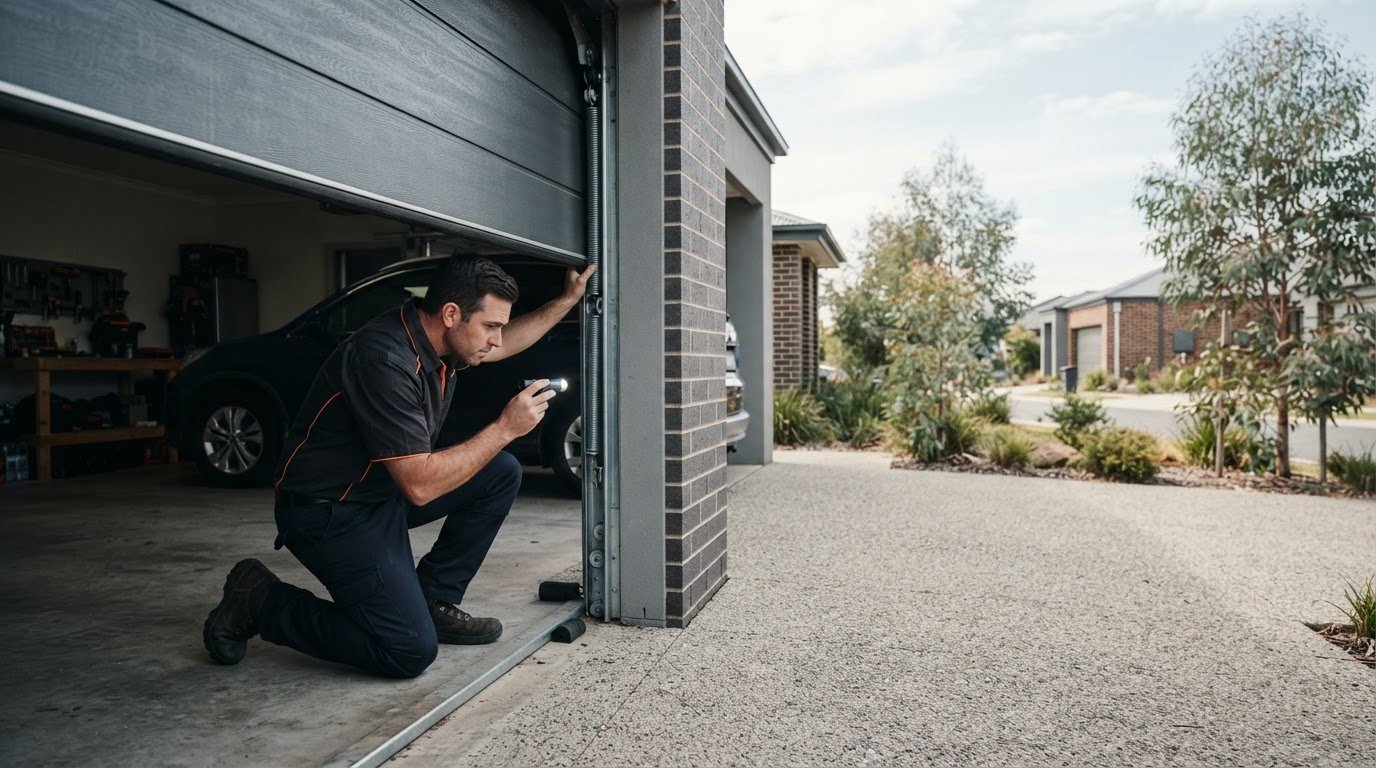
Walk around the garage and look before touching or adjusting anything. Check whether the door sits evenly, closes fully and appears free of visible damage. Look for gaps, loose fittings, bent tracks or panels that seem out of position. From inside, check that the opener and its visible components appear secure and undamaged. A visual check can reveal concerns, but it isn’t a reason to handle springs, cables or other tensioned parts.
Door and frame: Look for damage, gaps and signs that the door doesn’t meet the ground or frame properly when closed.
Opener: Notice unusual noises, inconsistent movement or controls that don’t respond as expected. For a general overview of understanding garage door openers, including common types and remote-control mechanisms, see Wikipedia.
Internal entry: Check that the garage-to-home door closes securely and that household members remember to shut and lock it.
Access items: Notice whether remotes or keys are left in an unattended vehicle, and whether access details are stored somewhere visible or easy to find.
Prioritise anything that leaves the door partly open, makes its movement unpredictable or gives easy access to a remote. If the door looks unstable or doesn’t close properly, avoid forcing it. A fault may need professional attention.
Why does one security measure rarely cover every risk?
Each layer addresses a different weakness. A door in good condition provides a physical barrier, while the opener and access controls determine who can operate it. Household routines help prevent mistakes, such as leaving a remote in a parked car or forgetting to secure the internal entry door. A strong door can still be undermined by a poorly managed remote, and electronic controls can’t compensate for damaged hardware.
Assess the full setup rather than relying on a single security feature. Check how the door closes, who can access the controls and what happens when everyone leaves. While garage access is critical, integrated electrical and security specialists like ELVION GROUP note that protecting a property often involves reviewing broader security technology and safe electrical distribution alongside physical entries. If a motor, remote or door component is faulty, repair or replacement may be the practical next step. Addressing the weakness you’ve identified keeps improvements focused and helps the system operate as it should.
Secure the garage door, emergency release and entry points
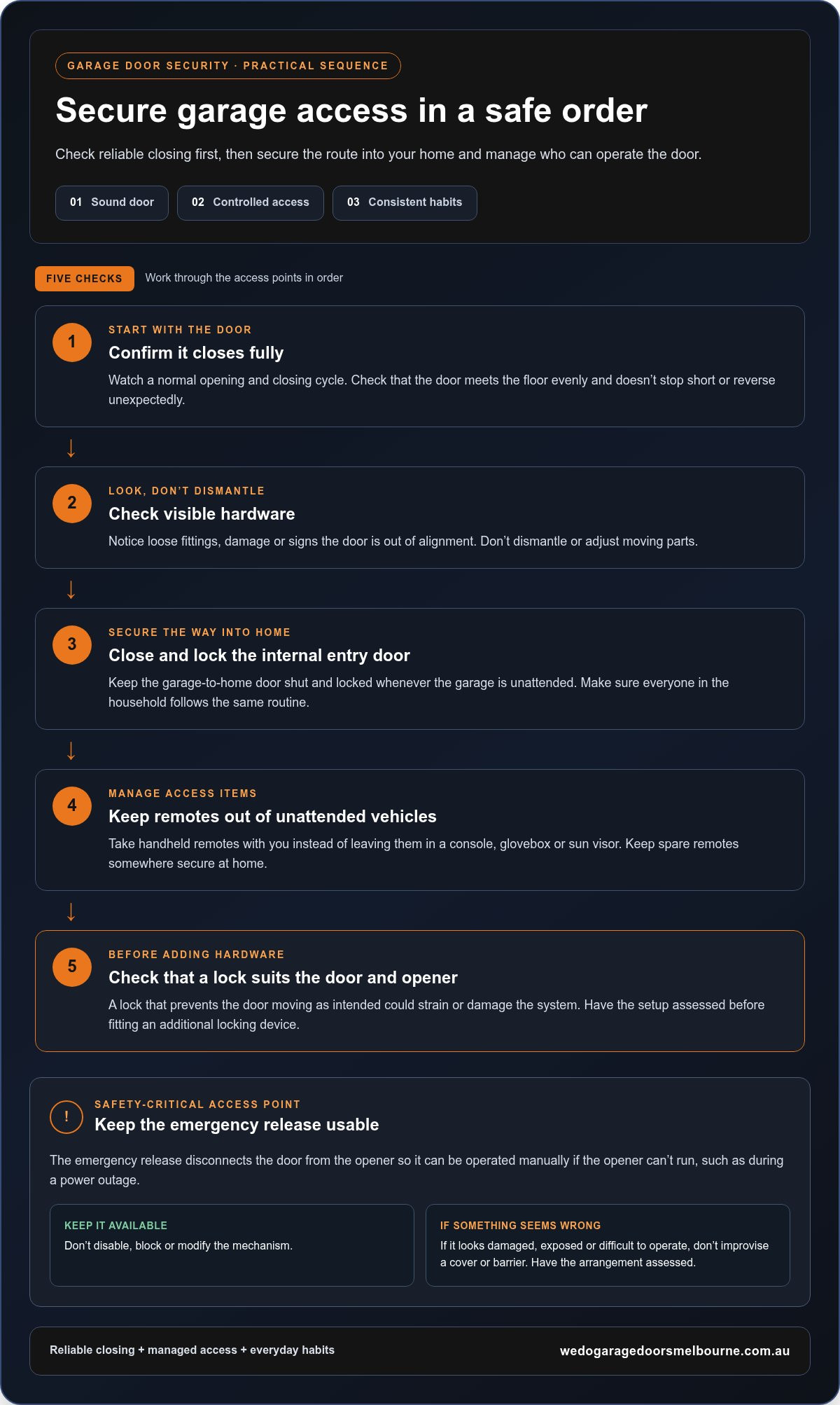
Once you’ve identified possible weak spots, work through them in a safe order. Focus first on reliable closing and the route from the garage into your home. Avoid forcing a door that sticks or adding hardware before understanding how it interacts with the opener. A lock that seems like an extra barrier can cause a problem if the motor tries to lift a door that’s still locked.
How can you make garage entry points harder to access?
Start with the entry door between the garage and home. Keep it shut and locked, just as you would another exterior entrance. Then check the garage door’s closing action and visible locking points. If the door has loose, damaged or misaligned hardware, don’t force it or attempt adjustments that could affect its movement. A technician can assess faults and carry out garage door repairs where needed.
Use this checklist to tackle access points in order:
Confirm the door closes fully. Watch it complete a normal opening and closing cycle. Check that it meets the floor evenly and doesn’t stop short or reverse unexpectedly.
Look over visible hardware. Notice loose fittings, damage or signs that the door is sitting out of alignment. Don’t dismantle or adjust moving parts.
Secure the internal entry door. Close and lock it whenever the garage is unattended, and make sure everyone in the household follows the same routine.
Store remotes securely. Take handheld remotes out of unattended vehicles rather than leaving them in a console, glovebox or sun visor. Keep spare remotes somewhere secure at home.
Pause before adding a lock. A lock must suit the door and opener. If it prevents the door moving as intended, operating the opener could strain or damage the system. Have the setup assessed before fitting an additional locking device.
How should you protect the emergency-release mechanism?
The emergency release disconnects the door from the opener so it can be operated manually if the opener can’t run, such as during a power outage. Its location and design vary, but it needs to remain usable when required. Don’t disable it, block it or modify the mechanism to make it harder to reach. For general safety information from the Door & Access Systems Manufacturers Association, see its garage door safety resources.
If the release looks damaged, exposed or difficult to operate, don’t improvise a cover or barrier. Have the arrangement assessed so security measures don’t interfere with emergency operation. A door that feels unusually heavy or unstable may have a mechanical fault, so don’t try to lift it manually in that condition. Keeping the release accessible and the door functioning properly supports both safe operation and household access.
Manage garage door remotes and smart access without adding risk
Access is only as secure as the way it’s managed. A remote is convenient for regular use, while a keypad can suit household members who don’t carry one. App control may offer remote operation and access visibility, depending on the opener and system. Choose based on who needs entry, how often they need it and whether you can keep each access method under control.
Before changing systems, check which controls your opener supports. Compatibility matters: a remote, keypad or smart controller won’t work with every opener. For a closer look at considerations for a system change, explore this smart garage door opener guide.
Are smart garage door controls safer than a remote?
Smart control can make it easier to see whether the door is open and manage access, if your system supports those features. It also introduces an account that needs protecting. Use a strong, unique password, secure the phone used to control the door, and share access only with people who need it. Convenience helps, but it isn’t a security guarantee.
Handheld remotes, keypads and apps suit different routines:
Handheld remote: Simple for drivers, but keep it with you rather than in an unattended vehicle.
Keypad: Useful when household members need entry without carrying a remote. Keep the code private and change it if it’s been shared too widely, following the opener’s instructions.
App: May provide visibility or access management from a phone, but depends on compatible equipment, a secure account and careful permissions.
Some openers use rolling-code technology, which changes the access code transmitted by the remote as it’s used. This helps reduce the risk of someone capturing and reusing an earlier signal. It doesn’t make a garage impossible to access, and features vary between openers. Check the manufacturer’s documentation to understand your system rather than assuming every remote or opener uses the same technology. Smart controls also can’t fix damaged door hardware or unreliable operation, so treat access technology as one part of the overall setup.
What should you do if a garage remote goes missing?
Treat a missing remote as lost access, especially if you don’t know where it went. Follow the opener’s documented process to remove or reconfigure it, then review who still has an authorised remote, keypad code or app permission. If the instructions are unclear, or you can’t safely change access settings, have the opener assessed by a technician.
After updating access, tell household members which controls remain active and agree on how spares are stored. If a remote is faulty rather than lost, replacement remotes and smart door control can help restore convenient access. Keep compatibility and safe operation in mind. That’s a practical step towards improving garage door security without relying on technology alone.
Use a simple garage door security routine to prevent avoidable gaps
A reliable routine turns good security intentions into small actions everyone can remember. Agree on who is responsible for checking the garage, where remotes are kept and how access is shared. Consistency can help prevent a rushed departure or household handover from leaving the door open or access devices within easy reach.
What should you check before leaving home?
Watch the door finish its cycle rather than relying on the motor’s sound or assuming it has closed. A quick glance can confirm the door has reached the ground and isn’t sitting partly open. Make the same final check part of the household’s leaving routine, whether you’re heading out in the car or on foot.
Close: Confirm the door has fully shut. If it stops short, reverses or behaves unusually, don’t assume it’s secure.
Lock up: Shut and lock the door between the garage and home. Check that everyone knows this is part of closing up.
Store access: Bring handheld remotes inside and keep them out of sight in a parked car. Avoid sharing keypad codes or app access more widely than needed.
Look over the door: Notice new damage, uneven movement or changes in the way it sounds. A brief visual check can help you spot a change before it becomes a bigger problem.
Keep the routine simple enough to follow every time. For example, agree that whoever leaves last confirms the door is shut, secures the internal entry door and takes any remote out of the vehicle. Decide how access will be updated when someone no longer needs it, rather than allowing old codes or permissions to remain in circulation. Broader upkeep checks can sit alongside this daily habit; the annual garage door service checklist covers maintenance beyond a quick close-up check.
Which changes mean your garage door needs attention?
Pay attention to changes from the door’s usual operation. New scraping or grinding noises, jerky or uneven movement, a door that reverses, or one that stops before closing fully can point to a fault. Don’t try to force a jammed, damaged or unbalanced door shut. Keep people clear and avoid using it until the issue has been assessed.
A routine is for noticing problems, not repairing components that affect balance or movement. If the door’s behaviour has changed, a Melbourne garage door repair assessment can help identify what needs attention. For a faulty door, motor or access system, arrange garage door repair assistance as a practical next step. A consistent close-up and inspection routine helps you act on warning signs before they become avoidable security gaps.
When a garage door repair or security upgrade needs a technician
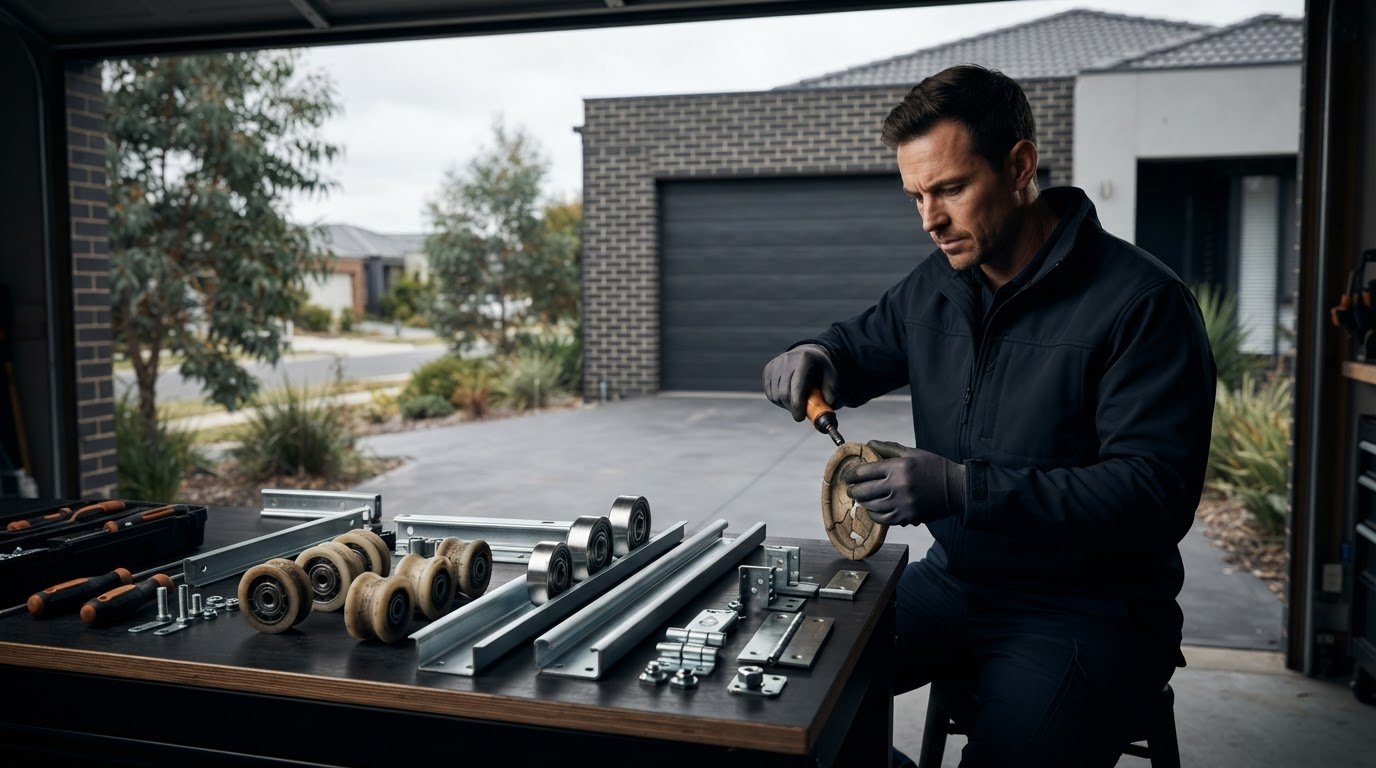
Homeowners can safely observe how a garage door looks and operates, but repairs involving its loaded components are different. Springs and cables help manage the door’s weight, while the motor and track system affect how it moves and closes. Attempting to adjust these parts without the right expertise can create a serious safety risk or make the fault worse.
Professional attention can help restore reliable operation and secure access, but no repair or upgrade can guarantee a home will never be targeted. The practical goal is a door that closes as intended and an access system that works reliably for your household.
When should you stop using the door and arrange help?
Stop operating the door if it’s damaged, unstable or moving unpredictably. Visible spring or cable damage is a clear reason to keep clear and avoid DIY repairs. Also arrange prompt attention if the door won’t close securely, the opener behaves erratically or the door appears out of alignment. Don’t try to force it shut or handle tensioned components yourself.
Spring faults need particular care because these parts are under tension. The garage door spring safety guide explains why spring issues should be treated cautiously. If the door is stuck open, keep people clear of the moving parts and consider how to secure access to the home while arranging help.
Keep clear: Don’t stand beneath a door that looks unstable or attempt to lift it manually if it feels unusually heavy.
Stop using the opener: Repeatedly pressing the control when the door is jammed or reversing can add strain without resolving the cause.
Describe what you’ve noticed: Share the sounds, movement changes or access-control problems with the technician. This can help clarify the issue during assessment.
How can Melbourne homeowners get practical repair support?
We Do Garage Doors handles residential garage door repairs, motor replacements and smart door controls across Melbourne and nearby suburbs, including Greenvale, Craigieburn, Mickleham, Roxburgh Park and Wollert. Master garage door technicians assess faults affecting movement, closing or access, then carry out the relevant repair or hardware work. The right response depends on the condition of the door and the problem identified.
For example, an unreliable opener may need motor attention, while a lost or faulty control may call for a replacement remote or an access-control update. A security upgrade should suit the door and opener, so the system remains safe to operate as well as convenient to use. If the issue needs more than a visual check, the Melbourne garage door repairs guide outlines common repair considerations.
Working out how to improve garage door security can start with simple checks, but faults involving springs, cables, motors or alignment are best assessed by a technician. For practical help with a repair or suitable control upgrade, get in touch with We Do Garage Doors.
Make your next security step a confident one
Improving garage security doesn’t have to mean changing everything at once. Start with the concern you can act on safely, then make a clear plan for anything that needs technical attention. This practical approach helps you strengthen access without compromising how the door should operate.
If you’re weighing up how to improve garage door security and aren’t sure whether the next step is a repair or control upgrade, We Do Garage Doors can help. The independent local business is operated by master garage door technicians and provides residential repairs, motor replacement and smart door control services across Melbourne and nearby suburbs.
Talk to We Do Garage Doors about a repair or security upgrade and take the next step towards a garage setup that feels more dependable for your household.
Frequently Asked Questions
Can someone open my garage door with a universal remote?
Only if the remote is compatible with your opener’s system. “Universal” doesn’t mean it can operate every garage door, as frequency, programming method and opener generation can affect compatibility. Follow the opener manufacturer’s instructions when pairing a replacement, and don’t share setup details casually. If a remote you don’t recognise operates the door, remove authorised remotes using the documented process and have the opener checked if you can’t regain control.
Are smart garage door openers safe to use?
They can be a useful access option, but safety depends on the door, opener and how the connected account is managed. Choose a strong, unique password, use two-factor authentication if available, and keep the app and device software updated. Be selective about who receives app access. Smart features can help you monitor or control a compatible door, but they don’t make faulty hardware safe or guarantee that unauthorised access is impossible.
What should I do if I lose my garage door remote?
Remove the missing remote’s access as soon as practical by following the opener’s instructions. The process varies, so check the manual for how to clear and re-pair authorised controls; this may also mean other remotes need to be programmed again. If you can’t identify the right procedure or aren’t confident changing the settings, We Do Garage Doors can help with remote and smart-control support across Melbourne and nearby suburbs.
How can I secure the emergency release on my garage door?
Keep the emergency release in its intended working condition and accessible for manual operation if the opener can’t run. Don’t tie it up, remove it or fit a barrier that could stop it being used. If you’re concerned about outside access to the release, avoid improvised shields or alterations. A technician can assess the opener and discuss an appropriate option that preserves emergency operation and suits the door’s setup.
Should I lock the door between my garage and house?
Yes, keeping the internal door closed and locked adds a separate barrier between the garage and living areas. Treat it as part of your normal home lock-up, even if the garage door is shut. Check that the latch engages properly and that household members use the lock consistently. If the door doesn’t close or latch as it should, address that fault rather than relying on the garage door as the only barrier.
Can I add a lock to an automatic garage door?
Possibly, but the lock must be suitable for the door and opener. A lock that remains engaged when the motor operates can obstruct movement and strain or damage the system. Don’t fit a bolt or other locking device without considering how it affects powered operation. If you want an additional physical barrier, have the arrangement assessed first so the door can still operate safely and as intended.
What should I do if my garage door will not close fully?
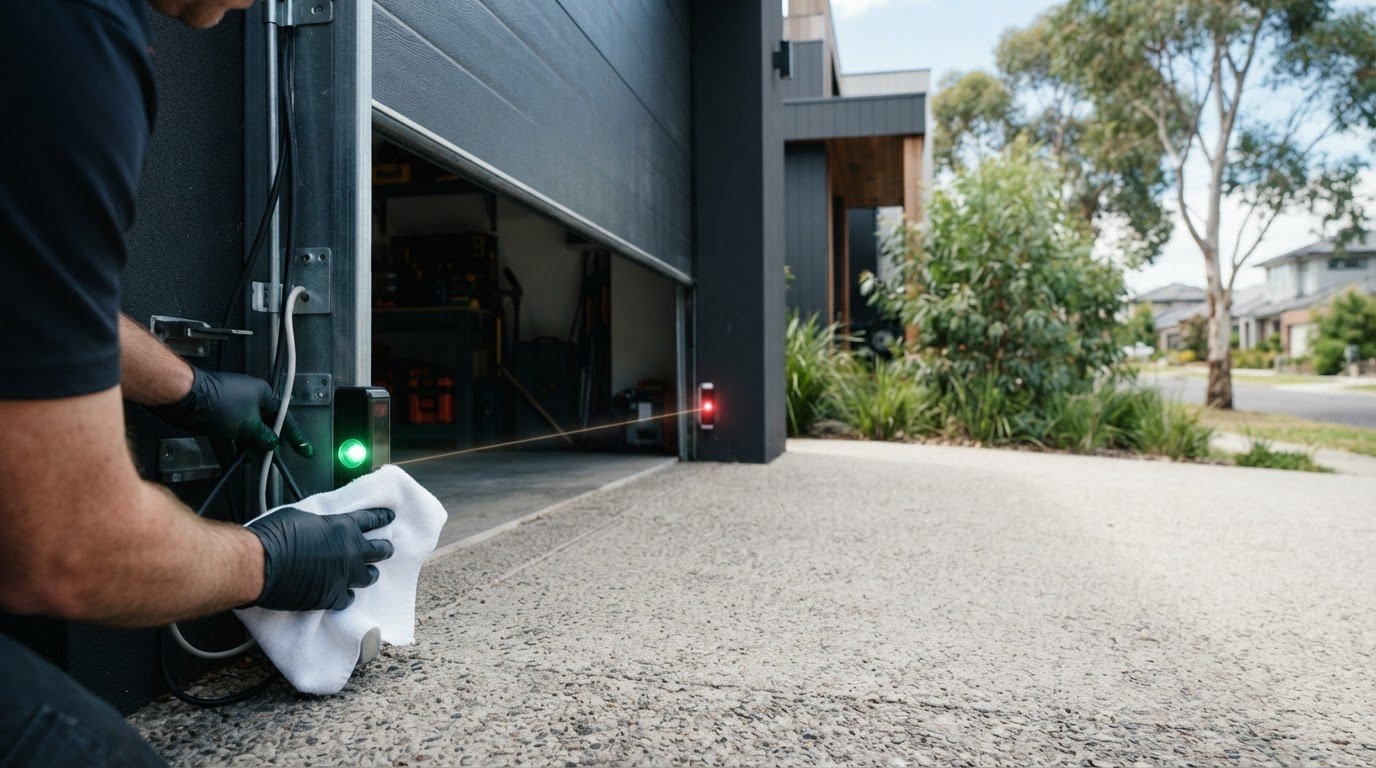
Don’t leave the door unattended in that state. From a safe position, check whether an object is obstructing the doorway or the photo-eye sensors, and clear only what you can reach without touching the door’s moving parts. Don’t bypass the sensors or repeatedly force the opener. If the door still stops short, reverses or behaves unpredictably, stop using it and arrange a repair assessment. Residents in Melbourne, Greenvale, Craigieburn, Mickleham, Roxburgh Park and Wollert can contact We Do Garage Doors for residential repair support.
Comments