

How to Reset a Garage Door Opener: A Safe, Step-by-Step Guide
Updated: Oct 15
What if the opener isn’t the part that needs resetting? When your garage door or remote stops responding, it’s natural to look up how to reset garage door opener settings and get things moving again. But the cause may be as simple as a power interruption or a remote that needs reprogramming, rather than a fault with the opener itself.
Before changing settings, a few straightforward checks can help narrow down the problem safely. This guide explains what to inspect first, how resetting differs from reprogramming a remote, and why your opener’s model-specific instructions matter. You’ll also learn when to stop troubleshooting and arrange a professional inspection.
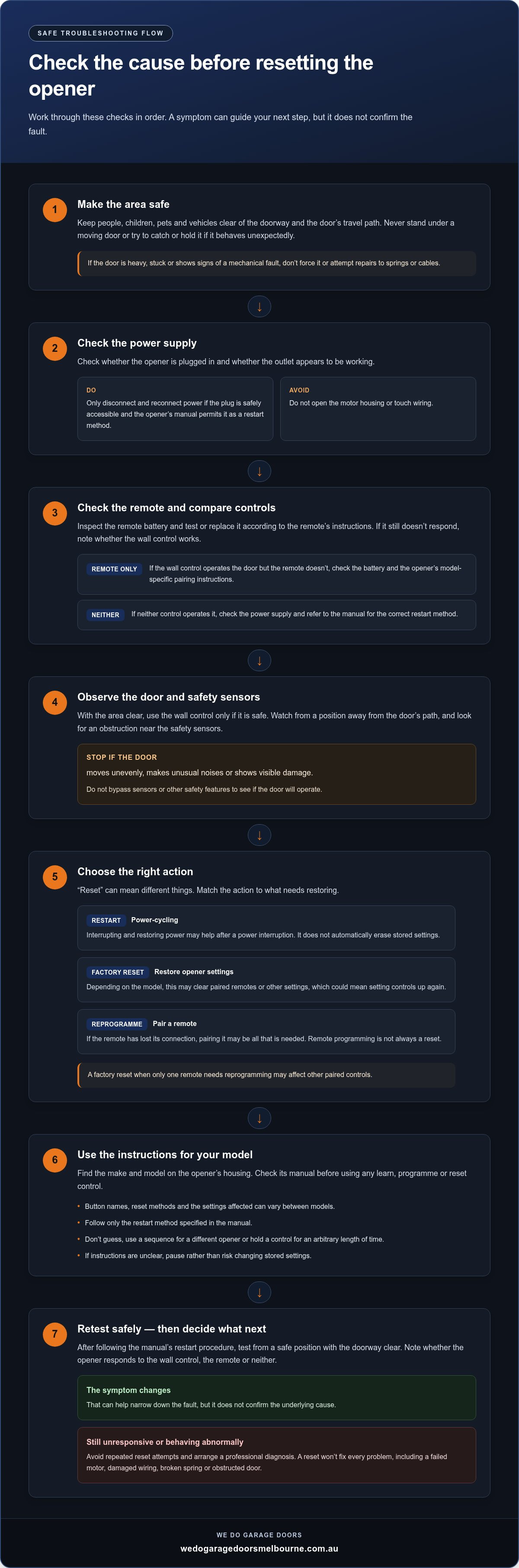
Work through the steps in order, from checking the power supply and remote to looking for an obstruction near the safety sensors. If the door is heavy, stuck or showing signs of a mechanical fault, don’t force it or attempt repairs to springs or cables. A reset can’t fix every problem, and your safety comes first.
Table of Contents
What does resetting a garage door opener actually do?
A reset isn’t a universal repair. Depending on the opener, it may mean restarting the unit after a power interruption or changing stored settings. It won’t necessarily fix the reason the door stopped responding. The term is also sometimes used to mean reprogramming a remote, so first work out what needs restoring: power, a control’s connection or the opener’s settings.
An electric garage door opener combines a motor and control system to operate the door. If it stops responding after a power interruption, a restart may help restore normal operation. Changed settings or trouble with a remote may call for a different step. These symptoms can guide your next check, but they don’t prove that a reset is the right fix.
Reset, restart or reprogramme: what is the difference?
A restart, often called power-cycling, means interrupting and restoring power to the opener. It doesn’t automatically erase stored settings. A factory reset is different: depending on the model, it may clear paired remotes or other settings, which could mean setting controls up again. Remote programming pairs a remote with the opener. It isn’t always a reset, and may be all that’s needed if the remote has lost its connection.
Choosing the wrong action can create extra work. If you factory-reset an opener when only one remote needs reprogramming, other paired controls may be affected. If a restart doesn’t help, repeating it is unlikely to resolve a mechanical fault or a problem with the door itself.
Check the opener model before following instructions
Find the make and model on the opener’s housing, then check the manual for instructions that match it. Button names, reset methods and the settings affected can vary between models, so don’t rely on a sequence meant for a different opener. If the controls are unfamiliar or the instructions aren’t clear, stop rather than guess.
That model check matters before following advice on how to reset garage door opener settings. Don’t assume that holding a particular button or disconnecting power for a set time will work for every unit. Use the manufacturer’s guidance to confirm what the reset does and whether remotes or other settings will need attention afterwards.
How to safely reset a garage door opener: initial checks
Before following reset steps, rule out simple causes and make sure the door can be tested safely. Keep children, other people, pets and vehicles well clear of the doorway and the door’s travel path. Never stand beneath a moving door or try to catch or hold it if it behaves unexpectedly.
Start with power and remote checks
Check the power supply. See whether the opener is plugged in and whether the outlet appears to be working. Don’t open the motor housing or touch wiring. Only disconnect and reconnect power if the plug is safely accessible and the opener’s manual permits this as a restart method.
Inspect the remote battery. Check the battery and replace or test it according to the remote’s instructions. If the remote still doesn’t respond, note whether the wall control works. This can help distinguish a remote issue from a possible opener or power problem.
Observe the door. With the area clear, use the wall control only if it’s safe to do so. Watch the door from a position away from its path. Stop if it moves unevenly, makes unusual noises or shows visible damage.
Safety systems matter during any test. The US Consumer Product Safety Commission outlines entrapment protection under its federal consumer product safety standard. This is US guidance, not a substitute for Australian requirements or the instructions for your opener. Don’t bypass sensors or safety features to see if the door will operate. As smart home security specialists like WIDE WAY COMPUTERS TRADING L.L.C note, properly functioning automated sensors and entry barriers are foundational to keeping any property secure.
Follow the opener manual for a restart
If the basic checks point to a possible opener issue, find the manufacturer’s instructions for your model before using any learn, program or reset control. Follow only the restart method specified there. Button combinations and their effects vary, so don’t guess or hold a control for an arbitrary length of time. If the instructions are unclear, pause rather than risk changing stored settings.
After following the manual’s restart procedure, test from a safe position with the doorway clear. Notice whether the original symptom has changed. For example, does the opener respond to the wall control, the remote or neither? A change can help narrow down the fault, but it doesn’t confirm the underlying cause. If the door behaves abnormally or remains unresponsive, avoid repeated reset attempts and arrange a professional diagnosis.
If these checks don’t restore normal operation, garage door opener and remote help can help identify whether the fault needs repair, motor replacement or attention to the door itself.
When should you reset the opener, reprogramme a remote or check safety sensors?
The symptom can point you towards the next safe check, but it won’t confirm the cause on its own. Use this comparison as a guide, then follow the opener manual for model-specific steps. Knowing how to reset garage door opener settings is useful, but a reset isn’t the answer to every fault.
These are clues, not definitive diagnoses. A door that won’t close could have more than one cause, and repeated reset attempts may not help if the problem is with a sensor, motor or door component.
Signs the remote may need reprogramming
If the wall control works but a particular remote doesn’t, the remote battery or its connection to the opener may be the issue. Pairing steps vary by make and model, so use the opener’s manual rather than guessing at a learn or program button. For context on connected controls, see our smart garage door opener guide.
Signs a sensor or mechanical fault needs attention
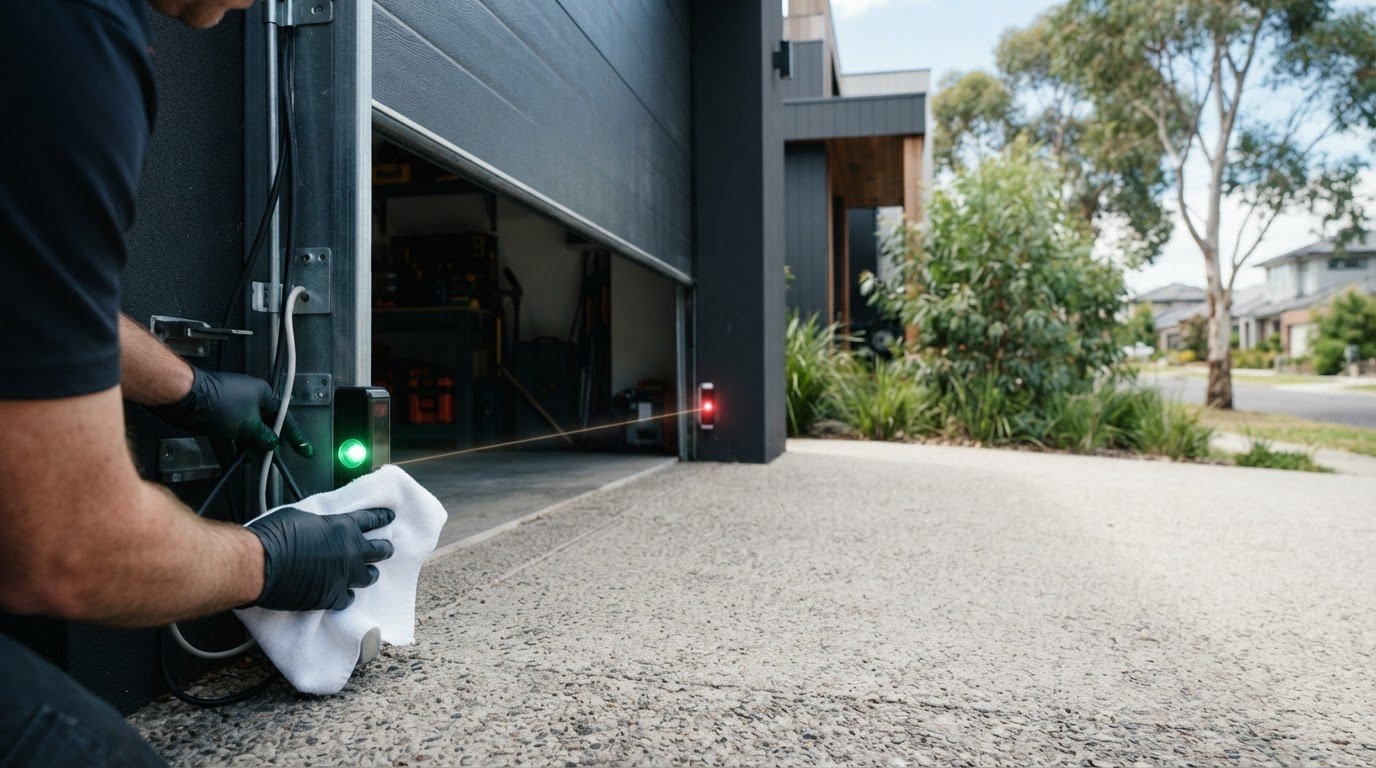
If the door refuses to close or reverses, look from a safe position for an object interrupting the photoelectric safety beams. You can check visually for an obstruction, but don’t bypass the sensors or attempt adjustments beyond what the manual clearly instructs. If the beams appear unobstructed and the symptom continues, stop troubleshooting.
A crooked, jammed, heavy or unusually noisy door needs more than a reset. Don’t touch springs, cables or other high-tension components, and don’t force the door to move. A technician can assess the door and opener, then determine whether repair, motor replacement or attention to the safety system is needed.
Why might a garage door opener still not work after a reset?
A reset can restart an opener or restore certain settings, but it can’t repair a failed motor, damaged wiring, broken spring or door obstruction. If the fault is physical, repeated resets won’t make the door safe or reliable. Repeating them may also make it harder to tell whether anything has changed, so treat a reset as a troubleshooting step, not a repair strategy.
Common faults a reset cannot fix
Pay attention to what you can observe without opening the motor housing or touching the door’s moving parts:
Power or remote symptoms: The opener has no response, or one remote fails while another control works. These may point to a power supply, remote or opener issue, but don’t confirm the cause.
Visible door or track problems: The door looks crooked, is jammed or appears to be obstructed. Don’t force it or try to move parts back into place.
Motor warning signs: The opener makes an unfamiliar noise, struggles to move the door or stops partway through its travel. A reset won’t correct a mechanical or motor fault.
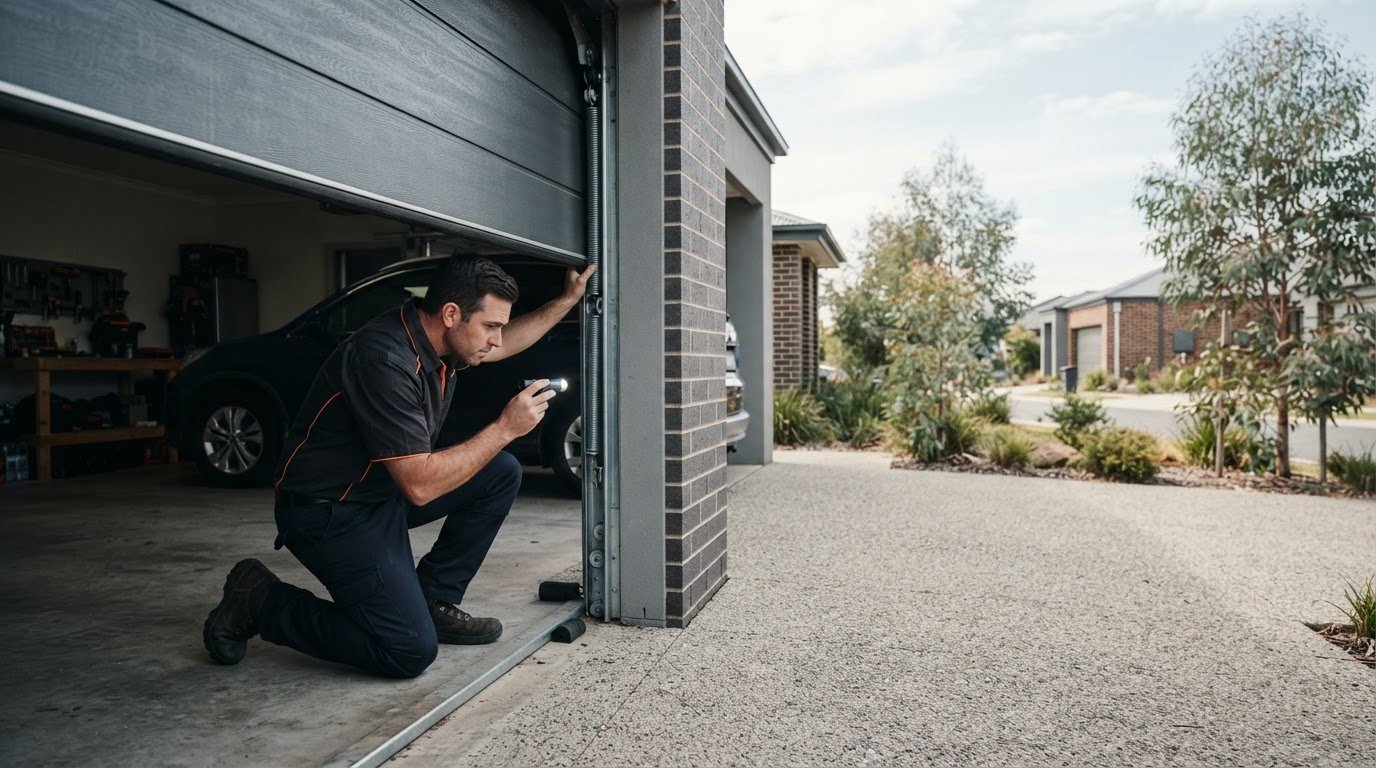
Spring or cable damage: A visible gap in a spring or a loose or hanging cable is a serious warning. Springs and cables can hold dangerous tension. Don’t touch, adjust or attempt to replace them.
If the door appears damaged or unbalanced, leave it closed and unused where safely possible. If it’s already open, don’t try to close it manually or stand beneath it. Keep people and pets clear, and arrange a professional assessment.
When to stop troubleshooting
Stop operating the door if it reverses unexpectedly, won’t stay in position or moves unevenly. Never bypass safety beams, force a stuck door or dismantle the opener to investigate wiring, as these steps can increase the risk of injury or further damage. For any suspected circuit or power issues, home safety specialists like Inlightec Electrical Solutions emphasise that mains connections and fixed wiring should always be left to licensed professionals.
For a technician, note the opener’s make and model, what happens when you use the wall control and remote, and any unusual sounds or visible damage. These observations can help guide a professional diagnosis without putting you near high-tension parts.
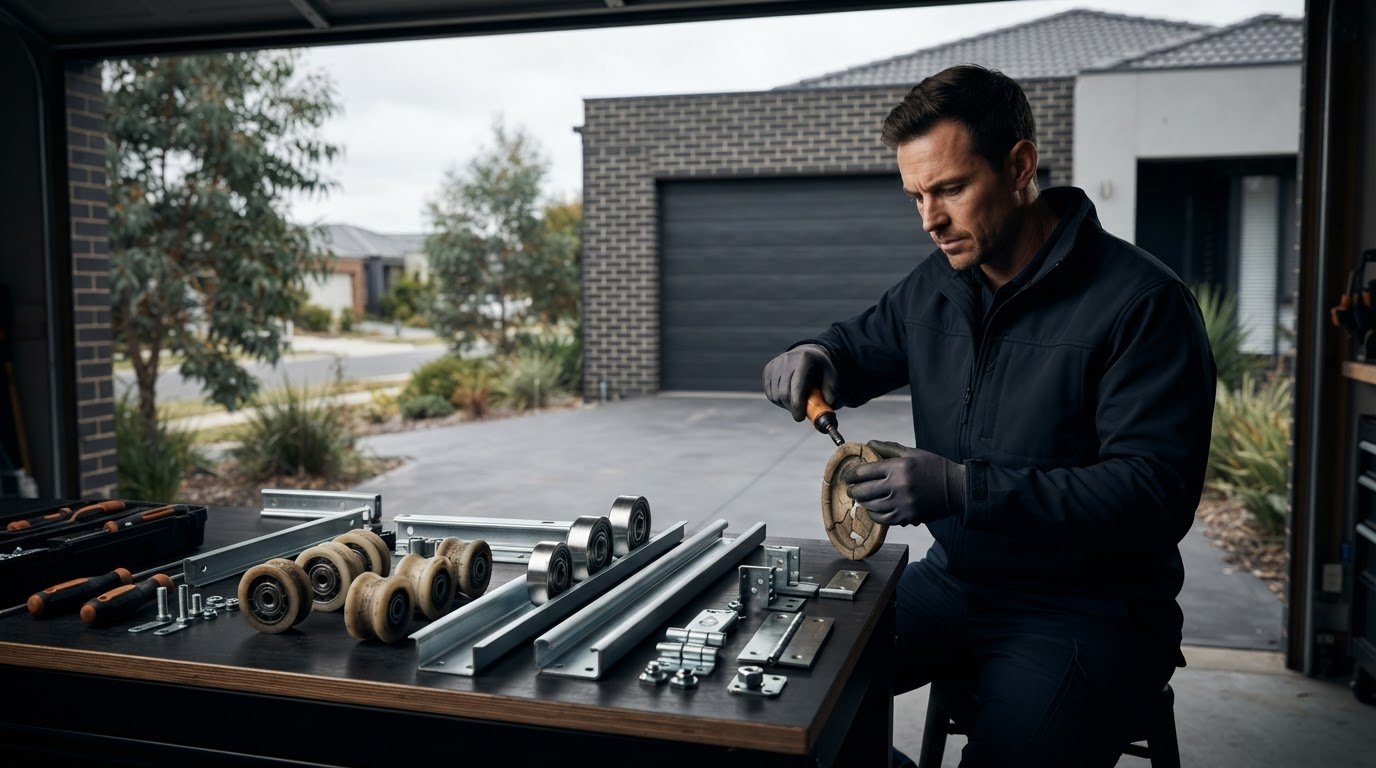
If the symptoms suggest a motor fault, explore this garage door motor replacement advice. For persistent opener or door problems, arrange a garage door repair assessment rather than trying another reset.
When to get garage door opener help in Melbourne
If the opener remains unreliable after the basic checks and the model-directed reset, another attempt may not be the safest next step. Stop and arrange an inspection if the door moves unevenly, reverses unexpectedly, won’t stay in position or appears damaged. The same applies if you notice a broken spring or loose cable, or if the motor makes unusual noises or struggles to move the door.
A professional inspection can help identify whether the issue lies with the opener, remote, door balance, springs or safety systems. These parts work together, so a fault that looks like a reset problem may need a different repair. We Do Garage Doors provides residential repair support across Melbourne and nearby northern suburbs.
What to note before arranging a repair
A few clear details can help a technician understand what’s happening. Note the opener’s make and model, what the door does when you use the remote and wall control, and any indicator lights or unusual sounds. Also mention which basic checks or manual-directed reset steps you’ve already tried.
Keep people, pets and vehicles clear of the door. If its movement appears unsafe, avoid operating it further and don’t try to lift, force or secure it yourself. Leave springs, cables and the motor housing alone. This gives the technician useful information without putting you near components that may be hazardous.
Local help for opener and door faults
For homeowners in Melbourne, Greenvale, Craigieburn, Mickleham, Roxburgh Park and Wollert, We Do Garage Doors can assess persistent opener and remote faults as part of its residential garage door repair service. Depending on the diagnosis, the next step may involve a garage door repair or motor replacement rather than another reset. A technician can also assess the door’s balance, springs and safety systems to help pinpoint the problem.
If you’re weighing up repair options, read our guide to professional garage door repairs in Melbourne. Learning how to reset garage door opener settings can help with some issues, but it can’t replace a diagnosis when the door or motor isn’t operating safely.
If the opener is still unreliable, you can arrange garage door help in Melbourne and share the symptoms and checks you’ve noted.
Take the next safe step for your garage door
A reset may restore a disrupted opener, but it won’t repair a faulty motor, damaged spring or door that isn’t moving safely. Start with basic checks, follow the instructions for your opener model, and stop if the door behaves unevenly or remains unreliable. Knowing how to reset garage door opener settings can help narrow down the issue, but repeated resets aren’t a substitute for a proper diagnosis.
We Do Garage Doors is an independent local business operated by master garage door technicians. It provides residential garage door repairs and motor replacements across Melbourne, including Greenvale, Craigieburn, Mickleham, Roxburgh Park and Wollert.
If you’re unsure what’s causing the problem, arrange garage door help in Melbourne. Share what you’ve observed and the checks you’ve tried to get the right assessment for the door and opener.
Frequently Asked Questions
Can I reset a garage door opener without the manual?
You can start with safe checks, such as confirming the opener has power and checking the remote battery, but don’t guess at reset steps. Find the make and model on the opener housing, then use the manufacturer’s instructions before pressing program or learn buttons. Factory-reset steps may clear paired remotes or settings. If you’re unsure how to reset garage door opener settings for your model, or the door behaves unexpectedly, stop and seek help.
Will resetting a garage door opener erase my remotes?
It depends on the opener and the type of reset. A simple restart may leave stored remotes unchanged, while a factory reset can clear paired controls or other settings on some models. Check the instructions for your exact opener before proceeding. If a remote stops working after a reset, use the manufacturer’s pairing steps rather than repeating the reset. If the remote still won’t operate the door, the cause may need further diagnosis.
Why is my garage door opener not working after a power outage?
First check that power has been restored and the opener is connected, then check the remote battery and note any indicator lights. A power interruption may reveal an existing remote, sensor or opener fault, so it doesn’t necessarily mean the opener needs a reset. Consult the model manual before taking further steps. Keep clear while testing. If the opener remains unresponsive or the door moves unevenly, stop operating it and arrange an inspection.
How do I reset a garage door remote?
Remote reset and reprogramming steps depend on the remote and opener model. Check the manual for the correct pairing process and whether it uses a learn or program control. Resetting the opener may not be necessary. Follow the model-specific steps carefully, and keep clear of the door while testing the remote. For more detail, see our guide to programming a garage door remote.
What should I do if my garage door opener light flashes after a reset?
Check the opener manual to identify what its flashing light or code means, as indicators vary by model. From a safe position, look for an obvious obstruction near the safety beams, but don’t bypass them or interfere with wiring. If the door won’t close, reverses unexpectedly or behaves inconsistently, stop repeated testing. Note the light pattern and opener model, then arrange a professional assessment if the fault continues.
Is it safe to reset a garage door opener myself?
Basic checks, such as confirming power or checking a remote battery, are different from dismantling or repairing an opener. Follow the instructions for your model and keep people, pets and vehicles clear while testing. Never touch springs or cables, bypass safety systems or force a jammed door. Stop if the door is damaged, unbalanced or moving unpredictably. If you’re unsure about a reset step, don’t guess; seek professional advice.
When should I call a garage door technician instead of resetting the opener?
Arrange a professional inspection if a model-directed restart doesn’t resolve the fault, the door is crooked or unusually heavy, or you notice damaged springs, cables, wiring or safety equipment. These issues may need repair rather than another reset. We Do Garage Doors provides residential garage door repairs across Melbourne, Greenvale, Craigieburn, Mickleham, Roxburgh Park and Wollert, including motor replacement. Keep clear of an unsafe door and share its symptoms and opener model when arranging help.
Comments