

How to Safely Adjust Garage Door Springs & Cables (2026)
Updated: Oct 16
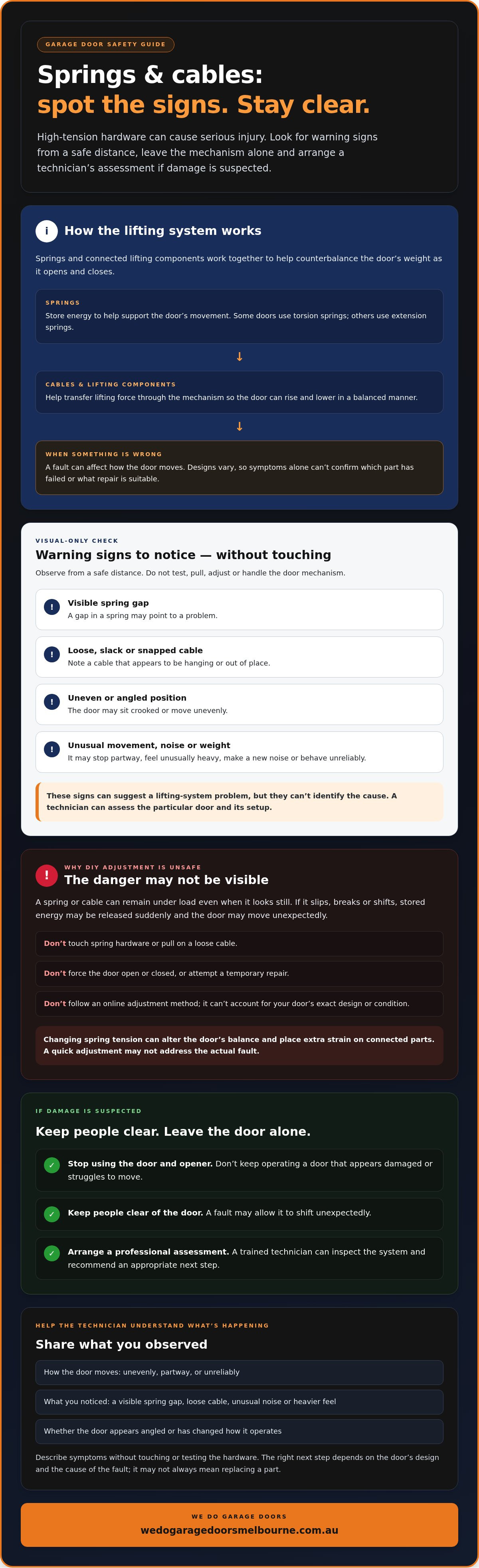
If you’re searching for how to adjust garage door springs and cables, it’s understandable: a door that feels heavy, moves unevenly or makes a sudden bang can be worrying. But springs and cables are under high tension, and trying to handle them can cause serious injury. The safest next step is to leave the hardware alone and arrange an assessment.
You can still look for warning signs without touching the door. A visible gap in a spring, a loose or snapped cable, or a door that stops partway may point to a problem, but symptoms alone can’t confirm the cause. If you notice anything unusual, keep people clear of the door and don’t attempt to adjust the springs or cables.
This guide explains how springs and cables work, what you can safely check, and when to arrange a technician’s assessment. You’ll also learn what details to share so a professional can understand what’s happening and recommend an appropriate next step.
Table of Contents
How garage door springs and cables work, and why a fault matters
A garage door that sits crooked, feels unusually heavy, makes a new noise or behaves unreliably can quickly become a source of stress. Springs and cables are part of the system that helps the door move in a controlled way. Understanding their general roles can help you recognise when something may be wrong, without touching or testing the hardware.
A garage door counterbalance system uses spring force and connected lifting components to offset the door’s weight as it opens and closes. The springs store energy to help support the door’s movement, while cables help transfer that lifting force through the mechanism. Designs vary, so the parts and their arrangement aren’t identical on every residential door. For a neutral overview of how garage door spring and counterbalance systems work, you can read more about different door mechanisms.
What do garage door springs and cables each do?
Some doors use torsion springs, while others use extension springs. Their position and relationship to the lifting components depend on the door’s design. Cables work as part of that system, helping the door rise and lower in a balanced manner. This is why a cable or spring problem can affect the door’s movement, but the right assessment depends on the particular setup. There isn’t one repair method that suits every door.
What can happen when one component fails?
A door may move unevenly, sit at an angle, stop partway or feel heavier than usual. You might also notice a cable hanging slack or a sudden change in how the door operates. These signs can suggest a problem in the lifting system, but they can’t confirm which component has failed. A technician can assess the door and identify the cause.
Don’t force a door that appears damaged or struggles to move. Continuing to operate it may put extra strain on connected parts, worsen the fault or allow the door to shift unexpectedly. If you’re researching how to adjust garage door springs and cables, remember that noticing a possible issue is different from handling the hardware. Leave the mechanism untouched and focus on describing what you’ve observed.
Why adjusting garage door springs and cables is not a safe DIY job
A visible bolt, bracket or cable can make the problem look like a simple adjustment. But seeing a component doesn’t reveal how much force is stored in the system or whether another part is damaged. Visual inspection is for noticing possible faults; handling loaded springs and cables is work for a trained technician.
Garage door springs hold mechanical energy to help move the door’s weight. If a spring or cable slips, breaks or shifts, that energy can be released suddenly. The door may also move unexpectedly, creating a risk of serious injury or damage to vehicles, belongings or the door itself. The Door & Access Systems Manufacturers Association (DASMA) explains these risks in its garage door safety tips and recommends trained technicians for spring and cable work.
Why are high-tension springs and cables hazardous?
The danger isn’t always obvious from the outside. A part that looks still may remain under load, and a fault elsewhere can affect how the system behaves. Door designs and conditions vary, so the appropriate procedure depends on the equipment and what has failed. A method that appears to suit one door may be unsafe for another.
Why can a quick DIY adjustment make the fault worse?
Changing spring tension can alter the door’s balance and movement, while placing extra strain on connected components. If the actual problem is a damaged cable or another fault, changing tension won’t necessarily address the cause. It may leave the door less stable or make further damage more likely.
Don’t pull on a loose cable, touch spring hardware or try to force the door open or closed. Avoid following online demonstrations to work out how to adjust garage door springs and cables; they can’t account for your door’s exact design or condition. Keep people clear and arrange a professional assessment instead. A technician can inspect the system and recommend a suitable next step, which may not always mean replacing a part.
If you’re in Melbourne and concerned about a spring or cable, you can enquire about a garage door assessment and describe what you’ve noticed.
How to identify a spring or cable problem without adjusting anything
You can note warning signs without touching the door or its hardware. Keep your observations visual only. Don’t stand beneath the door, approach loose components or try to see whether the door still works. These clues can help a technician understand what’s happening, but they can’t confirm the cause on their own.
What signs may point to a spring or cable fault?
From a safe position, look for a door that sits unevenly, a cable that appears slack or hangs down, a visible gap in a spring, or movement that looks jerky or out of balance. A sudden loud bang from the garage may also point to a component failure, but it isn’t a diagnosis. Note what you saw or heard, then leave the inspection to a technician.
Similar symptoms can have different causes. For instance, a door that doesn’t move could involve the opener, an obstruction or a problem with the door mechanism. Avoid trying to distinguish between them by operating the door. A technician needs to assess the full system before recommending a repair.
What should you check from a safe distance?
Stay clear of the doorway and moving parts. Without touching anything, observe the door’s position and any hardware you can see from a safe location. Keep children, pets and other household members away from the affected area, particularly if the door is crooked, partly open or appears unstable.
Position: Does the door appear level, or is one side higher?
Visible hardware: Is a cable hanging loose, or does a spring appear to have a gap?
Recent behaviour: Did the door move unevenly, stop partway, or make an unusual noise?
Timing: When did you first notice the change, and what happened just before it?
Don’t test the door’s balance by lifting or lowering it, and don’t disconnect it from the opener to investigate. Those actions can cause the door to move unexpectedly. A search for how to adjust garage door springs and cables shouldn’t turn into a hands-on check. Leave the components alone and share your observations with a technician instead.
A clear description is useful: explain what you noticed, when it began and whether the door was moving at the time. The technician can inspect the particular door and determine whether the issue relates to a spring, cable, opener, track or another component before suggesting an appropriate next step.
What to do when garage door springs or cables look damaged
If a spring or cable appears damaged, prioritise keeping people away from the door rather than trying to make it usable. Don’t use the opener, move the door by hand or attempt a temporary cable repair. A door that looks partly open or crooked may shift unexpectedly, so leave the mechanism alone and arrange a professional assessment.
What should you do immediately after spotting damage?
Stop operating the door. Don’t press the opener button or try to open or close the door manually.
Keep clear. Don’t stand underneath the door, touch the spring or cable, or try to secure loose hardware.
Restrict access where practical. Keep children, pets and other household members away from the garage door and its operating area.
Leave the mechanism as it is. Don’t disconnect the opener or release any part of the door system unless a technician directs you to do so.
Arrange an assessment. Explain what you’ve noticed and ask about suitable next steps for your door.
Resist the temptation to look up how to adjust garage door springs and cables and try a quick fix. A temporary repair, including pulling a loose cable back into place, can disturb loaded components and may make the situation less safe. The appropriate repair depends on what’s damaged and the door’s configuration.
What information helps a technician assess the problem?
A clear description helps the technician understand the situation before assessing the door. Share whether it’s stuck open or closed, sitting crooked, moving unusually or making a new noise. Mention when you first noticed the issue and whether anything changed beforehand, such as the door stopping during operation.
If you can take a photo from a safe distance without approaching the door or standing beneath it, you can offer it as a visual reference. Don’t put yourself at risk to get a closer view. Also provide your suburb so service availability for your Melbourne area can be confirmed. These details help the technician prepare to assess the problem, but they don’t replace an inspection or confirm which part needs attention.
For more on why spring work needs careful professional handling, read the garage door spring replacement safety guide. If your door appears damaged, request a garage door assessment and share the symptoms you’ve observed.
When to call a Melbourne garage door technician for springs or cables
Arrange a professional assessment if a spring or cable looks damaged, loose or out of position, or if the door’s movement has changed noticeably. You don’t need to identify the failed part yourself. A technician can inspect the door, investigate what may be causing the problem and recommend suitable repairs based on its condition.
What happens during a professional spring and cable assessment?
The technician considers the door’s design, the condition of its visible components and how the system is operating. These observations help them investigate the cause rather than relying on symptoms alone. The next step might involve a repair, spring replacement or another recommendation, depending on what the assessment finds. A diagnosis doesn’t automatically mean every component needs replacing.
Trying to work out how to adjust garage door springs and cables can’t replace an assessment of the specific door. Spring and cable arrangements vary, and a symptom such as uneven movement may have more than one possible cause. Keep the mechanism untouched and tell the technician what you’ve noticed, including when the issue began and whether the door was moving at the time.
How can Melbourne homeowners arrange the next step?
We Do Garage Doors provides residential garage door repairs and spring replacement in Melbourne and nearby suburbs. Homeowners in Melbourne, Greenvale, Craigieburn, Mickleham, Roxburgh Park and Wollert can enquire about assistance and confirm current service availability for their area.
Before arranging a visit, ask what information the technician needs and whether service is available for your suburb. Describe the door’s position, any visible damage and changes in how it operates. If you’re contacting someone about a door that appears unsafe, mention this when you enquire so they can advise you on the appropriate next step.
For other garage door concerns, the broader Melbourne garage door repairs guide may help you understand what to ask about. If a spring or cable looks damaged, loose or displaced, contact We Do Garage Doors to enquire about a professional assessment. A clear description of the symptoms can help start the conversation, with the technician recommending a suitable repair only after inspecting the door.
Choose a safer next step for your garage door
A crooked, heavy or unreliable garage door can be unsettling, but you don’t need to diagnose the fault yourself. Springs and cables work under tension, so keep clear of damaged hardware, avoid operating the door and leave hands-on assessment to a technician. Visual signs can help you explain the issue, but they can’t confirm which part needs attention.
Understanding how to adjust garage door springs and cables starts with knowing when not to attempt an adjustment. Share what you’ve noticed and when it began, then let a technician inspect the door and recommend an appropriate repair. Not every symptom means a spring needs replacing, so an assessment helps establish the cause first. Once essential safety repairs are taken care of, homeowners looking to optimise the rest of their setup can also consult resources by The Garage RX for practical inspiration on designing an organised, functional garage workspace.
We Do Garage Doors provides residential garage door repairs, including spring replacement, across Melbourne and nearby suburbs. If you’re concerned about your door, contact We Do Garage Doors for a professional assessment and describe the symptoms. With the right guidance, you can take a calm, safety-first step towards getting your garage door working reliably again.
Frequently Asked Questions
Can I adjust garage door springs and cables myself?
No, don’t adjust garage door springs or cables yourself. They can hold significant tension, and a component may shift or release suddenly if handled. Searching for how to adjust garage door springs and cables can’t account for your door’s design or condition. Keep clear of the hardware, don’t operate the door if it appears damaged, and arrange a technician’s assessment to identify the cause and recommend a safe next step.
How do I know if my garage door spring or cable is broken?
You may notice a visible gap in a spring, a slack or hanging cable, a door sitting unevenly, or movement that has become noisy or unreliable. A loud bang may also signal a component failure. These signs can point to a problem, but they don’t prove which part has failed. Don’t touch the hardware or test the door; have a technician inspect it and confirm the cause.
What should I do if a garage door cable comes loose?
Stop using the door and keep people clear of it. Don’t pull the loose cable, attempt to put it back in place, or try a temporary repair. Avoid using the opener or moving the door manually, as it may shift unexpectedly. Where practical, prevent children and pets from entering the affected area. Contact a garage door technician and describe what you can see from a safe distance.
Is it safe to open a garage door with a broken spring?
No, don’t try to open a door if you suspect a spring is broken. The door may be heavier or less controlled than usual, and operating it could cause unexpected movement or put added strain on other components. Don’t lift it manually or use the opener. Keep clear, restrict access to the area where practical, and arrange a professional assessment before using the door again.
Can a garage door still work with a damaged cable?
It may still move, but that doesn’t mean it’s safe to operate. A damaged or displaced cable can affect how the door travels and may be associated with uneven movement or a crooked position. Don’t use the opener to see whether it still works, and don’t try to move the door by hand. Keep clear and ask a technician to assess the door and identify the fault.
Should I use my garage door opener if a spring or cable looks damaged?
No, don’t use the opener if a spring or cable appears damaged, loose or out of position. Operating the door can cause unexpected movement or place further strain on the system. Leave the opener and door alone, keep household members away from the area, and contact a technician for advice. Tell them what you’ve observed and whether the door is open, closed or sitting unevenly.
When should I call a garage door technician in Melbourne?
Arrange an assessment if you see a damaged, loose or displaced spring or cable, hear a sudden bang, or notice the door moving unevenly or becoming unusually heavy. We Do Garage Doors provides residential garage door repairs, including spring replacement, across Melbourne and nearby suburbs such as Greenvale, Craigieburn, Mickleham, Roxburgh Park and Wollert. Enquire about service availability in your area and share the symptoms you’ve noticed.
Comments