

How to Secure a Garage Door Against Remote and Vehicle Break-Ins
A garage door can be a weak point even when the rest of your home feels secure. Learning how to secure your garage door from break-ins means considering three layers: a sound door and locking system, protected remotes or smart controls, and everyday habits that keep access out of sight and out of reach.
A locked door alone may not be enough: intruders can target the door itself or its opener. Understanding how to secure your garage door from break-ins starts with recognising the risks posed by damaged doors, exposed release mechanisms and remotes left in vehicles. The right measures depend on your door and how your household uses it.
This guide explains how to match security measures to your home, reduce risks linked to fixed-code remotes and smart systems, and recognise common lock and vehicle break-in methods. You’ll also learn when a professional assessment, repair or upgrade can help strengthen the parts that matter most.
Table of Contents
How Can a Professional Secure a Garage Door to Suit Your Home?
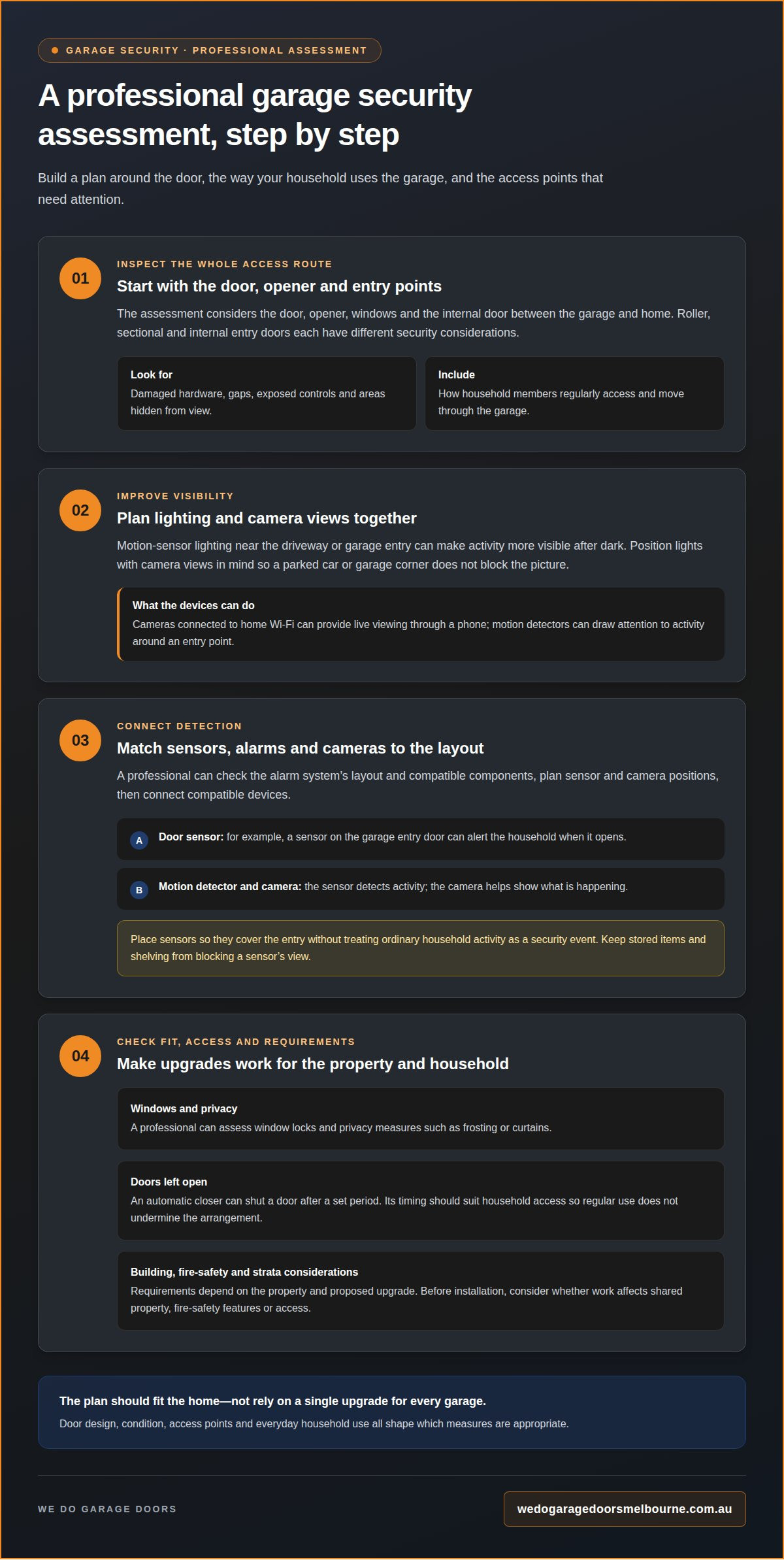
A professional assessment considers the door, opener, windows and access between the garage and home. Roller, sectional and internal entry doors each raise different security considerations. An inspection can identify damaged hardware, gaps, exposed controls and areas hidden from view, giving you a practical starting point instead of relying on a single upgrade for every home.
Motion-sensor lighting near the driveway or garage entry can make activity more visible after dark. Light placement should work with camera views, so a parked car or garage corner doesn’t block the picture. Cameras connected to home Wi-Fi can provide live viewing through a phone, while motion detectors can draw attention to activity around an entry point.
To connect garage security to an alarm system, first consider the system’s layout and compatible components. A professional can plan where door sensors, motion detectors and cameras should sit, then connect compatible devices. For example, a sensor on a garage entry door can alert the household when it opens. The setup should account for how residents use the garage, including regular access through an internal door.
A garage alarm adds another layer by drawing attention to an opening or movement. Sensors should cover the garage entry without treating ordinary household activity as a security event. Smart cameras and alarms can complement each other: a sensor detects activity, while a camera helps show what is happening. Shelving or stored items should not block a sensor’s view.
Australian building, fire-safety and strata requirements depend on the property and proposed upgrade. A professional should consider whether work affects shared property, fire-safety features or access before installation.
For garage windows, a professional can assess locks and privacy measures such as frosting or curtains. To reduce the chance of a door remaining open, an automatic closer can shut it after a set period. Its timing should suit household access, so regular use doesn’t undermine the security arrangement.
2. Risks from fixed-code remotes and insecure smart garage systems
A fixed-code remote sends the same signal every time you use it. If thieves capture or copy that signal, they may be able to operate a compatible opener. Older remote systems can therefore pose different risks from newer controls. A professional can assess the opener and remotes, then explain whether repairs or a control upgrade better suits the existing door.
Smartphone control changes where access is managed, but it still needs careful setup. A weak account password, shared login or former household member with access can undermine the convenience of an app. Professional guidance can cover setting up the app, choosing a strong, unique password and reviewing who can operate the door. Remove access that’s no longer needed, such as a former resident’s account.
Keypads create another entry point. A PIN that’s easy to guess, reused across several devices or visible while being entered can make access less secure. A professional can position a keypad where users can operate it discreetly and explain how to manage its code. Smartphone-controlled access can be more suitable for households that need to manage users without handing out another physical remote.
Timers can reduce the chance of leaving the door open after you leave. A professional can assess whether a compatible control can close it after a set period, taking regular household access into account. Smart lighting can also be scheduled to illuminate the garage or driveway when residents arrive. It improves visibility but doesn’t replace secure access controls or a properly operating door.
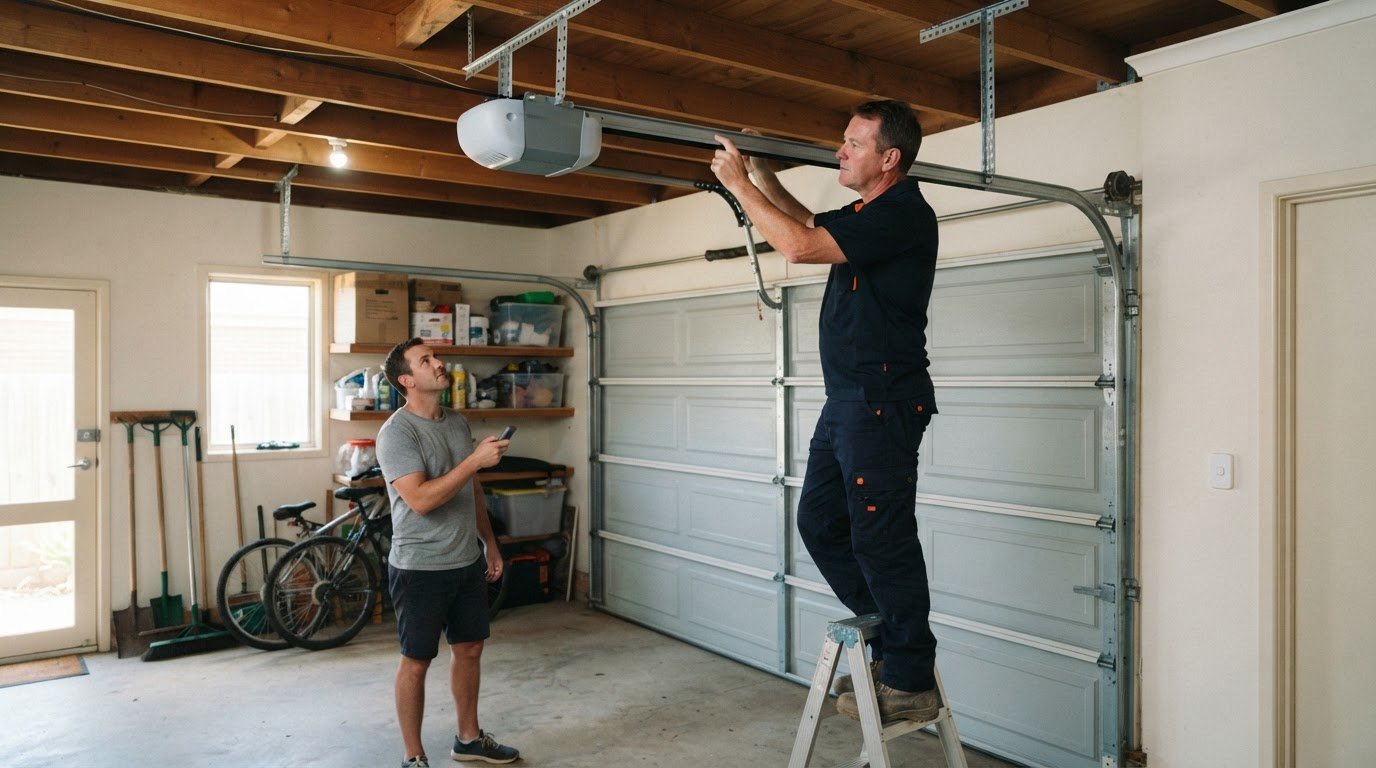
Before linking an app, keypad or timer to an opener, a professional can check that the control suits the door and its motor. The setup should be easy for household members to use and straightforward to manage when access changes. If the existing opener needs attention, smart door control can be considered as part of a security upgrade.
3. Garage-door opener backdrive protection and deadbolt locks
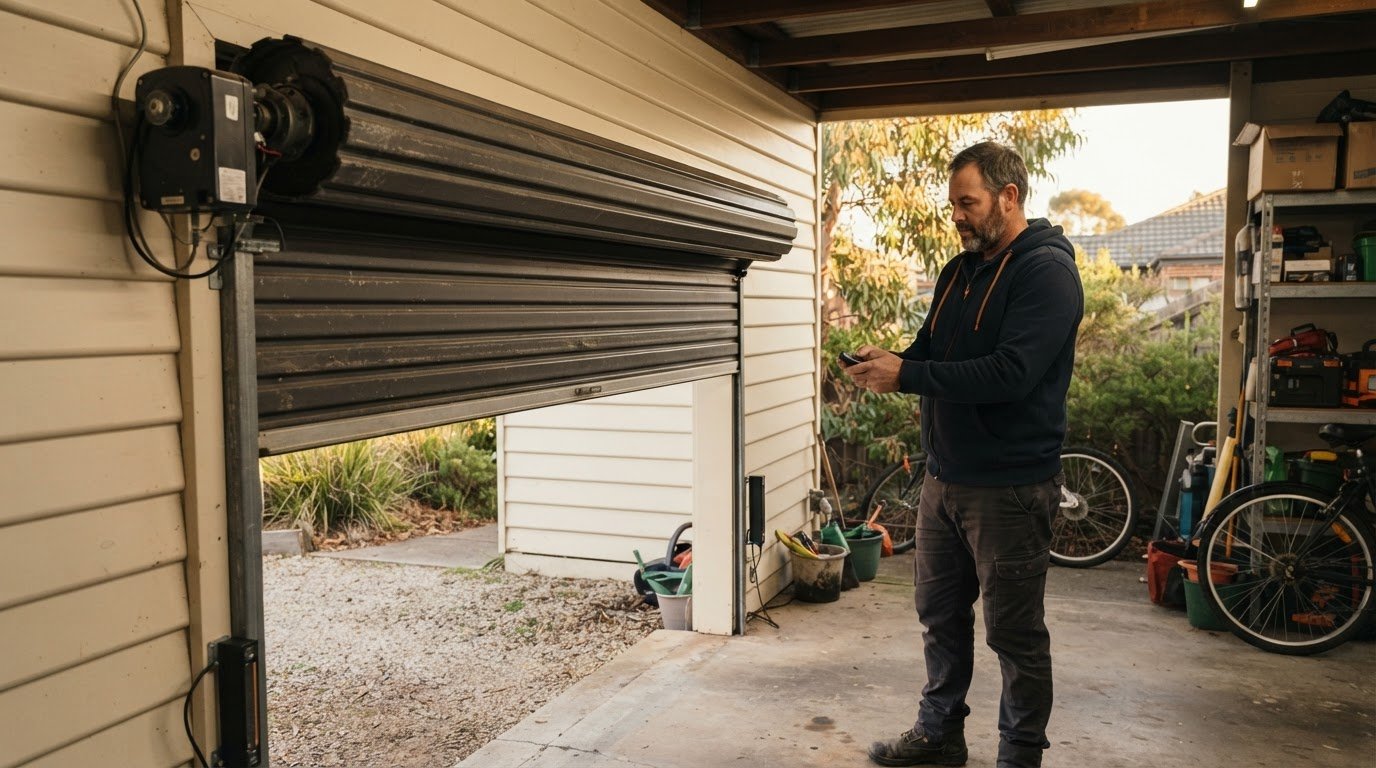
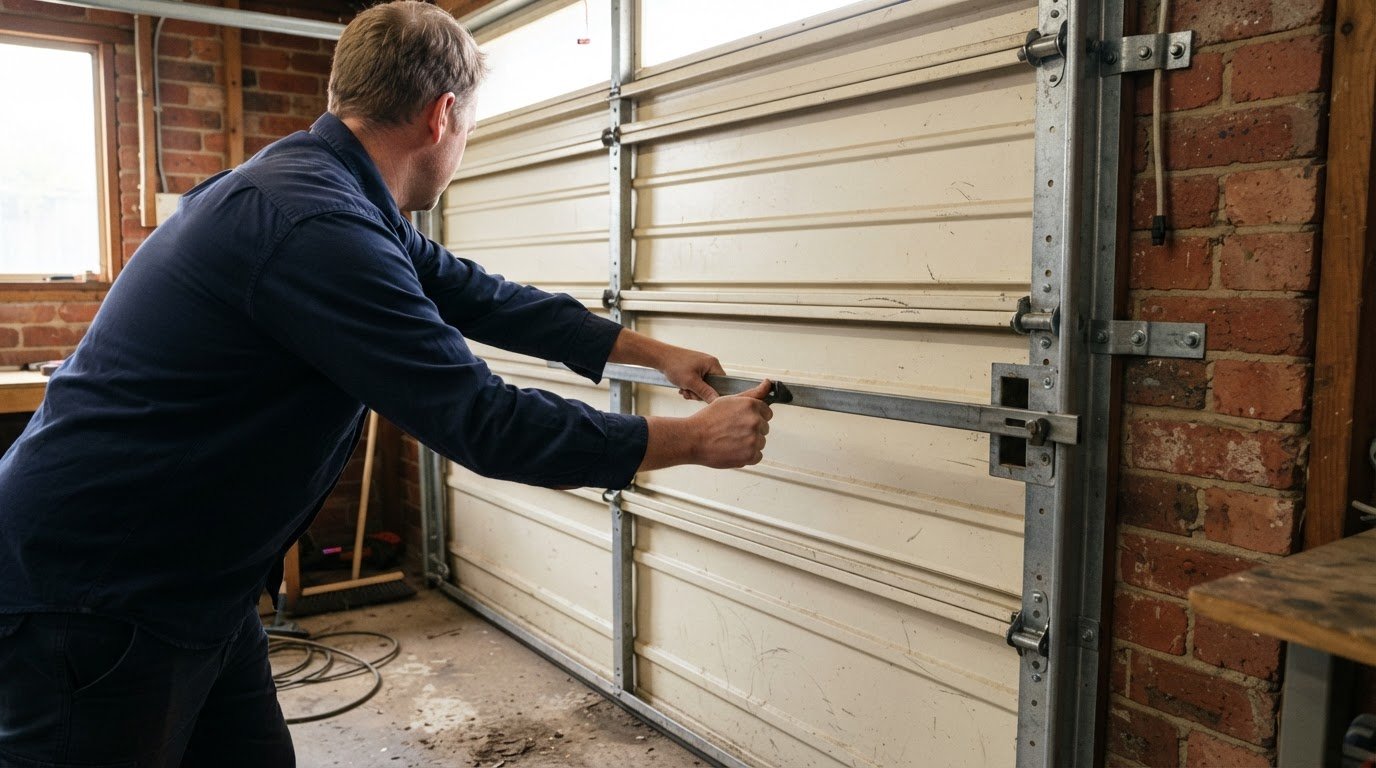
An opener makes a garage door convenient, but it shouldn’t be the only barrier. If the mechanism is compromised, a manual locking bar or ground anchor can help stop a roller door being lifted. A professional can assess whether either option suits the door and opener, and ensure added hardware won’t interfere with normal operation.
Older roller doors may have weak locking points or gaps that allow access to the release mechanism. A shield or cover can make the emergency release harder to reach from outside. A professional can fit protection while preserving the release’s emergency function. Extra physical locks need care: operating an electric door while a lock remains engaged can damage it.
Security upgrade costs depend on the door, its condition, required parts and work. Pricing is given after a quote request.
For the internal door between the garage and home, a professional can assess the lock, frame and strike plate. A deadbolt adds a separate locking point, while a reinforced strike plate and longer screws can strengthen the area where the bolt meets the frame. The door’s condition and existing hardware guide the upgrade.
Euro cylinder locks on garage personnel doors can be upgraded with anti-snap, anti-bump and anti-drill features. A professional can match the lock to the door and reinforce its fittings, rather than treating the cylinder as the only weak point. Roller doors may also benefit from locking slats that engage when closed, making the curtain harder to lift from the bottom.
With an automatic door, the emergency release needs protection without being disabled. A professional can fit a cover over the release mechanism or secure its handle with a breakable tie, allowing access during an emergency. The right approach depends on the opener and release layout. If the door or lock is damaged, have the garage door assessed to identify suitable repairs and security improvements.
4. Common vehicle garage door break-in methods
A vehicle can be involved in a garage break-in in more than one way. Burglars may target a remote left inside a car parked outside, then use it to open the garage. A vehicle can also be used to apply force to a vulnerable door. Single-skin metallic up-and-over doors can dent near the bottom centre under pressure, creating an opening. Learning how to secure your garage door from break-ins means considering both the door’s construction and access to its controls.
Damage may be less obvious than a fully open door. A dent, bent edge, damaged lock or door that no longer sits evenly can indicate an attempted entry. These faults can also make the door easier to force next time. After an impact, don’t assume the opener still makes the door secure. A professional can assess the door, its locking points and operation before recommending repairs or replacement parts.
After a break-in or attempted break-in in Australia, prioritise personal safety and avoid disturbing the damaged area. Report the incident to police, document visible damage and missing property, and contact your insurer. If the garage door won’t close or lock, keep the area secure while arranging repairs—relocating valuable tools or possessions to secure facilities like SafeHouse Storage can help keep them safe while access remains compromised. Don’t operate a visibly damaged door, as an impact can affect its balance and moving hardware.
Vehicle-related damage needs a proper repair assessment, not just a cosmetic fix. A technician can inspect the panel, tracks, locks and opener to identify damage that affects safe operation or security. For households considering how to secure your garage door from break-ins after an attempted vehicle entry, the right repair depends on the door’s construction and the impact location. If a vehicle has struck your door or an attempted entry has left it insecure, arrange a garage door repair to restore its operation and address damaged security points.
We Do Garage Doors
We Do Garage Doors repairs residential garage doors across Melbourne, including Greenvale, Craigieburn, Mickleham, Roxburgh Park and Wollert. If a damaged door, unreliable motor or outdated controls are affecting security, a professional assessment can identify whether a repair, motor replacement or spring replacement is relevant. Smart door controls can also be retrofitted to a compatible existing door and motor.
Each home has different access points and routines, so address the issue you’ve noticed rather than adding technology without a clear purpose. If your door has impact damage or its motor is no longer operating properly, We Do Garage Doors can assess the fault and recommend a suitable repair or upgrade.
Contact We Do Garage Doors to discuss your garage door security needs.
Make your next security step a considered one
Deciding how to secure your garage door from break-ins starts with the part that concerns you most: the door’s condition, its operation or the way you control access. A professional assessment can identify a suitable next step without adding upgrades that don’t address your household’s needs.
We Do Garage Doors offers garage door repairs, motor replacement and spring replacement. These services can help when a fault or damaged component affects the door’s reliable operation. A discussion about your door and how you use it can help clarify which service is relevant to your security concerns.
If you’re ready to talk through the issue, contact We Do Garage Doors. A clear, practical plan can make it easier to move towards a garage that feels more secure.
Frequently Asked Questions
Are electric garage doors secure?
Electric operation doesn’t automatically make a garage door secure: the door’s condition, locking points and opener all matter. A worn door or exposed release mechanism can leave weaknesses despite motorised operation. Added physical locks must also work with the opener, because operating an electric door while a lock remains engaged can damage it. Have the complete setup and its compatibility assessed.
Can burglars open garage doors?
Yes, burglars can exploit weaknesses in some garage doors or their access controls. An older door may have a vulnerable locking point, while a remote left inside a vehicle parked outside can provide access. A compromised opener can also leave a roller door susceptible to lifting. Keep remotes secure and arrange an assessment if the door no longer closes or locks properly.
How do burglars break into Australian garage doors?
Common approaches include exploiting older locks, reaching an emergency release through a gap, or taking advantage of a remote inside an accessible car. Some older roller doors can be opened using simple tools, while a single-skin metallic up-and-over door may be vulnerable to force near its bottom centre. The exact weakness depends on the door design, condition and access around it.
What are the best professional ways to reinforce a garage door against forced entry?
The right reinforcement depends on the door’s design and the point most susceptible to force. A professional can assess a manual locking bar or ground anchor for a roller door and inspect its locking points and frame. If impact has caused a dent or misalignment, repairs should address function as well as appearance. Any reinforcement must remain compatible with the opener.
Which garage door locks and security bars are effective in Australia?
Suitable options depend on whether the door is a roller door, an internal garage entry door or another design. A manual locking bar or ground anchor can help resist lifting on a roller door. For the door between the garage and home, a deadbolt with a reinforced strike plate can strengthen the locking point. Have fit and operation assessed before choosing hardware.
Comments