

Roller Door Stuck Halfway? Safe Checks and Next Steps
A roller door stuck halfway can leave your garage exposed or your car trapped inside, but repeated remote presses won’t explain why it stopped. Treat the stop as a symptom to assess, not an invitation to force the door. Further operation could worsen a fault or create a safety risk.
It’s understandable to hope for a simple fix, especially when you can’t tell whether something is blocking the door or a component has failed. Start with checks you can make safely from a clear distance, and stop if you notice damage, uneven movement or anything that seems unsafe. Don’t dismantle the door or try to adjust its spring system.
This guide explains common reasons a roller door may stop partway, what to look for without taking it apart, and which warning signs mean it’s time to arrange professional help. We Do Garage Doors repairs residential garage doors across Melbourne, including northern suburbs such as Greenvale, Craigieburn, Mickleham, Roxburgh Park and Wollert. Every repair and installed part comes with a one-year warranty.
Table of Contents
Roller Door Stuck Halfway? What the Position Can Tell You
A roller door that stops partway can leave your garage exposed, block your car or make it hard to secure your home. Pause before trying again. A calm, safety-first assessment can help you notice useful clues without getting close to moving parts or forcing the door.
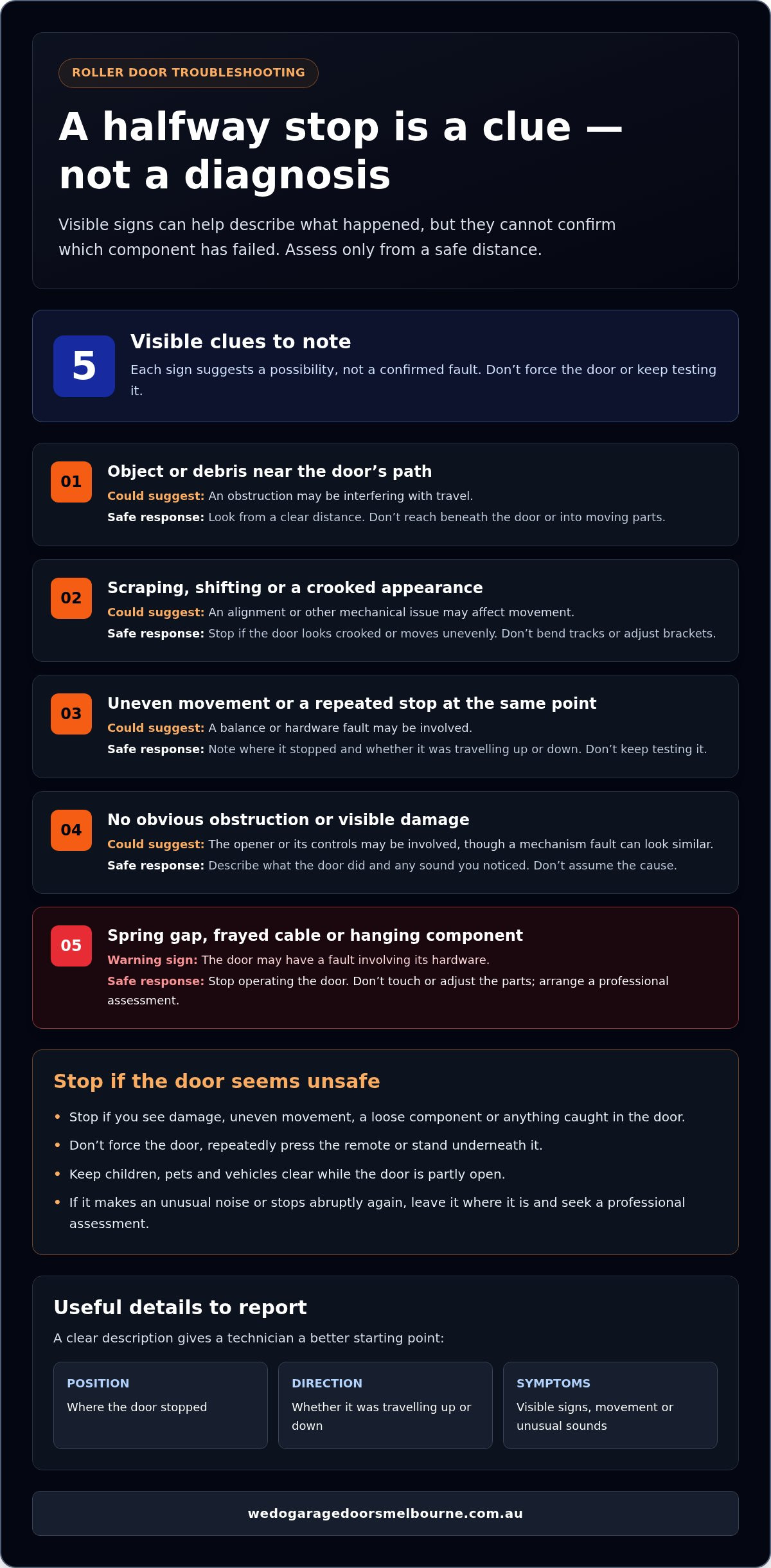
A halfway stop is a symptom, not a diagnosis. The door’s position alone can’t tell you whether the cause is an obstruction, an alignment issue, a door-balance problem or a fault with the opener or its controls. Roller doors and other garage door types and components work in different ways, so similar-looking stops can have different causes.
Think about what happened just before the door stopped. Was it opening or closing? Did it move smoothly, slow down, jerk or stop abruptly? These observations can help you describe the fault, but they don’t confirm which component is at fault. A door that stops at the same point each time offers a clue, not proof of a particular failure.
What a halfway stop can indicate
An obstruction or visible debris near the door’s path could interfere with movement. If nothing obvious is present, the stop may relate to alignment, balance or the opener. A change in sound or movement is also worth noting. These are possibilities, not a diagnosis: don’t inspect hidden parts or assume one symptom identifies a failed component.
From a safe distance, note whether the door appears level and whether it stopped while travelling up or down. This practical description gives a technician a clearer starting point than the door’s position alone.
When to stop operating the door
Don’t force the door, repeatedly press the remote or keep testing it to see if the fault clears. Further commands may cause movement when you’re not expecting it. Keep children, pets and vehicles clear while the door is partly open. Don’t stand underneath it or reach into its path.
Stop if the door looks crooked, moves unevenly or appears to have shifted out of alignment.
Don’t operate it if you can see damage, a loose or hanging component, or anything caught in the door.
If it makes an unusual noise or stops suddenly again, leave it where it is and arrange a professional assessment.
If you’re unsure whether what you see is harmless, treat it as a reason to pause. A roller door stuck halfway should be assessed rather than pushed through a suspected fault. Note its position and visible symptoms, then avoid further operation until you know it’s safe.
Why a Roller Door Stops Halfway: Clues Without Guesswork
A roller door can stop partway for several reasons, and the visible symptom won’t always reveal what’s happening inside the mechanism. A roller door stuck halfway may have encountered an obstruction, or the issue may involve alignment, balance, the opener or its controls. Use what you can observe to describe the problem, not to decide which part needs repair.
A halfway stop alone cannot identify the failed component. The clues below can help you distinguish something visible in the door’s path from a fault that needs professional assessment.
Obstruction, alignment and visible door movement
From a safe distance, look for an obvious object or loose debris in the door’s path. Don’t reach beneath the door or into its moving parts to retrieve anything. Note whether the curtain appears crooked, scrapes as it moves or travels unevenly from one side to the other. These signs can point to an alignment or hardware issue, but they don’t confirm its cause.
Don’t try to bend tracks, adjust brackets or remove components. A repeated stop at the same point is useful information: record where it happens and whether the door was travelling up or down. That pattern may help a technician assess the door, but it’s not a reason to keep testing it.
Opener, spring and cable warning signs
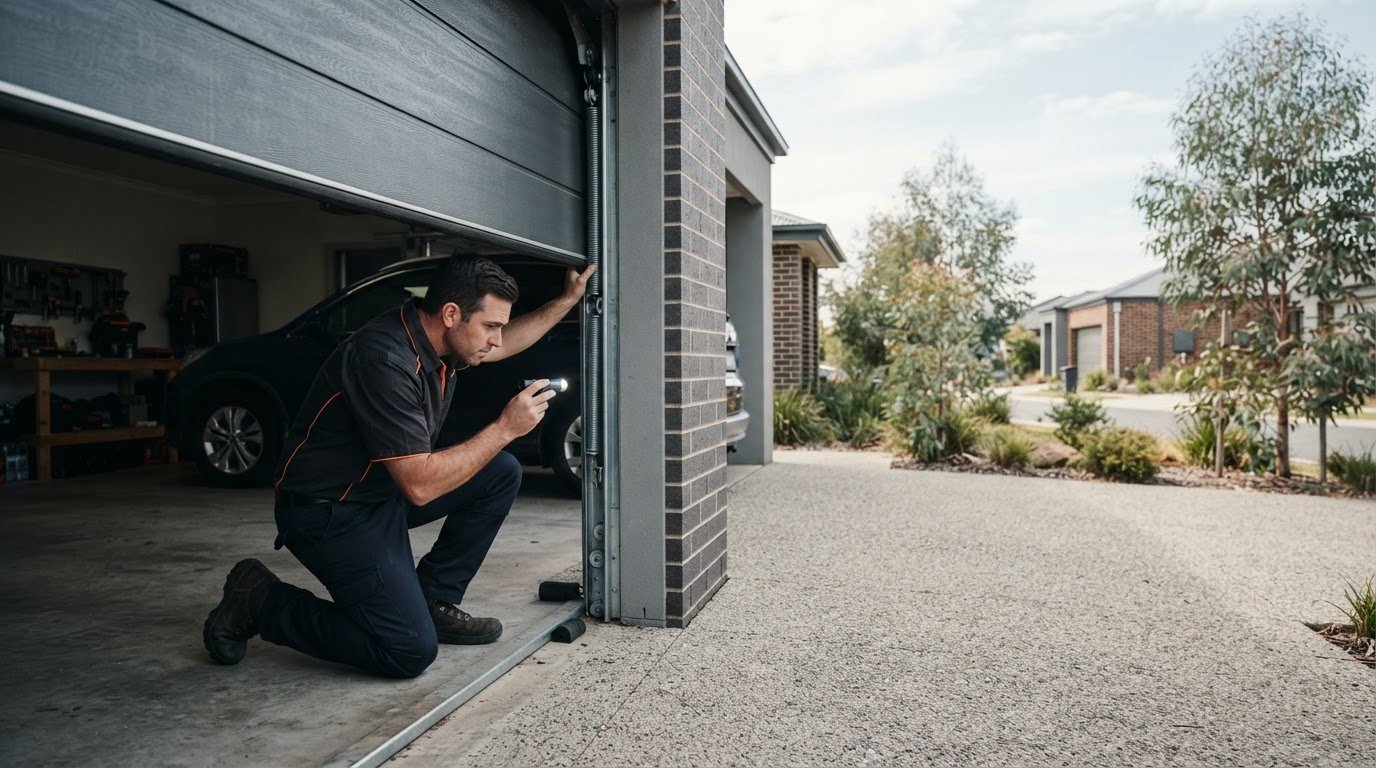
An opener or control fault can resemble a problem with the door mechanism, so the sound of the motor or the door’s response is only part of the picture. If you see a gap in a spring, a frayed cable or hardware hanging out of place, don’t touch it or operate the door again. Springs are under extreme tension; attempting a DIY fix can cause serious injury.
Unclear symptoms are a sensible reason to arrange a professional assessment rather than guess at a repair. We Do Garage Doors repairs residential garage doors across Melbourne. If you need help assessing the fault, explore roller door repair support.
Safe Checks for a Roller Door Stuck Halfway
If your roller door is stuck halfway, limit checks to what you can see and operate from a safe position. Work through these steps in order, and stop as soon as you notice damage, uneven movement or anything that makes the door seem unstable. The aim is to gather useful information, not to get the door moving at any cost.
Checks you can make without touching the mechanism
Look at the door from a safe distance. Note whether it appears straight, whether anything is hanging loose, and whether there’s obvious damage or debris in its path. Don’t stand under the door or reach into its travel area.
Check for an obvious obstruction. If the door is stationary and an object is clearly visible and safely reachable from outside its path, you can remove it. Don’t reach beneath the door, climb or use a tool to dislodge anything. If the object is trapped or hard to reach, leave it for a technician.
Observe the remote without repeatedly operating the door. If the remote has an indicator light, check whether it responds when you press a button. Don’t keep sending commands to test the door, particularly if it looks crooked or damaged.
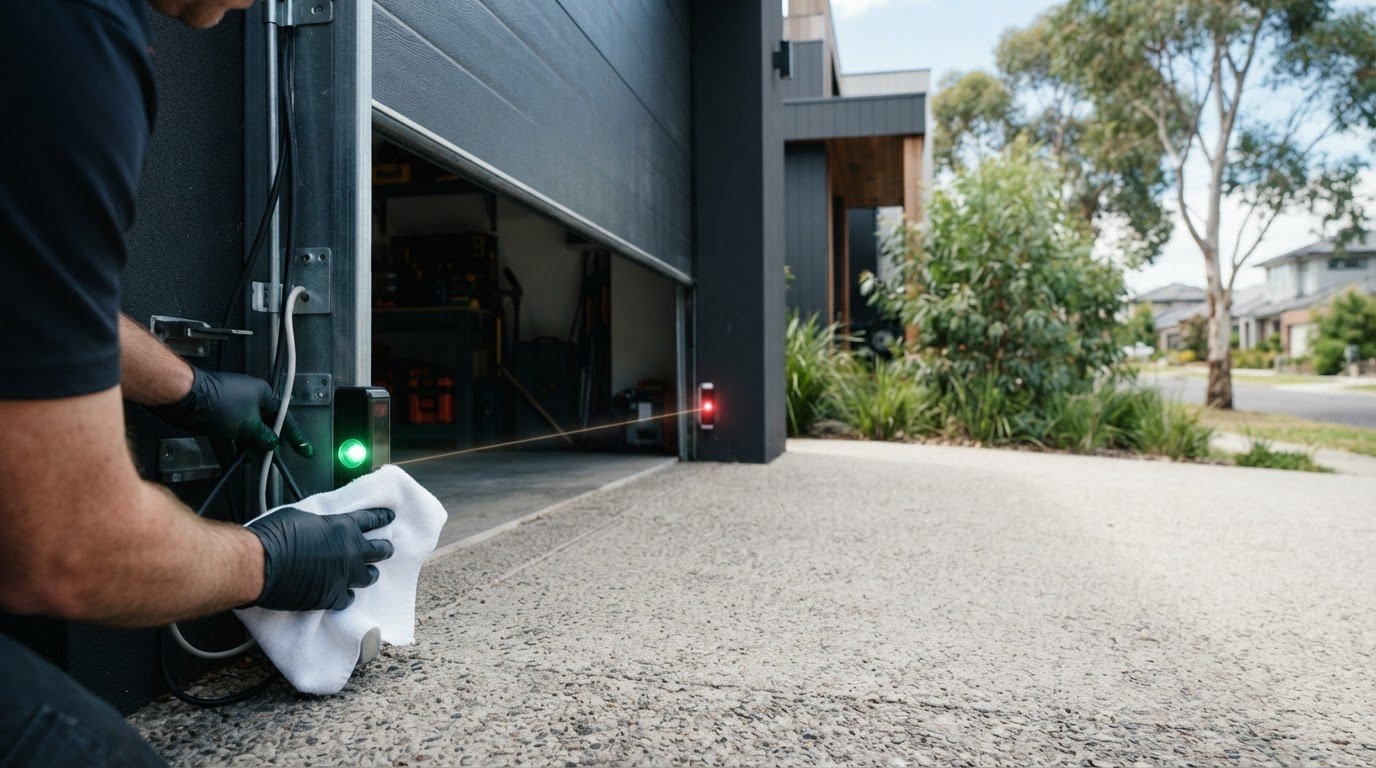
Check for a simple sign of opener power. From outside the opener, look for an indicator or light, if fitted, and consider whether there’s an obvious household power interruption. Don’t open the opener casing, touch wiring or investigate electrical components. Stop if you see damage or anything that appears unsafe.
These observations can help distinguish an obvious obstruction from a fault that needs further assessment. They can’t confirm whether the motor, controls or door mechanism are responsible. If there’s no clear, safe explanation, leave the door where it is rather than trying more tests.
What not to adjust or test yourself
A partly open door isn’t a safe position for maintenance. Don’t adjust springs, cables, brackets or tracks, and don’t try to correct the door’s balance. Avoid lubricating or moving components while the door is stuck. These tasks can involve parts that are under load or may shift unexpectedly.
Don’t use the manual release if the door looks damaged, crooked or unbalanced. Releasing the opener can leave the door unsupported, and it may move suddenly. A technician can assess the door and opener together, then determine what repair is needed without relying on guesswork.
A simple rule to remember:
Safe checks: observe the stationary door, remove only an obvious obstruction that’s safely reachable, and note whether the remote or opener shows a sign of response.
Technician tasks: release, lift, dismantle, adjust, lubricate or repair the door, its hardware or the opener.
If any check raises concern, stop there. That boundary helps protect you and gives a technician useful information to work from.
DIY Check or Professional Repair? How to Choose the Safer Next Step
It’s reasonable to wonder whether you need a technician, especially if the door has stopped but nothing looks obviously broken. Safe observation and a basic check of the remote can help identify simple, visible issues. But if those checks don’t explain why your roller door is stuck halfway, or you spot damage, don’t keep trying to make it move. The safety risk matters more than how minor the fault might appear.
A partly open door can shift or move unexpectedly if its balance or hardware is compromised. Forcing it may worsen the fault or create a hazard. A technician can assess the door, spring, cable and opener symptoms together, then recommend a repair based on what they find. That’s more reliable than guessing at a component from one symptom. For commercial properties where faulty roller doors can disrupt daily operations, managing building maintenance through a comprehensive provider like The CFS Group ensures entry points and broader site infrastructure remain safe and reliable.
Signs that mean you should stop and arrange repair
Stop operating the door if it looks crooked, moves unevenly, makes an unusual sound or has visibly damaged or hanging hardware. The same applies if your safe checks haven’t revealed an obvious obstruction or simple remote issue. These signs don’t confirm a particular fault, but they do make further testing a poor risk.
Visible damage or a change in movement: Leave the door where it is and arrange a professional assessment.
Suspected spring or cable damage: Don’t touch, adjust or attempt to repair it. Springs are under extreme tension; attempting a DIY fix can cause serious injury. For more detail, read this garage door spring replacement safety guide.
A fault that persists after safe checks: Avoid repeated operation, as forcing a partly open door may worsen the problem or cause it to move unexpectedly.
When the opener may need attention
A powered opener doesn’t rule out a mechanical fault. The motor may respond while a problem with the door itself prevents it travelling smoothly, and an opener or control issue can sometimes look similar. Don’t change force settings, open the motor casing or dismantle any part of the system to test a theory.
If the door appears undamaged but the opener behaves unusually, note what happens when you use the remote, such as whether it responds or whether the door stops at a consistent point. Those details can help a technician assess the system, but they aren’t a reason to keep operating it. For motor-specific symptoms, see the Melbourne garage door motor replacement guide.
If the fault remains unclear or you’ve noticed a warning sign, a professional assessment is the sensible next step. Arrange a professional roller door repair rather than risk turning a stalled door into a more serious problem.
Get Help for a Roller Door Stuck Halfway in Melbourne
If your roller door is stuck halfway and safe checks haven’t explained why, arrange a professional assessment. When you get in touch, describe how far the door travelled, whether it was opening or closing, and what you noticed before it stopped. Mention visible damage, uneven movement, unusual sounds or whether the remote appeared to respond. These details explain the issue without requiring you to diagnose it yourself.
We Do Garage Doors repairs residential roller doors across Melbourne, including Greenvale, Craigieburn, Mickleham, Roxburgh Park and Wollert. Same-day attendance is available in most cases, particularly across the northern suburbs. Emergency repairs are available 24/7.
What to expect from local repair support
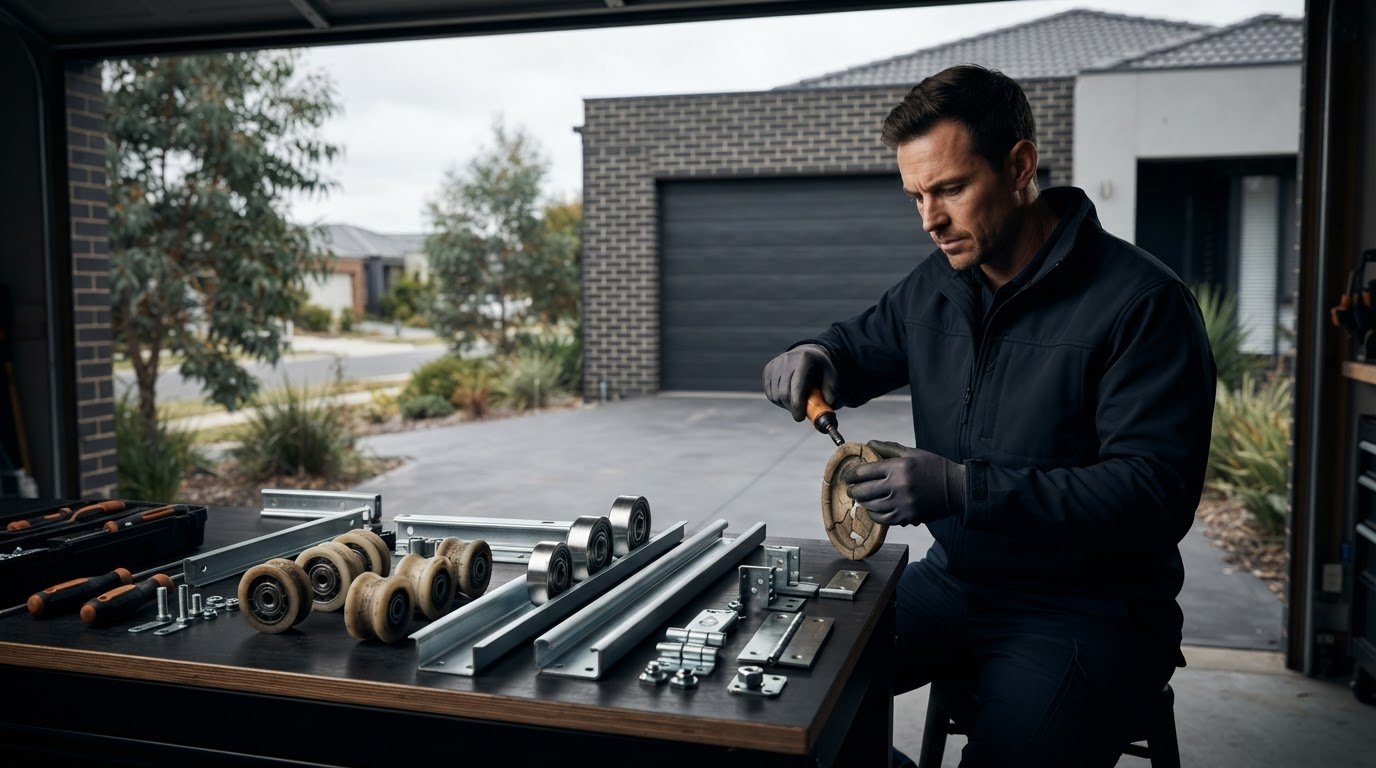
A technician can inspect the door and opener, assess the symptoms and determine the appropriate repair. Depending on the fault, this may include servicing, operational testing or repair work. Most repairs are completed in one visit, usually within an hour or two. If parts need to be ordered for a less common door brand or model, the repair may require a return visit.
General garage door repairs start from around $150, depending on the work needed. Spring replacements typically start around $400. Every repair, installed part and new installation comes with a one-year warranty. For broader information about local support, see garage door repairs across Melbourne.
How to arrange help when the door is stuck
Before arranging service, keep people, pets and vehicles clear of the partly open door. Don’t operate it if it appears damaged, crooked or unstable, and don’t try to lift or release it. If the garage is exposed, mention that when you describe the situation, along with your suburb and any visible warning signs. You don’t need to identify the failed part.
To arrange local repair support, call 0423 746 364 or email chrispdoors@gmail.com. Share what you’ve observed and where the door is located so we can discuss the next step. There’s no need to keep testing a door that may be unsafe; a clear description helps start the assessment calmly.
Arrange a roller door repair if safe checks haven’t resolved the issue or you’ve noticed signs of damage.
Take the Next Step Towards a Secure Garage
A roller door stuck halfway can make it tempting to keep trying until it moves. Instead, leave the door where it is if it looks damaged or unstable, and let a technician assess what’s happening. A clear description of the fault is a helpful start, even if you don’t know what caused it.
We Do Garage Doors brings over 12 years of garage door repair and installation experience in Melbourne to residential repairs. You don’t need to work out which component has failed before seeking help. The priority is a considered assessment and a safe path forward.
Arrange roller door repair support in Melbourne, or call 0423 746 364 or email chrispdoors@gmail.com to discuss the issue. Take the next step towards a secure, working garage.
Frequently Asked Questions
Can I leave a roller door stuck halfway overnight?
It depends on whether the door and garage can be left secure, so don’t assume a partly open door is safe to leave unattended. If the door looks crooked, damaged or unstable, stay clear and arrange urgent professional advice rather than trying to close it yourself. If the garage is exposed, move valuables out of sight if you can do so without going near the door, and keep people and pets away.
Is it safe to move a roller door by hand when it is stuck halfway?
Don’t try to push, pull or lift it by hand. A roller door that has stopped mid-travel may be difficult to control, and it could move suddenly if its balance or hardware is compromised. Don’t pull the curtain or reach around the barrel to help it along. If it needs to be moved for access, leave that task to a technician who can assess the door first.
Can a power outage make a roller door stop halfway?
Yes, a power interruption can stop an electrically operated door while it’s moving. Across Melbourne, including Greenvale, Craigieburn, Mickleham, Roxburgh Park and Wollert, an outage may be worth considering if other household power has also gone off. But a door stopping mid-travel doesn’t prove the outage caused it. Once power returns, don’t assume the door is safe to operate if it remains stuck or shows signs of damage.
Why does my roller door stop at the same point every time?
A repeat stop at the same spot is a useful pattern, but it doesn’t identify the fault on its own. The door could be meeting resistance at that point, or the cause could relate to its balance or opener. Note whether it stops while opening or closing and whether the movement or sound changes just beforehand. That information can help a technician assess the issue without you repeatedly testing the door.
Should I keep pressing the remote when my roller door stops halfway?
No. Repeated remote commands won’t establish why the door stopped, and they may prompt further movement when you aren’t expecting it. Stop after the initial response, then check whether the remote’s indicator behaves as usual, if it has one. Keep the remote away from children so the door can’t be activated accidentally while people are nearby. If the door appears damaged or uneven, don’t operate it again.
Will resetting the opener fix a roller door stuck halfway?
Not necessarily. A reset may not address an obstruction, a door-mechanism fault or an issue affecting the door’s movement. Opener reset steps can vary, so avoid changing settings or attempting a reset that could leave the system difficult to operate. If the roller door remains stuck after a power interruption or a basic remote check, note what happened and arrange an assessment instead of experimenting with the controls.
Comments