

Sectional Garage Door Maintenance: A Practical Homeowner Checklist
Updated: Oct 14
A sectional garage door can look fine right up until it sticks, strains or refuses to close. Regular sectional garage door maintenance is about noticing small changes before they become a breakdown, not taking the door apart. If you’re wondering which checks are safe to do yourself, or whether a noisy door is a warning sign, be cautious: springs and other tensioned components can be dangerous to handle.
This checklist explains how to inspect visible wear, keep the area around the door clear and carry out simple care without adjusting high-tension parts. You’ll learn what unusual movement, sounds or operating problems can signal, and when to arrange professional maintenance or repair. Start with safe homeowner checks, then leave spring, motor and other mechanical issues to a Melbourne garage door technician. Never adjust or replace a spring yourself.
Table of Contents
Why sectional garage door maintenance matters for Melbourne homes
Sectional garage door warning signs: what to inspect and what they mean
A safe sectional garage door maintenance checklist for homeowners
How to plan sectional garage door maintenance through the year
When Melbourne homeowners should arrange sectional garage door repairs
Why sectional garage door maintenance matters for Melbourne homes
A sectional door may look like one large panel, but it relies on connected moving parts. Each panel must travel smoothly, and a problem with a roller, hinge or track can affect the door as a whole. Routine checks help you spot changes while they’re visible, rather than waiting until the door struggles to open or close.
Sectional garage door maintenance involves inspecting accessible parts and carrying out basic care to identify wear early. It can help you respond when something changes, but it can’t guarantee the door will never fail. Parts wear over time, and faults that aren’t visible may still need a technician’s assessment.
How a sectional garage door moves
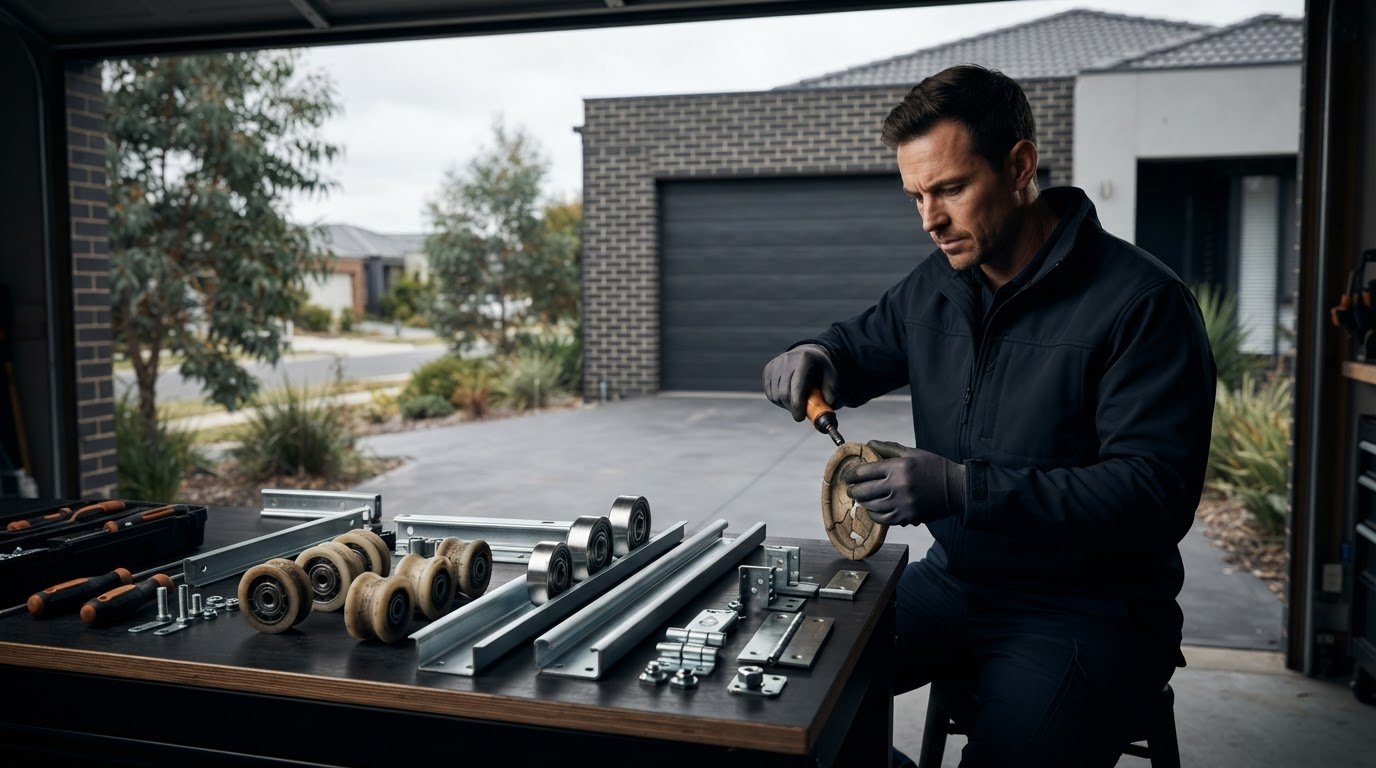
Hinged panels travel along tracks, moving from a vertical position beside the garage opening to a horizontal position overhead. Rollers guide the panels, while hinges let the sections bend around the curve. The tracks keep the route aligned, so damage or an obstruction can interfere with smooth travel.
A counterbalance system helps support the door’s weight as it moves, working alongside the opener, rollers, hinges and tracks. You can learn more about the general design of a sectional garage door, but don’t adjust tensioned components yourself. A door that moves unevenly, catches or makes a new noise may need professional inspection.
Why early checks matter around Melbourne
For Melbourne households, the garage is often part of the daily routine, whether you park inside or pass through it to reach the house. Repeated opening and closing makes small changes in movement or sound worth noticing. Pay particular attention after heavy use, an impact or exposure to weather. Record what has changed instead of assuming the door will settle on its own.
Rattling, scraping, hesitation or visible damage doesn’t identify a fault by itself. Several issues can produce similar symptoms, so treat them as a reason to look more closely, not as a diagnosis. If the door appears crooked or suddenly moves unpredictably, don’t force it to operate. A technician can inspect the system and advise whether a repair is needed.
Sectional garage door maintenance combines inspection, basic care and timely repair to help keep the door moving smoothly and identify wear early. Appropriate care can support reliable operation, but it doesn’t replace professional attention when hardware is damaged or a fault involves the counterbalance system. Knowing the difference helps you act sensibly and safely.
Sectional garage door warning signs: what to inspect and what they mean
Changes in how your door looks, sounds or travels are useful clues, but they don’t reveal the fault on their own. A roller, track, hinge, counterbalance component or opener issue can produce similar symptoms. Note what you observe and share it with a technician. Don’t dismantle or adjust the door to investigate.
Unusual noise, uneven movement and visible damage are reasons to stop and assess the situation, not to guess at the cause. If the door is crooked, unstable or moving unpredictably, stop using it. Don’t force it through a cycle, even if you need to get a car out.
Check panels, hinges, rollers and tracks
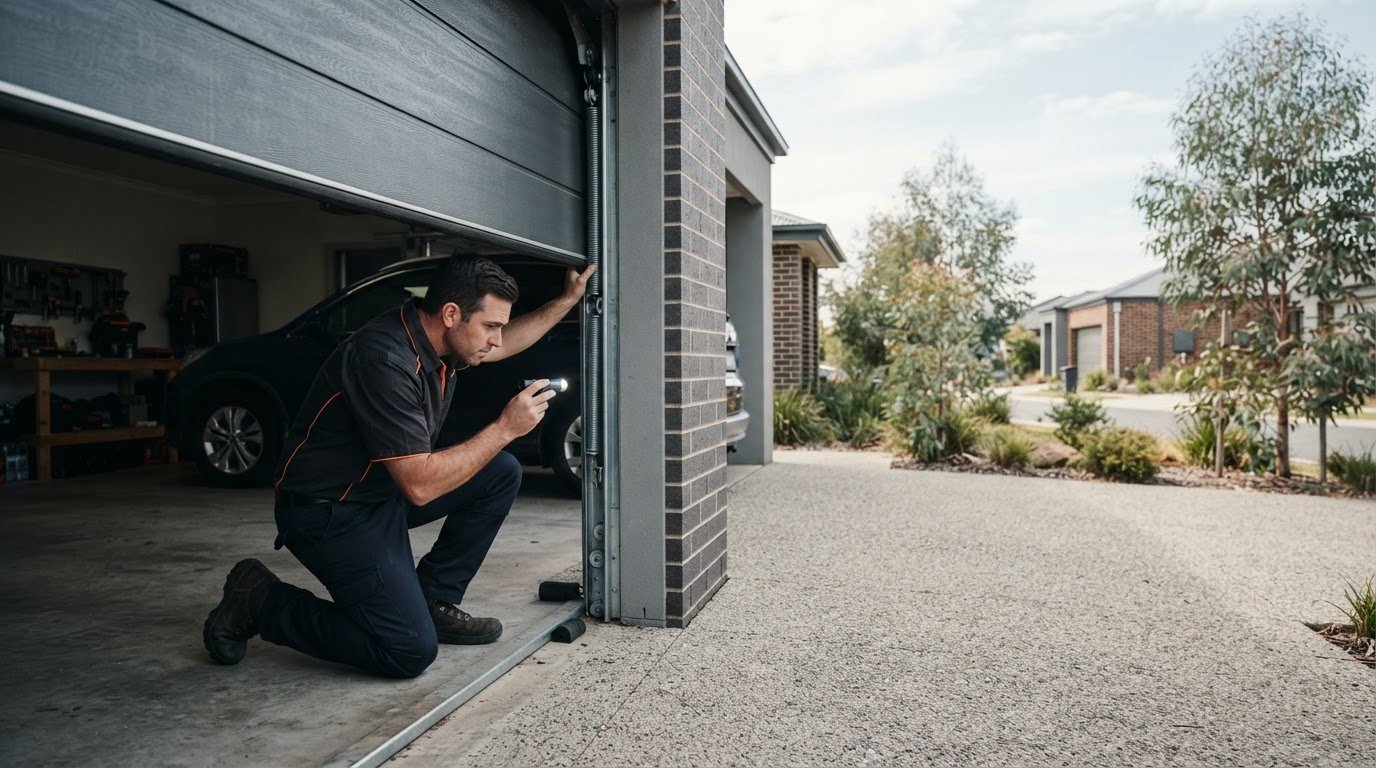
With the door stationary, look over the panels for dents, gaps or sections that appear out of line. From a safe position, check accessible hinges and rollers for visible damage or signs that something has shifted. Look along accessible track sections for debris or obstructions. Don’t reach into tracks, remove parts, bend hardware or try to realign anything.
An uneven panel may point to a problem elsewhere in the system, not just a panel fault. Don’t force a misaligned door to move. A visual check helps you describe the issue; a technician can inspect the connected components and determine what needs attention.
Notice changes in movement and sound
Only listen and observe while the door is operating if it appears safe to do so. Compare its movement with what’s normal for your door. Does it pause, jerk, scrape or hesitate where it used to move smoothly? A new rattle or repeated scraping deserves attention. Grinding, a sudden loud noise or jerky movement is a reason to stop operating the door and arrange an assessment.
If the opener hums, struggles or behaves differently, that doesn’t confirm the motor is at fault. The door’s movement and other components can affect how the opener performs. Note whether the change occurs while opening, closing or both, and refer to a dedicated motor guide for further context without attempting repairs yourself.
Make your observations useful with a simple note: record the sound, where in its travel the door changes, and whether there’s visible damage. Don’t keep cycling the door to reproduce a worrying noise, and never test one that looks unstable. The counterbalance system includes tensioned parts that aren’t suitable for homeowner adjustment.
If your checks reveal damage or persistent abnormal movement, professional sectional garage door repairs can help identify the cause and address the fault. Clear observations, without a DIY diagnosis, are a practical starting point for the repair.
A safe sectional garage door maintenance checklist for homeowners
A useful home check means observing and caring for accessible areas, not dismantling the door. Check it while stationary and follow the manufacturer’s instructions for both the door and opener. If you spot damage or unusual movement, stop and arrange a professional assessment instead of trying to correct the fault yourself.
Simple checks and cleaning you can do
Work through these steps in order. Keep your hands clear of moving parts, and don’t reach into tracks or near rollers and hinges.
Observe first. Look at the stationary door. Note visible dents, panels that appear out of line, or anything that looks loose or damaged.
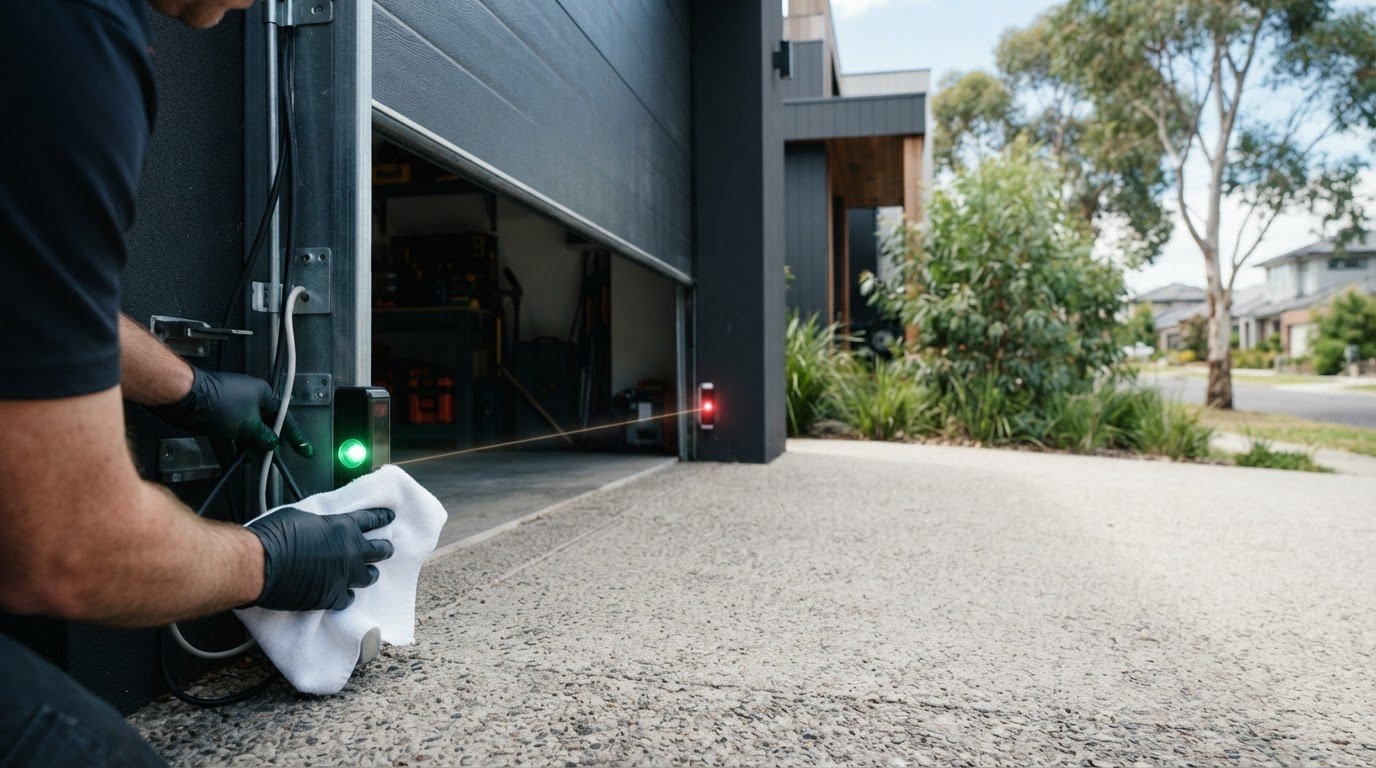
Clear accessible debris. Remove loose leaves and dirt from the floor and other easy-to-reach areas around the opening. Don’t put your fingers or tools into the tracks.
Clean gently. Wipe accessible door surfaces with suitable materials, following the manufacturer’s care instructions. Avoid unapproved cleaners that could affect the finish.
Check the weather seals. Look for visible gaps, tears or sections that have come loose. Record what you notice; don’t pull or reposition a firmly attached seal.
Review care instructions. Lubricate parts only if the door or opener manufacturer recommends it, using the specified product and method. Don’t apply lubricant to every moving part by default.
Finish with a function check. If you haven’t found damage or instability, stand clear and operate the door using its normal control. Watch and listen from a safe position. Stop if it hesitates, scrapes, moves unevenly or makes a new noise.
This routine keeps sectional garage door maintenance within safe homeowner tasks. For broader upkeep guidance, use the annual garage door service checklist alongside your manufacturer’s manual.
Tasks to leave to a garage door technician
Springs, cables and other high-tension hardware can cause serious injury if handled incorrectly. Don’t adjust, remove or replace them, even if they appear worn. Keep hands away from rollers, hinges and tracks while the door is moving. Never bend, realign or dismantle hardware. If you suspect a spring problem, the garage door spring safety guide explains why this work needs professional attention.
Stop using the door if it looks crooked, feels unstable or moves unpredictably. A professional technician can inspect the system and advise on repairs, including spring or motor issues. A visual check is an early warning, not a diagnosis.

How to plan sectional garage door maintenance through the year
A useful routine should fit your household, not follow an arbitrary calendar. Start with the door and opener manuals, which explain the manufacturer’s recommended care and any limits on cleaning or lubrication. Then consider how often the door is used and whether you’ve noticed a change in its sound, movement or appearance. Frequent daily use makes regular observation worthwhile, while a door operating consistently may need less attention between professional services.
For Melbourne households, including those in Greenvale, Craigieburn, Mickleham, Roxburgh Park and Wollert, a visual check can fit naturally alongside ordinary garage cleaning. There’s no need for a complicated schedule or to carry out a full service yourself. Follow the manufacturer’s instructions and check more closely after an impact, a period of heavy use or a new operating symptom.
Set a routine that suits your household
Choose an easy reminder, such as a note alongside a regular garage tidy. Use that moment to look for changes, not to dismantle, adjust or test components. If your door is used throughout the day, you may notice changes sooner. If it’s used occasionally, pay attention whenever you operate it. Manufacturer guidance takes priority over generic schedules.
Don’t wait for a planned check if something changes. A new sound, visible damage or uneven travel deserves prompt attention. If the door looks unstable or moves unpredictably, stop using it and arrange a professional assessment rather than waiting for your next reminder.
Keep a simple maintenance record
A short note on your phone or calendar is enough. Record the date, what you observed and any basic care completed according to the manual. Note any impact or obstruction to the door’s path. Describe symptoms plainly, such as “rattle during closing” or “hesitates near the floor”, rather than guessing which part is faulty.
Note when an unusual sound or movement first appeared.
Record visible changes, impacts and basic care carried out according to the manual.
Add the date and outcome of any professional inspection or repair.
These details help a technician understand how the issue has changed and when it occurs. They also give you a reference point for distinguishing a new symptom from the door’s usual operation. Good sectional garage door maintenance is responsive: observe, record and act on changes, without treating a log as a substitute for professional servicing.
If your notes show recurring noise, abnormal movement or damage, arrange professional garage door maintenance in Melbourne to have the door assessed and determine whether it needs repair.
When Melbourne homeowners should arrange sectional garage door repairs
Routine checks help you notice changes, but some signs mean it’s time to stop using the door and arrange professional help. A crooked position, damaged hardware, a jam or sudden unpredictable movement can indicate that the door isn’t travelling safely. Don’t keep pressing the remote to see if it corrects itself, and don’t try to lift, force or realign a door that appears unstable.
Sectional garage door maintenance has a clear limit: homeowners can observe and report what they see, while a technician assesses the mechanism and carries out repairs. A visible symptom doesn’t reveal the exact cause. Acting promptly can help avoid adding strain to a door that’s already moving abnormally.
Know when to stop operating the door
Stop using the door if it’s uneven, visibly damaged, jammed or moving in an uncontrolled way. Keep people clear of the door and its path, and don’t attempt to repair springs, cables or other tensioned parts. If you suspect a spring or cable fault, leave the system untouched. Further operation could worsen the fault or create a safety risk.
A professional assessment can identify what’s behind the symptoms and whether a repair is needed before the door is used again. If you can do so without approaching or touching the door, note what happened, such as whether it stopped while opening or closing. Don’t run it again just to reproduce the problem.
Get local help for repairs or worn components
We Do Garage Doors provides residential garage door repairs and maintenance across Melbourne. The right repair depends on the condition of the door and its mechanism. Spring or motor replacement may be needed if those parts are found to be faulty, but unusual movement or opener behaviour alone isn’t enough to diagnose either issue.
For households in Greenvale, Craigieburn, Mickleham, Roxburgh Park and Wollert, professional support is a practical next step when the door appears unsafe or the cause of a fault isn’t clear. Share the symptoms you observed and any notes you’ve kept. Don’t attempt adjustments while waiting for the door to be assessed. A suitable repair can restore dependable operation while keeping high-tension work in experienced hands.
If your sectional door is damaged, unstable or no longer operating as it should, arrange local garage door repair support for your home in Melbourne, including Greenvale, Craigieburn, Mickleham, Roxburgh Park and Wollert.
Make your next step a confident one
Good sectional garage door maintenance isn’t about fixing every fault yourself. It’s about knowing what you can safely observe and recognising when the door needs an experienced technician. Follow the manufacturer’s care guidance and take notice when something changes. You don’t need to diagnose the mechanism before asking for help.
We Do Garage Doors is an independent local business operated by master garage door technicians. The team assesses residential garage doors and carries out repairs, including spring or motor replacement when needed.
If your door needs professional attention, arrange professional garage door help in Melbourne. Share what you’ve noticed and let We Do Garage Doors help with the next step.
Frequently Asked Questions
How often should a sectional garage door be maintained?
Use the door and opener manuals to set your maintenance frequency, as recommendations can vary between systems. Household usage matters too: a door opened several times a day may show changes sooner than one used occasionally. Rather than relying on a universal timetable, pair visual checks with regular garage cleaning and watch for new sounds or movement changes. Arrange a professional assessment if you notice a problem between checks.
Can I use WD-40 on sectional garage door rollers and tracks?
Don’t use WD-40 as a default lubricant for rollers or tracks. Products differ, and a general-purpose spray may not suit your door’s components or the manufacturer’s care requirements. Check the door and opener manuals first. Use a lubricant only if the instructions recommend it, and follow the specified application method. If you’re unsure, leave the parts untouched rather than spraying them and potentially attracting dirt or affecting operation.
What should I do if my sectional garage door has a dented panel?
Don’t try to push the dent out or hammer the panel back into shape. Even damage that looks cosmetic can affect how the sections sit or travel, particularly if the dent followed an impact. Note where it is and check from a safe distance whether the door still appears aligned. If the panel is creased, separating or affecting movement, stop operating the door and arrange a professional assessment. This applies to homes across Melbourne, including Greenvale and Craigieburn.
Can a damaged weather seal be replaced without replacing the whole garage door?
Often, a weather seal can be replaced separately, but the right replacement depends on how it attaches and whether its retaining channel is intact. A small split or loose section doesn’t automatically mean the entire door needs replacing. Avoid pulling a firmly attached seal, as this could damage the retainer. If the seal has come away or a gap remains after it’s seated, have the fit and condition assessed.
Why does my sectional garage door leave a gap at the bottom?
A bottom gap can result from a worn or displaced seal, an uneven garage floor, or an issue with how the door sits when closed. Note whether the gap runs along the full width or appears in one spot, but don’t adjust the opener or door position yourself. If the gap is new, growing or accompanied by uneven movement, a technician can inspect the seal, door and travel alignment to find the cause.
Can I open a sectional garage door manually during a power outage?
Possibly, if the opener has a manual release and the door is in safe working condition. Follow the manufacturer’s instructions, and only disengage the opener when the door is fully closed and stable. Don’t attempt manual operation if the door is jammed, unusually heavy, crooked or suspected of having a spring or cable fault. If you’re uncertain, keep clear and arrange professional help rather than risk the door moving suddenly.
Does an insulated sectional garage door need different cleaning?
Usually, the outside can be cleaned much like other garage doors, but follow the manufacturer’s instructions for the specific finish and construction. Use a soft cloth and suitable cleaning materials, and avoid abrasive pads or harsh products unless the manual permits them. Much like the exterior care principles applied by property maintenance teams like JBM Custom Contracting, the priority is removing dirt and buildup without damaging underlying finishes. Don’t soak exposed edges or try to clean between panel layers. Check the care guidance for the insulation and surface before cleaning, as unsuitable methods may mark or damage the finish.
Comments