

The Dangers of DIY Garage Door Spring Replacement: Why Safety Matters
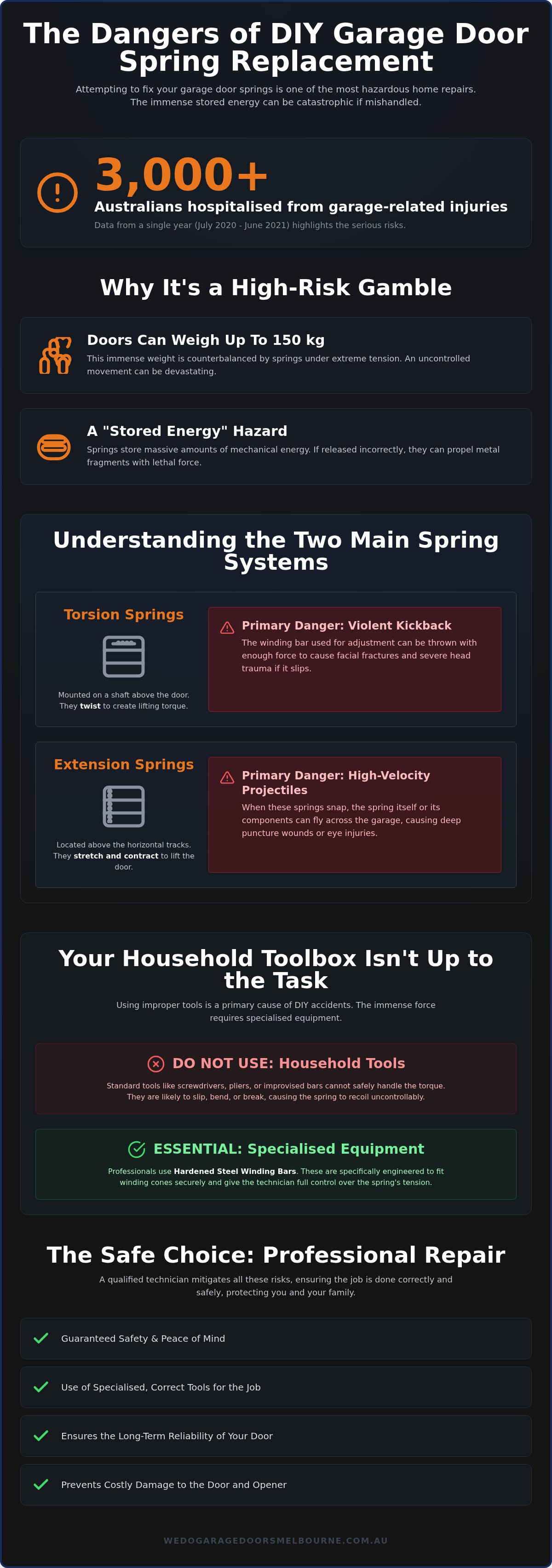
Did you know that between July 2020 and June 2021, over 3,000 Australians were hospitalised due to garage-related injuries? It is a startling figure that highlights just how precarious these heavy fixtures can be when they aren't handled with expert care. While it's tempting to grab a ladder and try to fix a snapped coil yourself to save a bit of time, the dangers of DIY garage door spring replacement are far more severe than most Melbourne homeowners realise. These springs are not just simple hardware; they are high-velocity mechanical hazards under immense tension.
We understand the sheer frustration of finding your car trapped behind a door that won't budge, especially when you're already running late. It's natural to feel anxious about unexpected maintenance, but your physical safety is worth far more than a weekend project. In this article, you'll discover the specific physical forces at play within your garage door system and why attempting a solo repair can lead to catastrophic accidents. We will also explore how professional technicians in Melbourne's Northern suburbs ensure your home remains a secure, functional space without the risk of a trip to the emergency room.
Table of Contents
Why DIY Garage Door Spring Replacement is a High-Risk Gamble
Many Melbourne residents take pride in maintaining their homes. From clearing gutters to painting a fence, these "weekend warrior" tasks are rewarding and cost-effective. However, working on a garage door system is a different beast altogether. While changing a washer in a tap is a standard handyman chore, replacing a spring is a specialist mechanical repair. A typical residential garage door can weigh up to 150kg, and the springs are responsible for doing all the heavy lifting. When you attempt this yourself, you aren't just fixing a part; you're interacting with a system under extreme tension. The core dangers of DIY garage door spring replacement lie in the fact that the potential for catastrophic failure far outweighs any minor savings on labour costs.
The Reality of Stored Energy
Garage door springs are essentially "stored energy hazards." They work by winding tightly to create torque, which balances the weight of the door. When a spring is in good working order, it holds this energy safely. However, if a component fails during a DIY attempt, that energy discharges instantly and violently. In the context of residential garage door safety, torsion is the mechanical strain produced when the metal coil is twisted around a shaft to create lifting force. If this force is released uncontrollably, it can propel tools, metal fragments, or even the spring itself across the garage with enough power to cause life-altering injuries. Understanding the Physics: Torsion vs Extension Springs is vital for anyone considering these repairs, as it highlights how these mechanisms are designed to operate under loads that no human can safely manage by hand.
Why 'Handy' Homeowners are Often the Most at Risk
The most dangerous person in a garage is often the one who is "good with tools." This overconfidence trap leads many to believe that a standard household toolbox is sufficient for the job. It's not. Using a screwdriver or a pair of pliers to adjust a high-tension spring is a recipe for disaster. Professional technicians use specific, hardened steel winding bars designed to fit perfectly into the winding cone. These bars allow for controlled tensioning without the risk of the tool slipping or bending under pressure. Without this specialised equipment, the spring can snap back with incredible speed. We often see cases where homeowners have underestimated the sheer weight of the door, leading to the door crashing down when the spring is disconnected. Relying on a master technician isn't just about convenience; it's about ensuring your home remains a safe environment for your family.
Understanding the Physics: Torsion vs Extension Springs
Most Melbourne garages utilise one of two spring systems to manage the immense weight of the door. While both serve the same purpose, they operate on different mechanical principles. Each system presents unique failure points that contribute to the dangers of DIY garage door spring replacement. When a spring fails, it doesn't just stop working; it often fails by releasing all its stored energy in a fraction of a second. This rapid discharge can turn small metal fragments into high-velocity shards capable of piercing skin or causing severe eye injuries. Understanding how these springs store and release force is the first step in respecting the hazards involved.
Torsion Springs: The Heavy Lifters
Torsion springs are the modern standard for most sectional doors in Melbourne's Northern suburbs. These springs are mounted on a central metal shaft above the door opening. Instead of stretching, they function by twisting to create torque. This torque is what balances the door, making a 150kg slab of steel feel light enough to lift with one hand. The most critical danger occurs during the winding process. To install or adjust these, a technician must use solid steel winding bars to tighten the coil. If the bar isn't seated perfectly in the winding cone, or if the technician's grip slips, the spring will unwind with enough force to throw the winding bar back at the operator. This "kickback" is a leading cause of facial fractures and head trauma for untrained individuals.
Extension Springs: The Hidden Projectiles
Extension springs are typically found on older tilt doors or smaller single-car garages. They are located above the upper horizontal tracks and operate by stretching as the door closes. Because these springs act like giant, heavy-duty rubber bands, they are under maximum tension when the door is down. The primary failure point is the loop at the end of the spring, which can snap due to metal fatigue. Without a safety cable running through the centre of the coil to tether it, a snapped extension spring becomes a free-flying projectile. These "hidden projectiles" have been known to smash through car windscreens and even penetrate garage walls. Common signs of fatigue include visible rusting, elongated coils, or the door hanging unevenly. If you notice your door looks slightly crooked, it is often a sign that one spring has lost its elasticity and is nearing a breaking point. To avoid a dangerous snap, it is best to organise a professional spring replacement before the hardware fails completely.
The Most Common Injuries from DIY Spring Mishaps
While the financial appeal of a weekend repair is clear, the physical cost of a mistake can be devastating. When we talk about the dangers of DIY garage door spring replacement, we aren't just discussing a broken door; we're talking about life-altering trauma. Hospital records across Australia frequently document incidents where homeowners have suffered severe injuries because they underestimated the force of a coiled spring. These components don't simply "break" during a botched repair; they explode. This violent release of tension often catches people completely off guard, leading to accidents that could have been easily avoided with professional assistance.
Impact and Laceration Risks
The velocity of a snapping steel spring is comparable to a projectile. If a coil fails while you are standing nearby, the metal can lash out with enough force to cause deep lacerations or facial fractures. Many people believe that standard safety glasses from a local hardware store will provide enough protection. Unfortunately, these are often insufficient against the sheer momentum of a heavy-duty steel fragment. The most dangerous area is the "line of fire"-the space directly in front of the winding cones. If a winding bar slips, the spring can also trap fingers against the shaft. This often results in complex fractures or "degloving," a horrific injury where the skin and tissue are forcibly stripped away from the bone. These aren't just "scrapes"; they are surgical emergencies.
Crush Injuries and Door Collapse
A garage door without functional, balanced springs is essentially a massive dead weight hanging over your head. If you accidentally release the tension or disconnect the wrong bolt, the door can plummet to the floor in less than a second. For anyone standing underneath or working on the tracks, this creates a significant risk of life-threatening crush injuries. It's also worth considering the secondary risks involved in these repairs. The sudden, loud "crack" of a spring snapping or a tool slipping often causes a person to jump or lose their footing. Falling from a ladder onto a hard concrete floor can lead to spinal injuries or broken limbs, even if the spring itself never touches you. To better understand how we mitigate these risks, you can read our safety guide on spring replacement. We take these precautions seriously so that you don't have to risk your well-being for a functional garage.
Why Your Household Toolbox Isn't Up to the Task
A common mistake many Melbourne homeowners make is assuming that a well-stocked shed is enough to tackle any home repair. While your cordless drill and socket set are perfect for building a deck, they are dangerously inadequate for managing high-tension steel coils. One of the greatest dangers of DIY garage door spring replacement is the reliance on "making do" with the wrong equipment. Standard household tools are simply not designed to withstand the sudden, explosive torque required to lift a 150kg door. When a tool fails under this pressure, it becomes a projectile that can cause severe physical harm in an instant.
Professional technicians rely on heavy-duty vice grips that are specifically rated to hold the full weight of a garage door. Standard pliers or light-duty clamps will often slip or buckle when the spring tension is released. This sudden loss of control is the primary cause of DIY accidents in Australian garages. Choosing the right tool isn't about being fancy; it's a fundamental safety requirement that prevents the door from crashing down unexpectedly.
The Winding Bar: A Non-Negotiable Tool
In the world of garage door maintenance, the winding bar is the most critical piece of safety equipment. Many DIY enthusiasts attempt to substitute these solid steel rods with screwdrivers, pliers, or even pieces of rebar. This is a recipe for disaster. If the tool is even a millimetre too small, it will slip out of the winding cone the moment you apply tension. A winding bar must be a solid, hardened steel rod with a diameter that matches the winding cone's receiving hole exactly to ensure a secure, slip-free fit during the entire winding process. Without this precision, the spring can unwind uncontrollably, snapping the tool and potentially breaking the operator's jaw or wrists.
The Calibration Problem
Even if you manage to install the new springs without a trip to the hospital, the job isn't finished. Balancing a door is a delicate art that requires years of professional experience to master. A door that is off-balance by even a few kilograms will cause significant long-term damage to your entire system. This extra weight forces the opener to work much harder than intended, which often burns out your garage door motor far sooner than expected. The cost of replacing a dead motor and fixing a warped track usually far exceeds the price of a professional spring service. For a result that is both safe and durable, it is always wiser to book a service call with a local technician who has the right tools for the job.
Professional Spring Replacement in Melbourne: The Safe Choice
While the dangers of DIY garage door spring replacement are significant, the solution is straightforward. Choosing a professional service isn't just about avoiding a trip to the emergency room; it's about ensuring your home remains a secure and functional environment. At We Do Garage Doors, we specialise in the high-tension hardware that keeps your daily routine moving. Our team brings a sense of calm competence to every job, transforming a stressful mechanical failure into a seamless, reliable fix. We don't just swap out a part; we restore the precise balance required for your door to operate safely and quietly for years to come.
Every professional spring service begins with a comprehensive safety inspection. We look beyond the snapped coil to ensure the entire system is healthy. This includes checking that your installation complies with Australian Standard AS/NZS 4505:2012, which governs the structural integrity of residential doors. By sourcing the correct high-cycle springs specifically rated for the weight of your door, we provide a level of precision that off-the-shelf parts simply cannot match. This professional approach guarantees that your door is perfectly balanced, reducing the strain on your motor and extending the lifespan of your entire garage door system.
The Master Technician Advantage
Our technicians are deeply connected to the local community, providing expert repairs across Melbourne's Northern suburbs, including Craigieburn, Mickleham, and Roxburgh Park. This local expertise means we understand the specific door types and weather conditions common in our area. During a service call, we often identify secondary issues that a homeowner might miss, such as frayed lifting cables, worn pulleys, or misaligned tracks. Catching these problems early prevents future breakdowns and saves you from the frustration of a door that gets stuck again just weeks after a DIY fix. We pride ourselves on being the friendly, helpful guides who take the guesswork out of home maintenance.
Book Your Safe Spring Replacement Today
There is no need to risk your physical safety or the integrity of your home for a weekend project. If your door is heavy, making strange noises, or simply won't open, it is time to call in the experts. We provide peace of mind through high-quality craftsmanship and a commitment to dedicated care. For those moments when your car is trapped and you need help immediately, we offer emergency garage door repairs to get your life back on track quickly. Don't let a broken spring compromise your security. Contact We Do Garage Doors for expert assistance and experience the ease of a professionally maintained home.
Prioritise Your Safety and Peace of Mind
Choosing to step away from the ladder is the smartest decision you can make for your home and your health. We have explored how high-tension springs function as stored energy hazards and why standard household tools simply cannot manage the force of a 150kg door. The dangers of DIY garage door spring replacement are real; they range from severe lacerations to life-threatening crush injuries. By trusting a specialist, you ensure that your door is perfectly balanced and that your motor is protected from premature wear.
Since 2018, our master-trained hardware specialists have served the Northern Melbourne suburbs with a focus on precision and dedicated care. Whether you are in Craigieburn or Mickleham, we provide a fully insured service and rapid emergency response to get your door moving again safely. Don't risk a weekend project turning into a surgical emergency. Book a Professional Spring Replacement with We Do Garage Doors today for a seamless, stress-free experience. We are here to help you get back to your day with a door that operates as smoothly as it should.
Frequently Asked Questions
Can I replace just one garage door spring if only one is broken?
While it's possible to replace just one, we always recommend replacing the pair. Garage door springs are manufactured to have a similar lifecycle, so if one has snapped, the other is likely nearing failure. Replacing both at once ensures your door remains perfectly balanced and saves you the cost of a second service call just a few months later.
How much does it cost to have garage door springs professionally replaced in Melbourne?
The price for a professional replacement depends on several factors, including the spring type and the size of your door. In Australia, you can generally expect to pay for the high-quality parts plus the technician's labour. Investing in professional service ensures the job is done safely and includes a warranty, which provides much better long-term value than risking a DIY mishap.
What are the signs that my garage door springs are about to snap?
You should look for visible gaps in the coils or signs of physical deformation like stretching. If the door makes a loud straining noise or moves slower than usual, the springs are likely failing. A door that feels incredibly heavy when you pull the emergency release cord is a clear warning that the hardware is no longer providing the necessary lifting force.
Is it safe to open my garage door manually with a broken spring?
Opening a door with a broken spring is highly dangerous and not recommended. Without the counterbalancing force of the spring, a residential door can weigh up to 150kg, making it a serious crush hazard. Attempting to force it open manually is one of the most common dangers of DIY garage door spring replacement and can lead to severe back injuries or a total door collapse.
How long does a professional garage door spring replacement take?
For an experienced technician, a standard spring replacement usually takes between 30 and 60 minutes. This timeframe allows us to safely secure the door, remove the old hardware, and install the new springs with precision. We also take the time to balance the door and lubricate the moving parts, ensuring your system operates quietly and reliably before we leave your home.
Why did my garage door spring break in the first place?
Springs break primarily due to metal fatigue after reaching their maximum cycle limit. Every time you open or close your door, the steel coils undergo intense mechanical stress. Over time, this causes the metal to weaken and eventually snap. In Melbourne's climate, lack of regular lubrication or the presence of surface rust can also make the steel more brittle and prone to sudden failure.
Are torsion springs more dangerous than extension springs?
Both types are hazardous, but they fail differently. Torsion springs are under immense torque and can cause catastrophic injury if a winding bar slips during adjustment. Extension springs act like giant rubber bands; if they snap without a safety cable, they can fly across the garage with enough force to penetrate walls. This unpredictability is why professional handling is essential for any spring-related task.
Can I buy garage door springs at a local hardware store in Melbourne?
It is very rare to find these springs at a standard hardware centre in Melbourne. Because the springs must be precisely matched to the weight and height of your specific door, they aren't a "one-size-fits-all" product. Using the wrong spring can damage your motor or cause the door to fall, which is why these parts are typically only available through specialised garage door repairers.


Comments