

How Often Should a Garage Door Be Serviced, and Why?
For most Australian homes, a garage door should be professionally serviced once a year. That’s a practical starting point when deciding how often a garage door should be serviced. Homes near the coast or with doors used multiple times daily should consider servicing every six months. A quick monthly visual check can help you spot unusual sounds, uneven movement or trouble closing before the issue gets worse.
A door that still opens and closes can seem to be in good condition, but wear may affect its springs, tracks, opener and safety features before a fault becomes obvious. This guide explains what you can safely inspect and maintain at home, when to arrange professional attention and what a service can cover. It also outlines warning signs that mean you should act rather than wait for the next scheduled service.
Table of Contents
Can homeowners perform service inspections on garage doors?
For most Australian homes, professional servicing once a year is a useful baseline. Add a brief monthly inspection to spot changes and handle simple upkeep.
Monthly visual checks
During a monthly visual check, watch one full opening and closing cycle, then look over the visible parts. Note scraping or squeaking noises, uneven movement, hesitation, gaps around the closed door, loose-looking cables or debris in the tracks. Check that safety sensors are clean and unobstructed, but don’t touch cables or springs. A short note can help you compare the door’s movement next month.
Basic maintenance between services
Between professional services, clear leaves and grit from the tracks and clean the safety sensors. Lubricate hinges as routine upkeep, following the manufacturer’s instructions, and keep the tracks clear. These simple maintenance tasks help reduce friction and support reliable movement, but they don’t replace a professional inspection of springs, alignment or the opener. An inspection can reveal issues that a surface clean won’t address.
Signs maintenance or repair is needed
Grinding, scraping, squeaking or thudding noises can signal a problem that needs attention. Watch for a door that moves slowly, shudders, travels unevenly or becomes difficult to operate. If it feels heavier than usual or won’t stay open, it may need attention. If the opener still responds slowly after you change the remote battery, arrange a professional inspection.
Adjusting care for coastal conditions and heavy use
Coastal air, heat, dust and frequent operation can put extra strain on garage door components. Melbourne homes near the coast, and households that use their doors multiple times daily, should consider servicing every six months rather than relying on the annual baseline. Frequent opening adds wear over time. Monthly checks can help you spot changes in noise or movement, while clear tracks and clean sensors support everyday operation.
Why Is Garage Door Service Important?
For most Australian homes, a professional garage door service once a year is a practical schedule. Homes near the coast or with doors used multiple times daily should consider servicing every six months. Annual servicing may also matter for a manufacturer’s warranty, which may be voided if normal wear and tear isn’t addressed annually. Home insurance depends on the policy wording and circumstances of a claim; servicing alone doesn’t establish cover.
Coastal exposure and frequent operation increase the workload on garage door components. Salt air, heat and dust can affect hardware, while regular opening adds wear to rollers, tracks and the opener. A door used six times a day experiences more wear than one used twice daily. In Melbourne, older doors, coastal locations and heavy use are reasons to consider service every six months instead of waiting for a small fault to become a breakdown.
Usage and condition matter as much as location. A door that starts grinding, moves unevenly or responds slowly to its remote needs attention sooner than one that operates smoothly. A technician can assess whether the issue involves alignment, rollers, the opener or another part. Addressing wear can help prevent further strain on connected components. Change the remote battery if response slows, then arrange professional attention if the opener remains sluggish.
Neglected maintenance can allow wear to progress, leading to unreliable movement, a door that becomes difficult to operate or a component failure. A fault can also put extra load on the opener when the door doesn’t travel smoothly. Regular inspection helps catch changes early, but it doesn’t remove the need for professional servicing. If grinding or uneven movement persists, arrange garage door repairs before continuing to operate a door that’s behaving unpredictably.
Components and safety features checked during a professional service
A professional service assesses the door as a connected system, from springs and alignment to the opener’s response. This can reveal wear that affects smooth movement or safe operation.
Cleaning, lubrication and safety testing
Quarterly upkeep means cleaning tracks, lubricating hinges and rollers, and testing the auto-reverse feature. These simple checks help keep movement smooth and reveal changes between professional visits. Set aside 10 minutes each quarter for the tasks, using the manufacturer’s instructions for lubrication. Keep tracks clear of dirt and debris, and check that safety sensors remain clean and unobstructed.
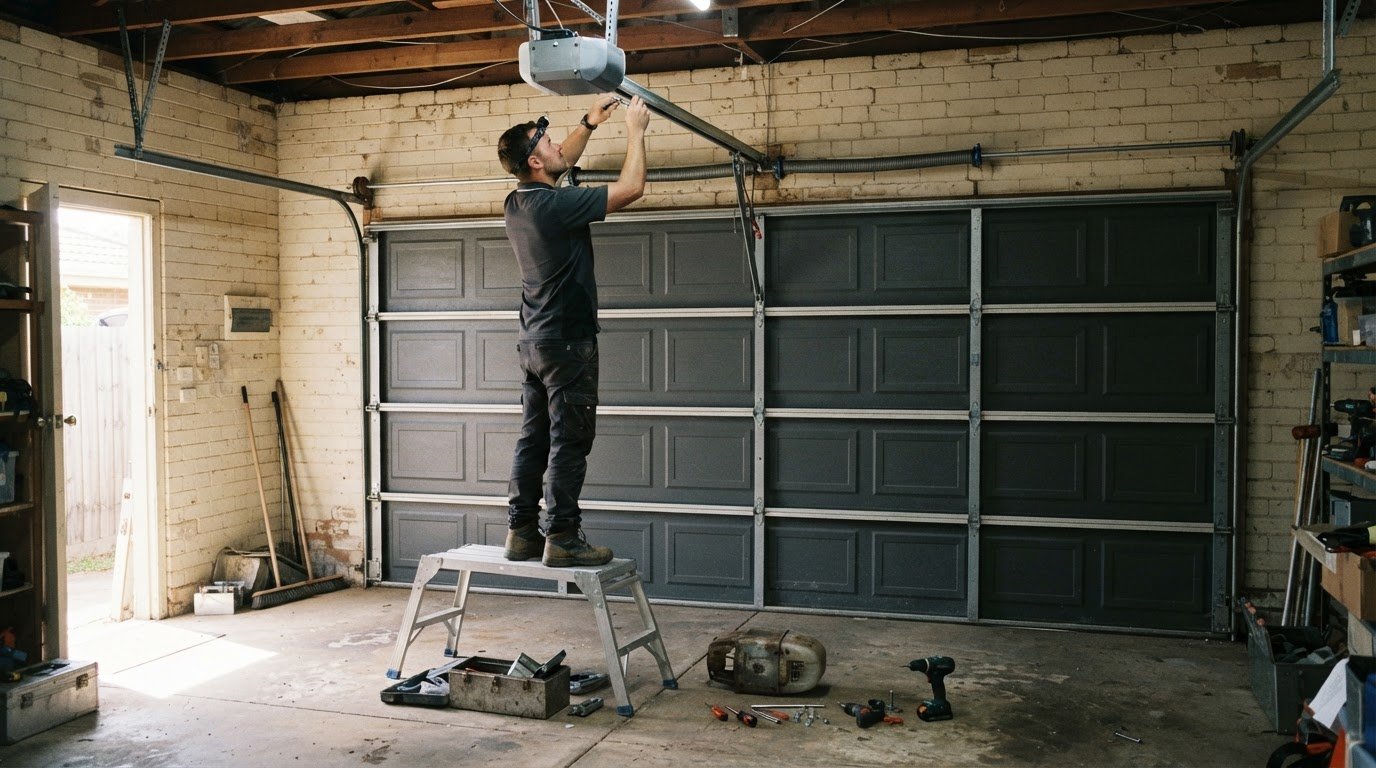
During a professional service, a technician checks moving parts, door alignment, spring tension and the opener. They can assess whether the door travels evenly and whether the opener’s settings and response are working correctly. The auto-reverse feature and safety sensors should also be tested to help identify faults affecting the door’s response.
Inspecting springs, cables and safety systems
A professional inspection should include springs, cables and safety systems. Yearly servicing is the usual schedule for most Australian homes, while homes near the coast or with doors used multiple times daily should consider servicing every six months. Springs are under extreme tension; attempting a DIY fix can cause serious injury. Leave their inspection and any repair work to a professional.
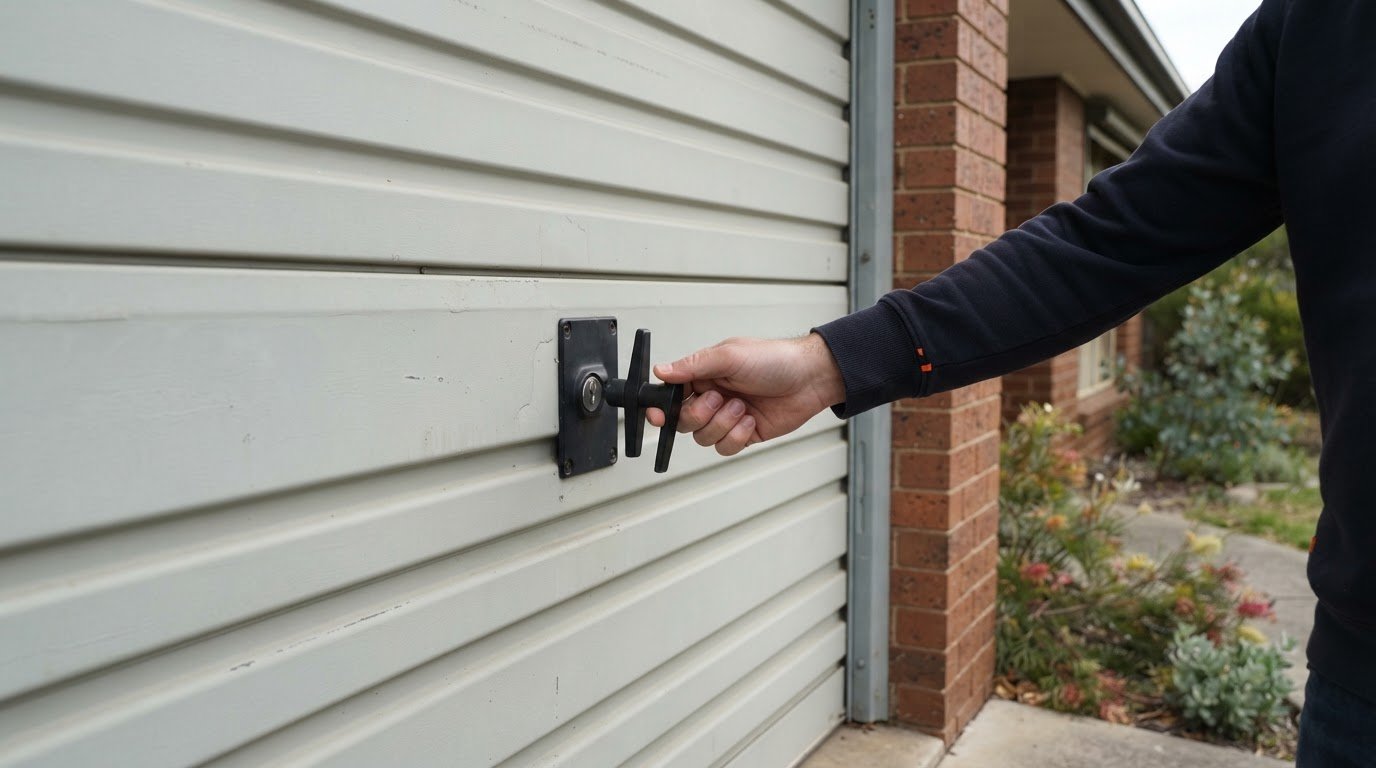
A balance check can also reveal a problem: if a manually operated door lifted halfway won’t stay there, it may need professional adjustment. A service can test the sensors and auto-reverse function, checking whether the door stops or reverses when obstructed. Weather exposure, frequent use and component wear can affect reliable operation, so mention any new noise or uneven movement during the inspection.
Garage door opener and component servicing
A garage door opener works with the door’s springs, hinges, bearings and rails, so servicing one part in isolation can miss wear elsewhere. During an annual service, a technician can assess the opener’s settings and response, along with the door’s balance and movement. These checks can identify strain before the opener struggles to lift or close the door correctly.
Opener maintenance depends partly on its drive type. Inspect belt-drive openers every six months for fraying or wear. Chain-drive openers should be inspected annually, with the manufacturer-specified grease used if lubrication is needed. A belt or chain sag of 1/4 inch is considered acceptable, but avoid adjusting tension yourself. Incorrect tension can affect the opener’s operation and the way the door closes.
Hinges, bearings and opener rails can need lubrication every 3-4 months, while garage door bearings should be lubricated annually. Follow the manufacturer’s instructions, since the correct lubricant and application points depend on the hardware. Springs also need a technician’s attention: annual re-tensioning can help prevent extra motor wear. A door that feels heavy or moves unevenly may indicate a balance or spring issue, not simply an expensive opener fault.
Safety checks are part of the same maintenance picture. A professional can test the auto-reverse feature, inspect the opener’s response and confirm that the door stops or reverses when obstructed. If it closes inconsistently, shudders or the opener responds slowly after a remote battery change, arrange an inspection instead of repeatedly operating it. These symptoms can have different causes, from settings to worn components.
Use the manufacturer’s maintenance instructions between services, but leave spring tension and internal opener repairs to a technician. If a fault persists, arrange garage door repairs to identify whether the opener or another component needs attention.
We Do Garage Doors: Garage door repairs
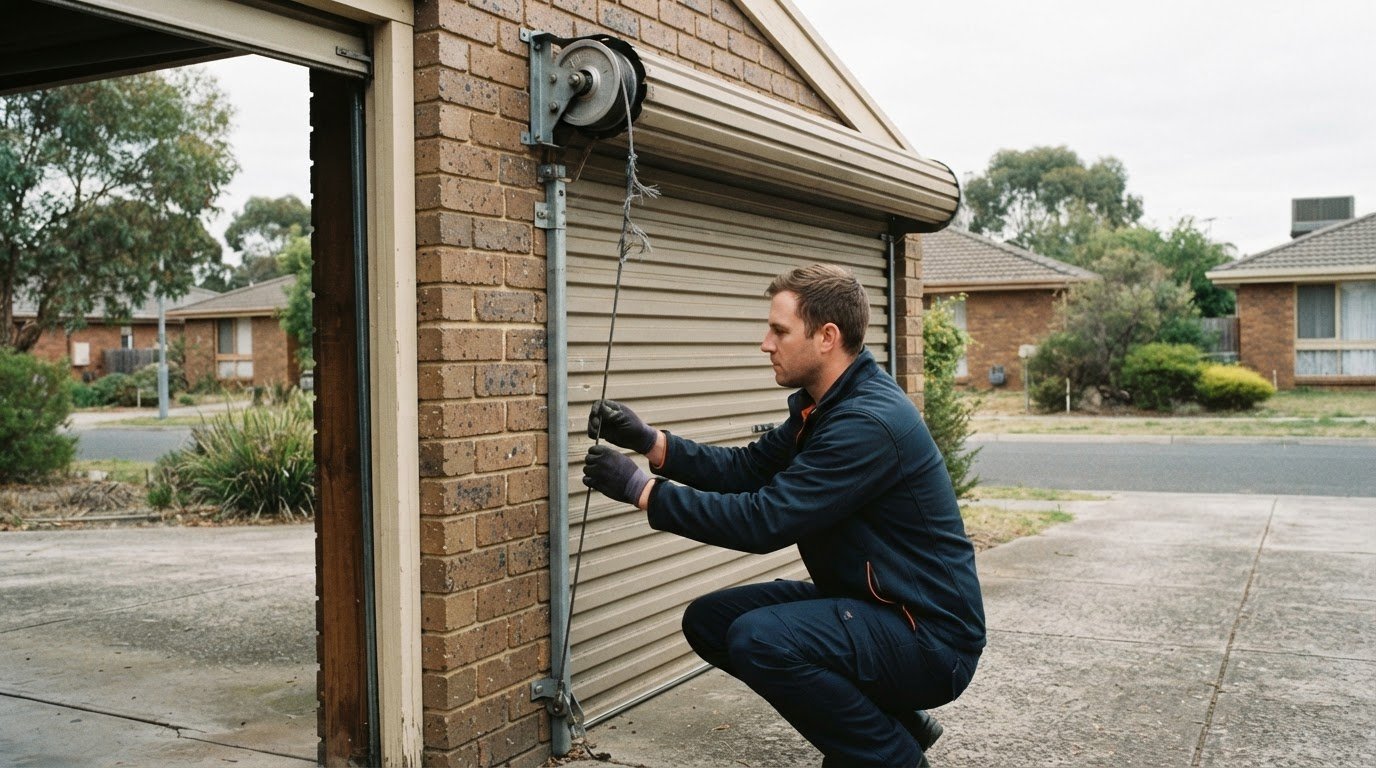
We Do Garage Doors provides residential garage door repairs in Melbourne, including Greenvale, Craigieburn, Mickleham, Roxburgh Park and Wollert. If the door won’t open or close smoothly, or its motor response remains unreliable, a repair can address the underlying issue. A worn or damaged spring may need replacement, while a failing motor may need motor replacement. Springs are under extreme tension; attempting a DIY fix can cause serious injury. Leave adjustments and repair work to a professional.
If you want connected control, We Do Garage Doors can retrofit smart controls to your existing garage door and motor. The right next step depends on what you’ve noticed, whether it’s unusual movement, a persistent fault or a need to change how you operate the door.
Contact We Do Garage Doors to discuss your garage door concern.
Make your next maintenance step count
Turn what you notice during everyday use into a clear maintenance plan. Keep a simple record of changes in movement, sounds or opener response, then use it to guide your next service conversation. Knowing how often a garage door should be serviced is useful, but acting on a new fault rather than waiting for the calendar can help you make a timely decision.
If an inspection points to a mechanical issue, We Do Garage Doors can help with garage door repairs, motor replacement or spring replacement. These services address different problems, from a failing opener to a worn spring. Describe the symptoms you’ve noticed when you get in touch.
Contact We Do Garage Doors to discuss the issue and find a practical next step for your garage door.
Frequently Asked Questions
Is garage door maintenance really necessary?
Yes. A small fault can affect how the whole system operates. For example, a worn roller can cause uneven movement, while a struggling opener may be reacting to resistance elsewhere. Note symptoms such as when a noise occurs or whether the door stops at the same point. This information can help a technician diagnose a recurring problem.
What Are The Most Urgent Warning Signs?
A broken spring, loose cable, door off its track or failed auto-reverse feature needs prompt attention. Don’t try to move a jammed or unstable door, and keep people clear of its path. If the door won’t reverse when obstructed, stop using it until it’s assessed. These warning signs point to a safety or mechanical fault, not routine cleaning.
When should I call for garage door repair?
Arrange a repair if the door stops partway, won’t close securely or continues making an unusual noise after basic upkeep. For example, if the opener runs while the door remains still, the fault is likely beyond a flat remote battery. Avoid forcing repeated cycles, which can add strain. Note whether the issue happens when opening, closing or both, and share that detail when arranging help.
Your Garage Maintenance Schedule: How Often Is Enough?
Homeowners often ask, “How often should a garage door be serviced?” For most Australian homes, professional servicing once a year is a practical baseline. Consider servicing every six months if the door is exposed to coastal conditions or used frequently each day. Add a monthly visual check and follow the manufacturer’s care guidance. Use the door’s environment and workload to fine-tune the schedule.
What does a garage door service include in Australia?
A professional service can assess balance, alignment, spring tension, moving hardware, opener response and safety systems. It can also identify worn parts and explain which need attention. Ask for the findings and recommendations to be recorded so you can track recurring issues over time. This is particularly useful if the same symptom returns after an adjustment or repair.
Can homeowners safely maintain or service a garage door themselves?
You can handle simple upkeep, such as clearing debris and cleaning accessible safety sensors. Follow the manufacturer’s instructions for cleaning and lubrication, and keep clear of moving parts. Don’t adjust springs, cables or opener mechanisms. Leave those components to a professional.
Comments