

How to Balance a Garage Door and Check Whether the Opener Is Straining
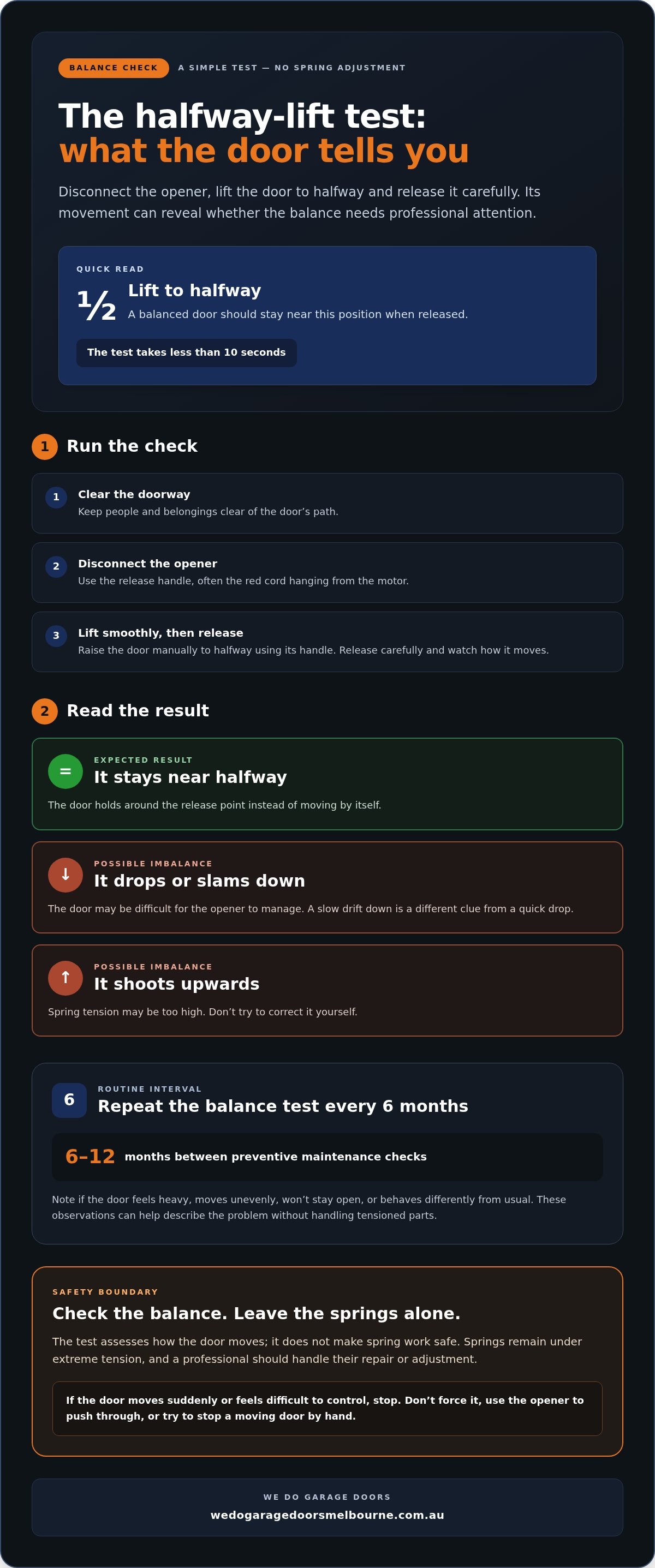
A garage door can move under power and still be out of balance. To check how to balance a garage door, disconnect the opener, lift the door to halfway and release it; a properly balanced door should stay in place. The test takes less than 10 seconds.
If the door drops, shoots upwards or feels difficult to move, its springs may not be counterbalancing its weight correctly, forcing the opener to work harder. Take these warning signs seriously, but don’t adjust the springs yourself: they’re under extreme tension, and a DIY fix can cause serious injury.
This guide explains what the halfway-lift test can reveal, how imbalance may strain the opener and why a professional should handle spring adjustment. You’ll also learn what a technician may inspect, so you can describe the problem and understand the next steps.
Table of Contents
Risks of DIY spring adjustment
Garage door springs counterbalance a door’s weight, which can range from 60 to 180 kilograms. Their stored tension makes adjustment hazardous, even when a small movement seems sufficient.
A spring adjusted incorrectly may no longer support the door evenly. The opener can be left carrying more of the load, and the door may move unpredictably.
Extension Spring S-Hook Adjustments
An extension-spring S-hook adjustment changes tension by moving the spring’s attachment point. Even a small change can affect how the spring helps lift the door and how the door moves.
A tensioned spring can recoil during handling, causing injury or damage. Don’t move the hook yourself. A technician can inspect the spring and its connections and determine whether replacement is needed.
Torsion Spring Tension Adjustments
Adjusting torsion-spring tension changes the force the spring applies as the door moves. Springs are under extreme tension, so a professional should handle their repair or adjustment.
Adding one turn of garage door spring tension may shorten the springs’ life by as much as 45%. Adding half a turn may reduce their life by 25%. Those figures show why trial-and-error adjustments can create further wear instead of correcting the balance.
Using the wrong tool or losing control near a tensioned spring can make the door move suddenly. Keep clear of the spring assembly if a spring looks damaged, loose or out of position, and never try to stop a moving door by hand.
More tension isn’t automatically the solution. A door that’s difficult to move or won’t stay open may have a weak spring; one that shoots upwards may have too much tension. A technician can assess whether adjustment or replacement is appropriate instead of relying on guesswork.
Safety questions about use, repair and maintenance
Treat spring work in Australia as hazardous, not as a routine adjustment. Torsion springs are under extreme tension, and a professional should handle their repair or adjustment. This is practical safety guidance, not a reference to a named Australian legal standard.
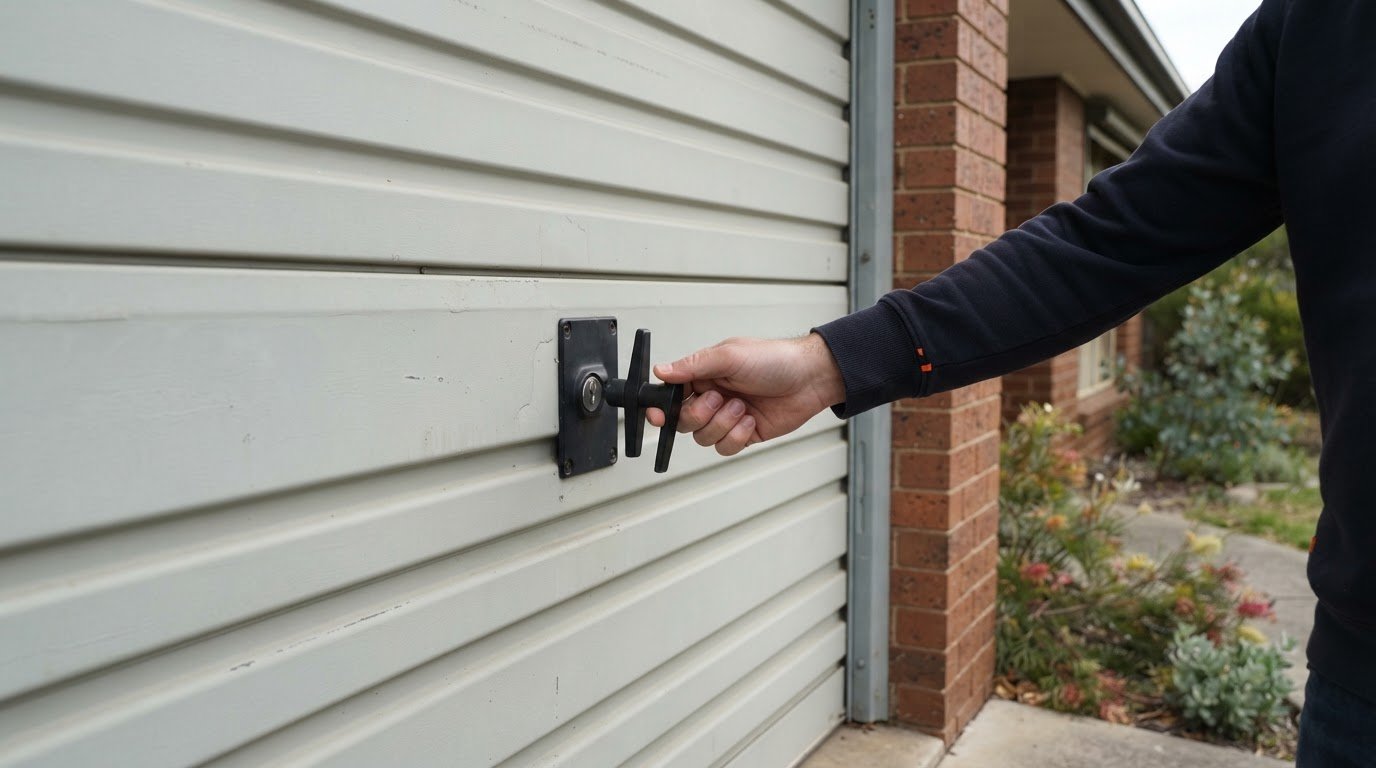
For a basic balance check, use the opener’s release handle, often a red cord hanging from the motor. Don’t touch the spring assembly or use adjustment tools. Keep clear of the door’s path, and stop if it moves suddenly or feels difficult to control.
Disconnecting the opener doesn’t make spring work safe; it only separates the door from the motor. The springs remain under extreme tension, and winding bars, pliers or improvised tools can’t make a DIY adjustment safe. Leave spring repairs to a professional.
What happens if the balance is poor? A door that is 40 pounds out of balance can require an extra 20 pounds of pull or opener force to close, when adjusted to remain 20 pounds heavy on the floor. That added load gives the opener more work and can make reliable operation harder.
If the springs are too weak, replacement is generally the solution. Don’t rely on the opener to lift a door it can’t safely manage. Replacing the spring addresses the counterbalance problem; motor replacement is relevant only if the motor itself needs replacing.
Build simple checks into regular upkeep. Test the balance every 6 months, and perform preventive maintenance checks every 6-12 months. If the door behaves differently, note whether it feels heavy, moves unevenly or won’t stay open. Those observations help describe the fault without handling tensioned parts.
For a door that needs spring work, professional spring repair support is a safer next step than attempting an adjustment yourself.
This is practical guidance, not a named Australian legal standard: a professional should handle spring repairs or adjustments because torsion springs remain under extreme tension.
The halfway-lift balance test
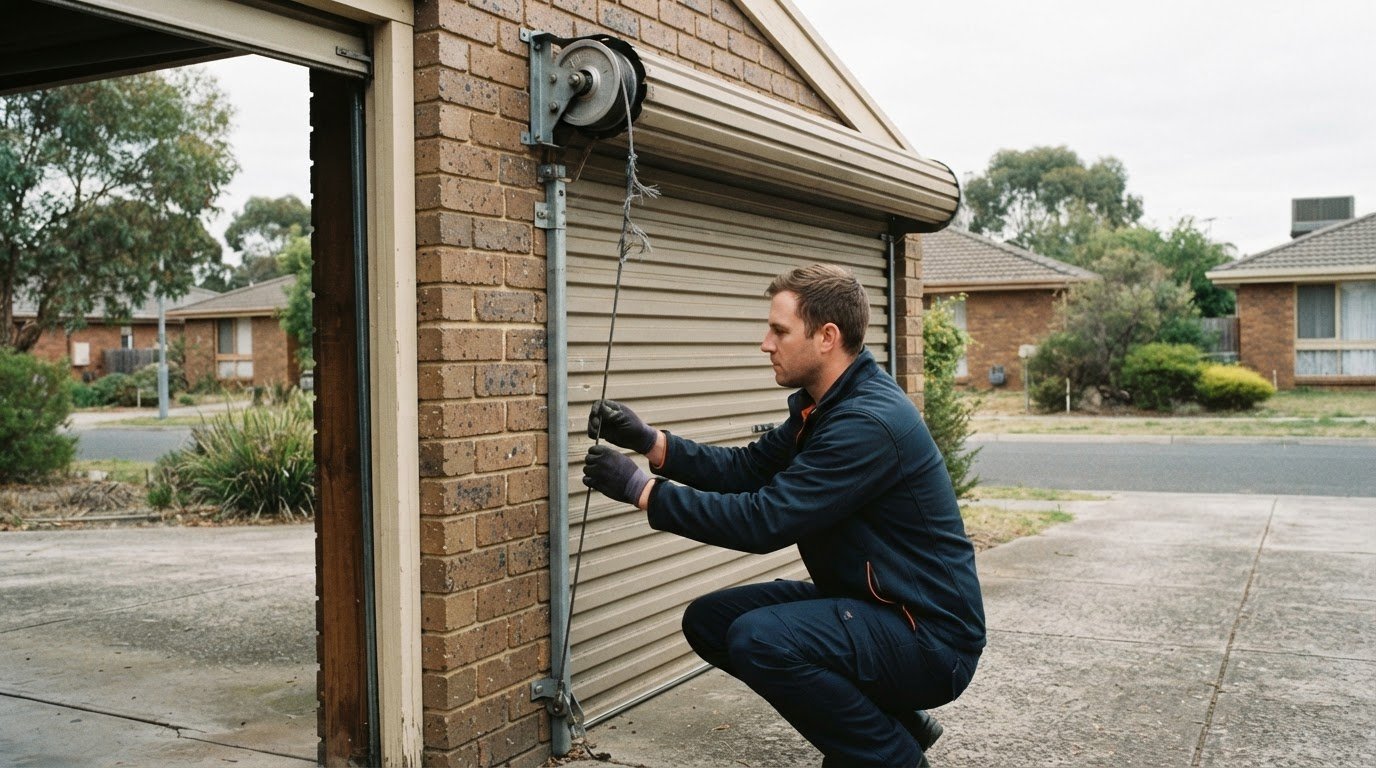
For a roller garage door in Australia, disconnect the opener and raise the door manually to halfway. Release it carefully; a properly balanced door should stay near that position instead of moving by itself. This halfway test is the safest first step when learning how to balance a garage door without adjusting its springs.
Use the test to assess the door’s balance, not to change spring tension. Clear the doorway, then operate the release handle, often the red cord hanging from the opener. Lift the door smoothly using its handle and release it at halfway. If it feels difficult to move, stop rather than forcing it.
It stays in place: the door holds at halfway, the expected balance-test result.
It drops or slams down: the door is unbalanced and may be difficult for the opener to manage.
It shoots upwards: the door is also unbalanced; spring tension may be too high.
Pay attention to the movement as well as where the door stops. A roller door that drifts down slowly gives a different clue from one that drops quickly. If it rises sharply after release, don’t adjust the spring tension yourself. Springs are under extreme tension, and a professional should handle the adjustment.
Knowing how to balance a garage door means understanding what the test can reveal, not attempting a spring repair. After testing, reconnect the opener according to its operating instructions. Keep people and belongings clear while the door moves, and don’t use the motor to force a door that has become heavy, jerky or noisy.
Repeat the balance test every 6 months as part of regular maintenance. If the roller door won’t stay open, moves unevenly or behaves differently from its usual pattern, stop testing and arrange an inspection. A repair may address the underlying problem; repeated opener use won’t restore spring balance.
What a technician may inspect
A technician looks beyond the opener’s effort to find why the door is hard to move. An inspection can distinguish a spring-balance issue from worn hardware, misalignment or a motor fault.
The technician may begin by operating the door and listening for scraping, rattling or uneven movement. If it binds at one point, the tracks, rollers or alignment may be involved, rather than spring tension alone.
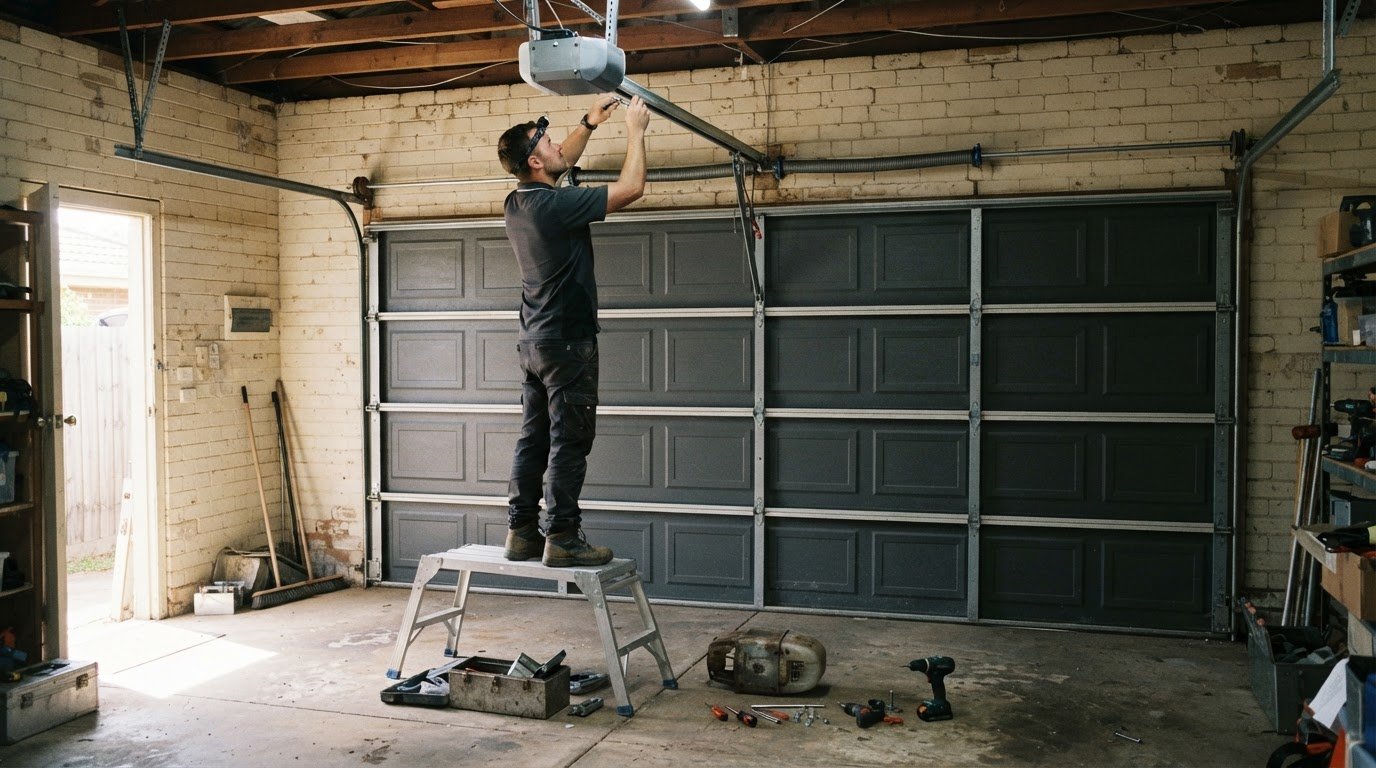
The technician can also check the spring system and its connections for visible wear, damage or looseness, and assess whether the springs counterbalance the door correctly. They can determine whether repair or replacement is appropriate. Cables, drums and brackets may also be inspected because faults in these parts can affect smooth movement.
Tracks and rollers: signs of obstruction, damage or uneven travel can help explain sticking or noise.
Hinges and panels: loose hinges or damaged sections may make the door flex or move inconsistently.
Opener operation: the motor, drive system and controls can be assessed if the door moves freely by hand but struggles under power.
These checks help distinguish a door problem from an opener fault. For example, if the door feels heavy when operated manually, the technician will assess its balance and hardware before attributing the problem to the motor. If it moves smoothly by hand but stalls under power, the opener may need closer attention.
Once the likely cause is identified, the technician can explain whether a garage door repair, spring replacement or motor replacement suits the fault. The right work depends on the inspection, not simply on how loudly the opener runs.
Before the visit, note when the problem occurs, such as during opening, closing or at one point along the track. Arrange a garage door inspection to have the balance, hardware and opener assessed together.
We Do Garage Doors: Garage door repairs
We Do Garage Doors can help when a balance test points to a spring, hardware or opener problem. Their garage door repairs address faults affecting safe, smooth operation, while spring replacement is relevant when worn or weak springs cannot properly counterbalance the door.
If the door balances by hand but the motor struggles, motor replacement may be appropriate if the motor itself is faulty. For a different way to operate the door, smart controls can be retrofitted to the existing door and motor. The right service depends on the fault, so describe what you noticed during the test.
If your garage door needs attention, contact We Do Garage Doors to discuss the repair.
Make the next repair decision with confidence
Knowing how to balance a garage door gives you a useful starting point. Note whether the problem occurs during manual movement, powered operation or both, and share that detail when arranging help. It can help focus attention on the door hardware or opener without attempting spring work yourself. You don’t need to diagnose the fault before explaining what you’ve noticed.
We Do Garage Doors offers garage door repairs, spring replacement and motor replacement, giving homeowners a path from identifying a fault to addressing the relevant component. A door that behaves differently deserves attention, especially if continued use is making daily access less predictable. A clear account of its changes can help shape a practical discussion about the next step.
For help with your garage door, contact We Do Garage Doors. With the right repair in view, you can move towards dependable everyday operation with greater confidence.
Frequently Asked Questions
10-Second Garage Door Balance Test: Is Your Opener Working Too Hard?
The balance check takes less than 10 seconds, but it doesn’t prove the opener is faulty. Disconnect the opener, raise the door to halfway and release it. If it drops or rises, the door is unbalanced and may be making the motor work harder. If it stays put but the opener still labours, another mechanical fault may need attention.
What Should Happen?
When released halfway during a manual test, a balanced garage door should stay in place. This suggests the spring system is counterbalancing the door at that position, but doesn’t confirm that every component is fault-free. If powered movement is still noisy, hesitant or uneven, note those symptoms for an inspection rather than adjusting the spring tension yourself.
How can you tell if a garage door is unbalanced?
Notice how the door behaves manually and under power. A door that feels unusually heavy, won’t stay open, drops when released or shoots upwards may be unbalanced. The opener may also seem to labour. Note whether the issue happens while opening, closing or at a particular point, as that detail may help identify the cause.
What tools and safety equipment are needed to balance a garage door?
For the balance test, use the opener’s release handle, often a red cord, and keep clear of the door’s path. Spring-adjustment tools aren’t needed for the test; leave spring work to a professional.
Comments