

How to Fix a Garage Door That Won’t Stay Down: A Melbourne Homeowner’s Guide
You have just pulled into your Craigieburn driveway after a long day, pressed the remote, and watched the door glide shut, only for it to pop right back up like a stubborn jack-in-the-box. It is an incredibly frustrating moment that leaves your home feeling exposed and your evening plans on hold while you worry about the security of your property. You might be concerned that a costly motor replacement is the only way to fix a garage door that won’t stay down, but the reality is often a simple settings clash or a minor sensor misalignment that can be sorted with the right approach.
We understand how much you value the peace of mind that comes with a secured home, and we are here to help you regain that confidence. This guide will help you discover why your door is refusing to cooperate by troubleshooting sensors, travel limits, and basic hardware before you reach for the phone. We will walk you through the most common culprits behind these automated failures, providing you with a clear path to a reliable, closed garage and the knowledge to decide if a professional service call is the right next step for your Merlin or B&D system.
Table of Contents
Why Your Garage Door Won’t Stay Down: Common Culprits
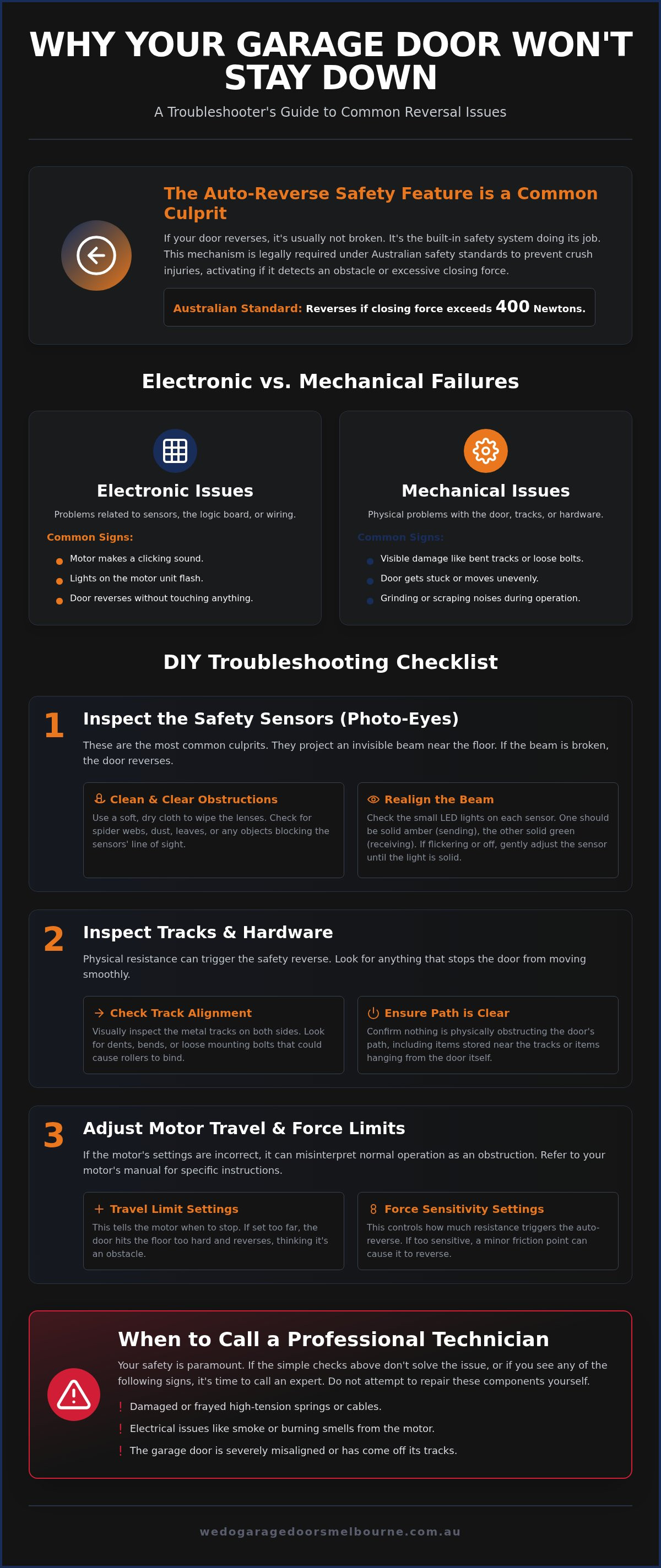
When your garage door behaves like a boomerang, it is usually because the motor’s internal logic has detected a problem. This is almost always triggered by the built-in garage door safety features designed to protect your family and vehicles. Rather than a total mechanical failure, the system is likely performing an "auto-reverse." It thinks there is a child, a pet, or an object in the way, so it retreats to the open position to prevent a crush injury. This mechanism is a legal requirement under Australian safety standards, ensuring that the closing force does not exceed 400 Newtons before the door reverses.
It is helpful to distinguish between "rebounding" and "ghosting." Rebounding occurs the second the door touches the floor or an obstruction, immediately heading back up. Ghosting is when the door opens randomly, often hours after you have left, which can be due to frequency interference or a faulty logic board. To fix garage door that won't stay down issues, we first need to determine if the motor is overreacting to a perceived obstacle or if a component has physically shifted out of alignment.
The Security Risk of an Unreliable Door
A door that refuses to stay shut is more than just a nuisance; it is a glowing invitation for intruders. In Melbourne suburbs like Craigieburn or Mickleham, a garage often provides direct access to the main house. Leaving it even slightly ajar can also complicate home insurance claims. Many policies require the property to be fully secured to cover a theft, and a door that has reversed back to the open position leaves you vulnerable. If your door is cycling back up late at night and you cannot secure it, seeking emergency garage door repair Melbourne is the fastest way to restore your home's perimeter.
Electronic vs. Mechanical Failures
Identifying the root cause involves separating electronic "brain" issues from physical hardware problems. Electronic failures usually involve the photo-eye sensors or a glitching logic board. If the motor makes a clicking sound or the lights flash, it is likely a sensor signal error. Mechanical failures, however, involve bent tracks, loose mounting bolts, or worn rollers that create enough friction to trigger the motor's safety reverse. For older systems that have reached the end of their lifespan, a full garage door motor replacement Melbourne might be the most reliable long-term solution to ensure effortless operation and modern safety compliance.
Troubleshooting the Safety Sensors (Photo-Eyes)
The safety sensors, often referred to as photo-eyes, are your door's primary line of defence. Located just a few centimetres above the ground on either side of the door tracks, these devices project an invisible infrared beam across the opening. If that beam is interrupted while the door is closing, the motor assumes something is in the way and reverses the door immediately. This logic is a mandatory requirement under the federal safety standard for automatic openers, ensuring that the system prioritises safety over closure. If you are trying to fix garage door that won't stay down issues, the sensors are the most common culprit and the easiest place to start your investigation.
Cleaning and Clearing Obstructions
Melbourne's climate and local wildlife often conspire against these sensitive electronic components. Spiders love the sheltered corners of a garage, and a single thick web spun across a sensor lens can be enough to break the beam. Similarly, dust from the driveway or a stray garden rake leaning too close to the track can trigger a safety reversal. It is a simple fix that requires no technical expertise. Use a soft, dry cloth to gently wipe the lenses on both the sending and receiving units. Avoid using harsh chemical cleaners, as these can cloud the plastic lens over time and lead to more frequent errors. While you are down there, check the wiring leading back to the motor. Inquisitive pests or vibrations from the door's movement can sometimes loosen the connections, causing the door to bounce back unexpectedly.
Realigning the Beam for Consistent Closure
Each sensor unit features a small LED indicator that tells you exactly what is wrong. Typically, the sending sensor has a steady amber light, while the receiving sensor has a green light. If either light is flickering or completely dark, your sensors are out of alignment. You can often fix garage door that won't stay down problems by simply loosening the wing nut on the sensor bracket by hand. Pivot the sensor slowly until the light glows steadily without any flickering. During a bright Melbourne summer, direct sunlight hitting the receiving lens can "blind" the sensor, tricking it into thinking the beam is broken. If your door only refuses to stay down during the sunniest part of the afternoon, you might need to create a small cardboard sunshade to protect the lens from glare. If the lights remain uncooperative despite your best efforts, it might be time to book a professional service call to test the internal circuitry and ensure your home is secure.
Adjusting Motor Travel Limits and Force Settings
If your sensors are clear and aligned but the door still refuses to stay shut, the issue likely lies within the motor’s internal logic. Every automatic opener uses "travel limits" to understand exactly where the door should stop. Over time, these settings can drift due to cable stretch or the natural settling of your home. When the "down" limit is set even a few millimetres too far, the door hits the driveway with too much pressure. The motor interprets this resistance as an obstruction and reverses the door to prevent damage. To fix garage door that won't stay down issues caused by limit drift, you need to recalibrate the motor's "brain" so it knows exactly where the floor is.
The "Force" setting works alongside these limits as a secondary safety measure. It measures how much electrical current the motor draws to move the door. If the door becomes heavy due to age or poor maintenance, the motor has to work harder. Once it hits a certain threshold of resistance, it assumes it has struck an object and triggers the auto-reverse. This is a common point of confusion for homeowners, as the door appears to be working perfectly until the final few centimetres of travel.
Setting the "Down" Limit
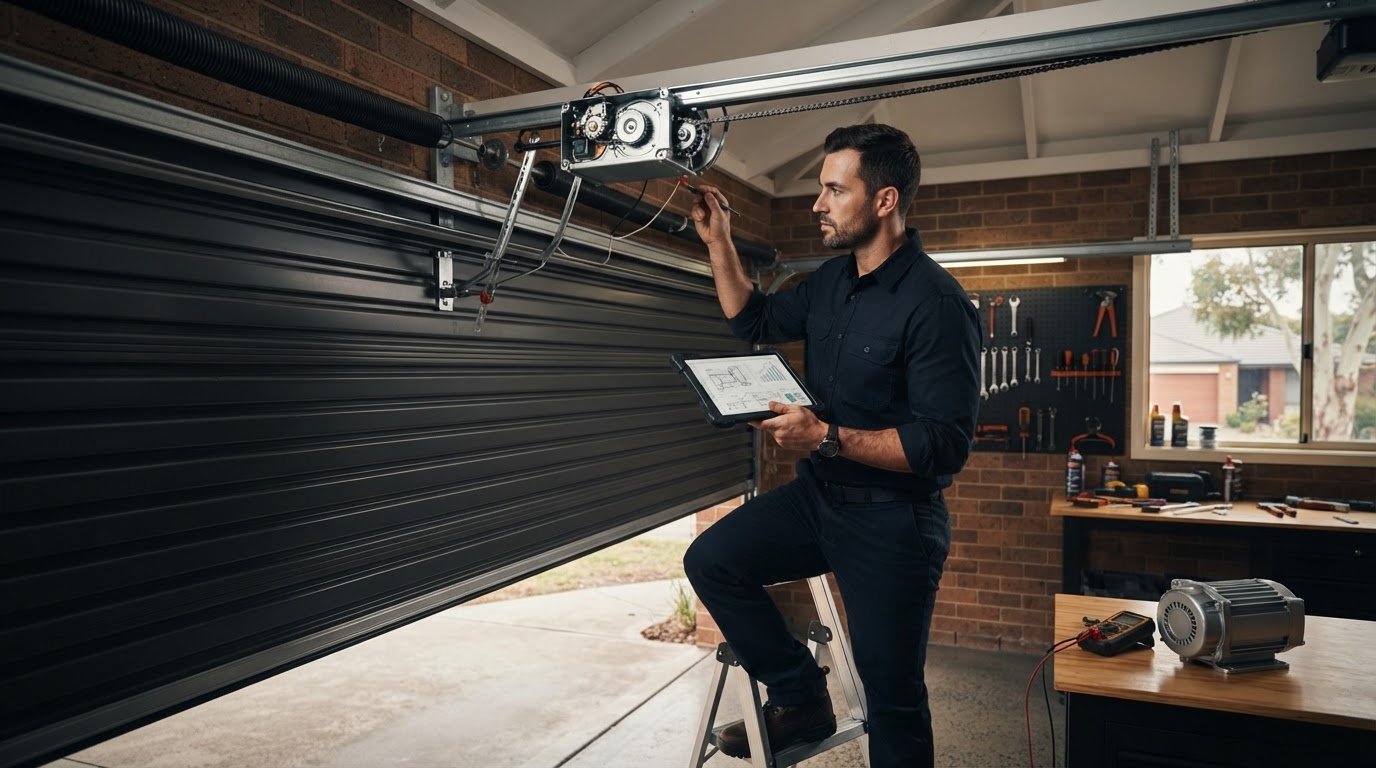
Most modern Merlin or B&D motors have a simple interface on the motor head, often hidden behind a light cover or plastic panel. You will typically find buttons labelled "Limit" or adjustment screws marked with arrows. The goal is to decrease the downward travel in tiny, incremental steps. If you adjust it too much in one go, you might leave a gap at the bottom, which compromises your home security and allows leaves or pests to enter. After every minor tweak, run a full cycle to test the result. A professional technician will often use a 50mm piece of timber to perform a safety reversal test, ensuring the door still reacts correctly to a real obstruction while staying firmly closed on the concrete.
Calibrating Close Force
The force setting determines how much muscle the motor uses before it decides it has hit something. Melbourne’s wild weather swings play a significant role here. On a freezing July morning, the metal tracks might contract or the lubricant may thicken, creating extra friction. If your force sensitivity is set too low, the motor will struggle against this natural resistance and pop back up. However, you must be extremely cautious. Setting the force too high is a major safety risk because it can override the auto-reverse function. If you find yourself constantly fiddling with these settings on an older unit to fix garage door that won't stay down problems, upgrading to a smart garage door opener Melbourne homeowners trust can provide much more precise digital calibration and better long-term reliability.
Inspecting Mechanical Obstructions and Track Alignment
While the motor serves as the brain of your system, the tracks and rollers form the skeleton that must remain perfectly aligned for smooth operation. Even a tiny pebble or a buildup of dried grease inside the track can create enough physical resistance to trigger the auto-reverse mechanism. When you are trying to fix garage door that won't stay down, it is vital to inspect the physical path the door takes. If the motor senses a "bind" or a sudden spike in friction, it assumes it has struck an object and will retreat to the open position to stay compliant with Australian safety standards.
Track Alignment and Melbourne Weather
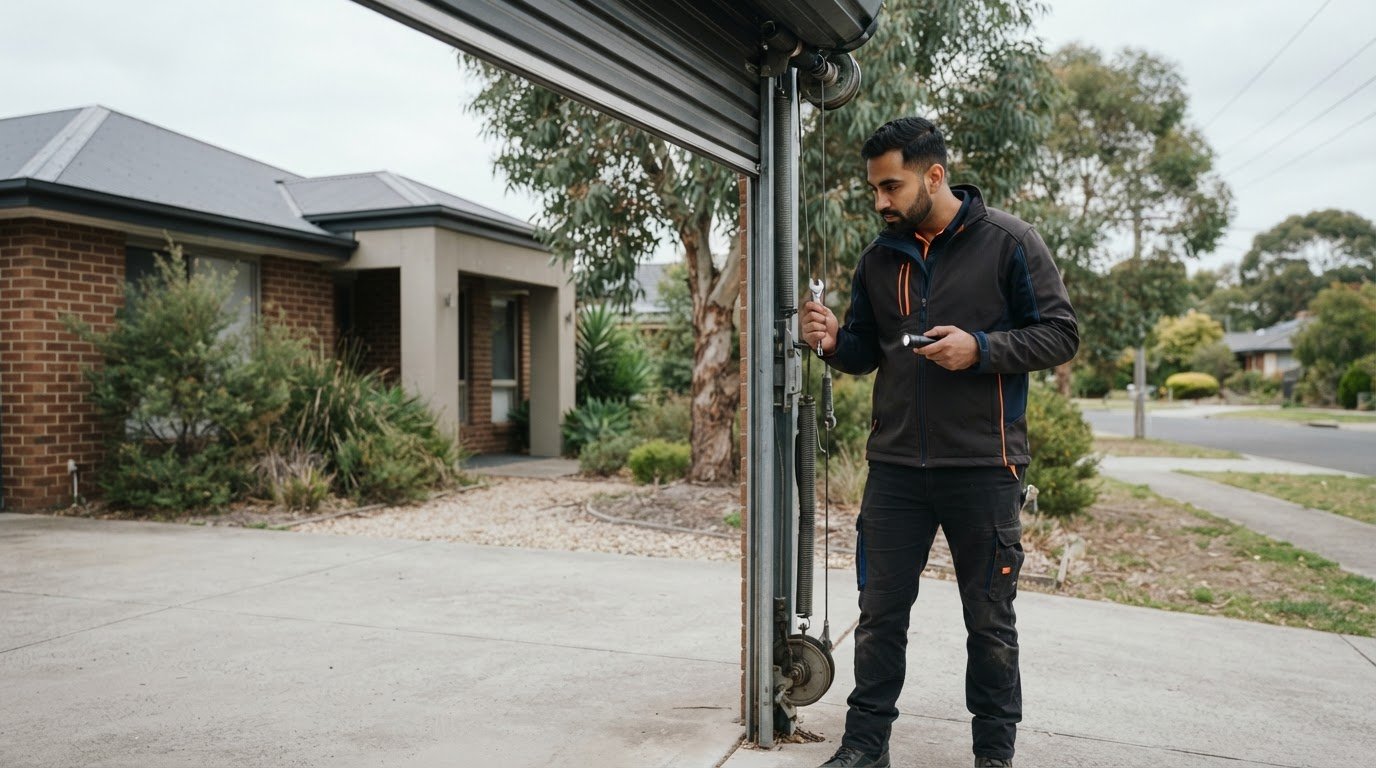
Melbourne’s variable climate can wreak havoc on metal components. In suburbs like Greenvale or Craigieburn, where summer temperatures can soar, the metal tracks are subject to significant thermal expansion. This can cause the mounting bolts to loosen over time or the tracks to shift slightly out of vertical alignment. You can check this yourself with a spirit level; the tracks should be perfectly plumb. If they have drifted, the door will rub against the side of the track, creating the mechanical resistance that forces the door back up. Tightening the hardware and ensuring the tracks are parallel will often resolve these reversals caused by vibration and heat warping.
Roller and Hinge Maintenance
The rollers are the unsung heroes of your garage door. If they are chipped, rusted, or have flat spots, they won’t glide smoothly. This "stuttering" movement is frequently misinterpreted by the motor as an obstruction. A common mistake homeowners make is spraying the tracks with heavy grease or WD-40, which actually attracts dust and creates a sticky sludge that hinders movement. Instead, use a high-quality silicone or lithium-based lubricant on the rollers and hinges only. If the door still feels incredibly heavy or lopsided, you might be dealing with a broken garage door spring Melbourne homeowners often overlook. A failing spring puts immense strain on the motor, making it nearly impossible for the door to complete its cycle safely. If you suspect a mechanical bind is the culprit, request a professional track realignment to restore effortless operation.
When to Call a Professional Melbourne Technician
While we encourage homeowners to handle basic maintenance, there is a fine line between a simple adjustment and a hazardous repair. If your attempts to fix garage door that won't stay down have led to a persistent "ghost opening" cycle, where the door moves without any remote input, you are likely facing a logic board failure or frequency interference. This isn't something that can be solved with a screwdriver or a cloth. When you encounter strange grinding noises, a motor that feels hot to the touch, or the faint smell of electrical smoke, the system is telling you it’s under extreme duress. Ignoring these red flags can lead to a complete motor burnout, which is far more expensive than a standard service call.
Safety First: The "No-Go" Zones for DIY
The safety of your family is the top priority, and that means knowing which parts of the door are strictly off-limits for DIY enthusiasts. Torsion springs and the cables attached to the bottom brackets are under immense tension, often supporting over 100kg of door weight. If a cable looks frayed or a spring has physically snapped, do not attempt to tighten or remove it. These components can fail violently if handled without professional expertise. Engaging a master garage door technician Melbourne ensures that these high-tension elements are replaced with precision, preventing a catastrophic failure that could damage your vehicle or your home's structure.
Expert Repairs in Craigieburn, Greenvale, and Beyond
Living in Melbourne’s northern suburbs like Craigieburn or Greenvale means you have access to rapid, local response times when your home's security is on the line. During a professional service call, we do more than just get the door to stay shut. We perform a full diagnostic, checking for worn rollers, lubricating moving parts, and verifying that the auto-reverse mechanism meets current Australian safety standards. This is also the perfect time to consider an annual garage door service Melbourne to stay ahead of future wear and tear. We can even help you transition to 2026-standard smart upgrades. These modern systems provide real-time alerts on your phone whenever your door is operated, giving you an ultimate layer of peace of mind and ensuring you never have to worry about a "rebounding" door again.
Restoring Security and Confidence to Your Home
A garage door that refuses to stay shut is often a sign of a safety feature working exactly as intended, even if the timing feels like a major inconvenience. By clearing simple obstructions from your sensors and ensuring your motor limits are correctly calibrated, you can often fix garage door that won't stay down issues without specialised tools. However, when mechanical resistance from warped tracks or failing springs becomes the culprit, prioritising your safety is the most important step you can take.
If your troubleshooting has reached a dead end or you suspect a more serious mechanical failure, We Do Garage Doors is ready to help. Our master garage door technicians provide expert repairs and emergency services across the Northern Suburbs, including Craigieburn and Greenvale. We specialise in all major brands, including Merlin and B&D, ensuring your system is restored to peak performance with precision and care. Book a Professional Service Call with We Do Garage Doors in Melbourne Today and regain the effortless operation your home deserves. Your security is too important to leave to chance; we are here to ensure your garage remains the safe, reliable entrance it was meant to be.
Frequently Asked Questions
Why does my garage door close halfway and then open again?
Your garage door is likely triggering its auto-reverse safety mechanism because it detects an obstruction or excessive physical resistance. This can happen if a garden tool is leaning against the track or if the photo-eye sensors are slightly misaligned. In Melbourne's northern suburbs, debris like leaves or thick cobwebs frequently block the invisible infrared beam. If the tracks are clear, the motor's force settings might need professional adjustment to handle the door's weight correctly.
Can I fix a garage door sensor myself?
Yes, most sensor issues are straightforward for homeowners to resolve without specialised help. You can gently wipe the lenses with a dry cloth and ensure the LED indicator lights are glowing steadily without any flickering. If the lights are blinking, simply loosen the bracket and pivot the sensor until the beam is restored. However, if the wiring is frayed or the sensor units are physically damaged, it is best to contact a technician for a proper replacement.
How much does it cost to fix a garage door that won’t stay down in Melbourne?
The cost to fix garage door that won't stay down problems in Melbourne depends on whether the root cause is electronic or mechanical. Industry averages for standard repairs often range between A$150 and A$600, covering tasks like sensor alignment or minor track work. If the problem requires more complex hardware like a motor or spring replacement, the total investment will increase. A professional service call provides a definitive diagnosis and ensures the repair meets Australian safety standards.
Is it safe to use my garage door if it keeps reversing?
It is not advisable to continue using a door that won't stay down, as this puts unnecessary strain on the entire motor unit. Repeatedly forcing the door to close can lead to premature motor burnout or damage to the drive gear. More importantly, a door that reverses back to the open position leaves your home in Craigieburn or Mickleham vulnerable to intruders. It is safer to use the manual release until a technician can inspect the system.
Why does my garage door open by itself at night?
This phenomenon, often called "ghost opening," is usually caused by frequency interference or a glitching logic board. If a neighbour's new remote is on a similar frequency or if your own remote has a stuck button, the door might trigger randomly. In older systems, the circuit board can become sensitive to power surges or moisture. Upgrading to a modern Merlin or B&D system with encrypted rolling codes can effectively eliminate these security risks and provide better peace of mind.
How do I reset the travel limits on a Merlin garage door motor?
Resetting the travel limits on a Merlin motor involves using the "Limit" and "Arrow" buttons located on the motor head. You generally hold the limit button until the light flashes, then use the arrows to guide the door to the desired closed position. It is vital to make these adjustments in small increments to avoid the door hitting the floor too hard. If the settings don't save, it may indicate a faulty encoder or a more serious internal logic error.
What should I do if my garage door remote isn’t working properly?
Start by replacing the batteries with high-quality lithium cells, as weak power is the most common cause of intermittent signals. If new batteries don't work, the remote may need to be reprogrammed to the motor head. Check for any local electronic interference from LED lights or wireless devices in your garage that might be blocking the signal. If the remote is physically damaged, we can provide a replacement remote compatible with your specific Merlin or B&D model.
Do I need a new motor if the door won’t stay closed?
Not necessarily, as many issues are related to sensors or minor limit settings that are easily adjusted. Most modern motors are designed to be repaired rather than replaced. However, if your motor is over ten years old and experiencing recurring logic board failures or loud grinding noises, a replacement might be more cost-effective. We can assess your current system and help you decide if a repair or a new motor replacement is the best long-term solution.
Comments