

How to Lock a Garage Door From Outside Using Its Handle
A garage door’s outside handle locks the door when you turn it 90 degrees. To unlock it from outside, use the key cylinder to release the side lock; the handle alone won’t retract the bolt. Knowing how to manually lock a garage door also means understanding how to disconnect the opener: pull the emergency release cord once to switch to manual operation.
If the power is out or the motor won’t re-engage, it helps to know what to do next and when to stop rather than force the door. A door that feels unusually heavy or won’t stay closed may need attention.
This guide explains how to lock and unlock a garage door from outside, disengage and reconnect the motor, and secure the door temporarily if reconnection fails. It also covers warning signs that call for professional repairs, so you can decide what to do safely.
Table of Contents
How to lock and unlock a garage door from outside?
To learn how to manually lock a garage door from outside, use its key cylinder to release the side lock, then operate the handle. Disconnect the opener before moving the door by hand.
Locate the manual releaseFind the release cord or lever hanging from the opener rail, usually with a red handle. Identify it before pulling and keep clear of the moving door. If you’re outside without access to the release, use the exterior key cylinder rather than reaching through the door.
Disconnect the openerWith the door closed, pull the emergency release cord down once to disconnect the door from the opener. You can then operate it manually, including during a power outage. Pull only a cord you can identify, and don’t force the door if it feels unusually heavy.
Engage the manual door lockClose the door fully before engaging its manual lock. On a sectional or roller door, turn the exterior handle 90 degrees to extend the bolt. To unlock, use the key cylinder to release the lever; the handle alone can’t free a blocked bolt. If the bolt doesn’t spring open, hold the key in the unlocked position and turn the handle to retract it.
For a B&D Auto-Lock, use its key cylinder to release the lock before moving the door. Designs vary, so follow the instructions for your model. Australian requirements depend on the product and installation, so use a lock suited to the door and follow the manufacturer’s instructions.
From inside, close the door fully and operate its fitted manual lock. Don’t engage the lock while the opener is moving the door. Before lifting, watch for unusual heaviness, snapping or grinding noises, or a lock that won’t engage. Knowing how to manually lock a garage door doesn’t make it safe to operate when these warning signs appear. Stop if you notice them.
Manually securing a door when the motor will not re-engage
If the opener won’t reconnect, secure the closed door before addressing the motor. For a panel door, a screwdriver may help hold it in place through an opening in the side track.
Unplug the motor. Disconnect it from its power supply before securing the door. Unplugging the motor is a precaution while you’re working on the door. Don’t attempt to hold the door in position while the motor is powered or trying to move it.
Close the door fully. A manual lock should only be engaged when the door is fully closed. If it isn’t seated, don’t force the lock or try to secure the door partway down. Make sure the panels have reached the floor before continuing.
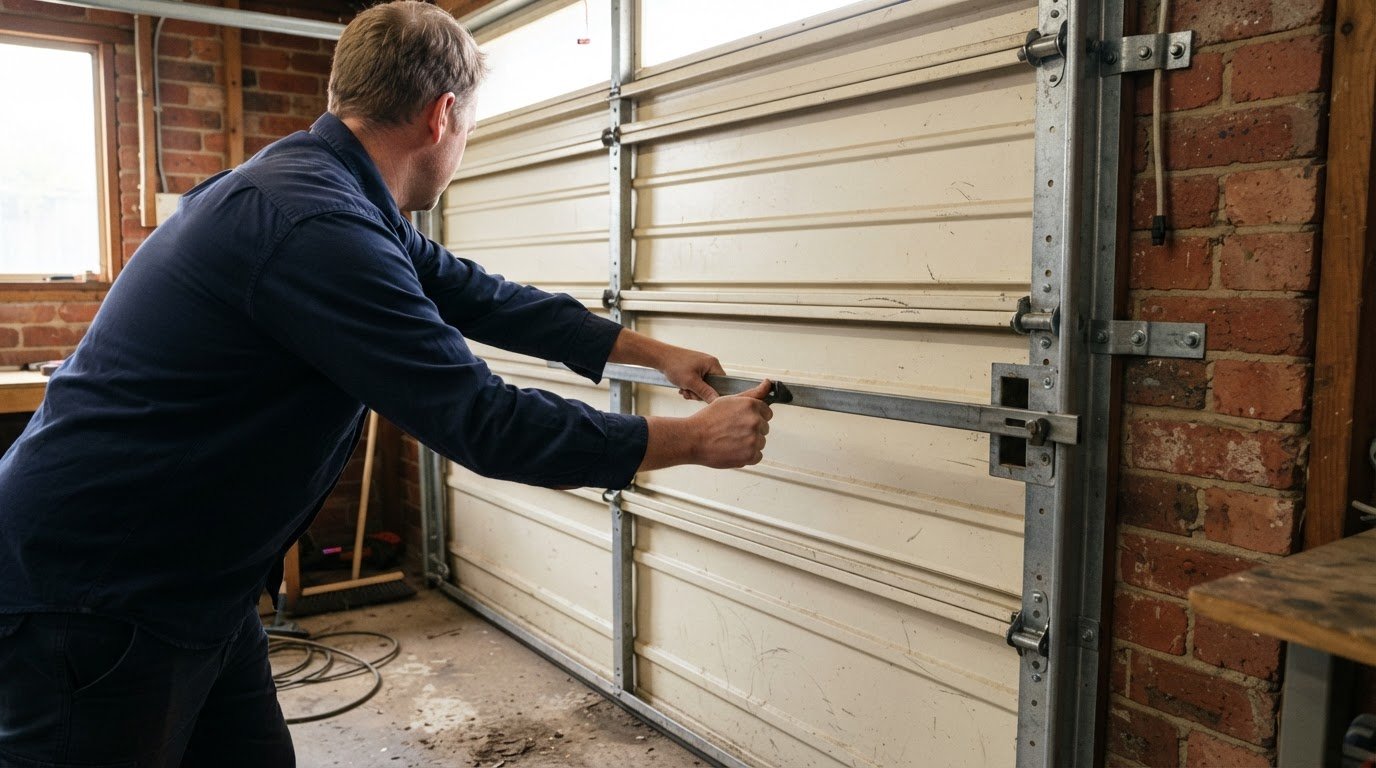
Secure a panel door at the side track. Find a hole in the vertical track just above a wheel. Insert a screwdriver through the opening to help secure the door in place. This is a temporary measure, not a repair to the opener or door mechanism.
Stop if the door feels unsafe to handle. Garage doors can weigh hundreds of pounds, and a broken spring can make one drop suddenly. If the door feels extremely heavy when lifted manually, stop lifting it. A door that won’t stay closed or has a lock that won’t engage properly also needs professional assessment.
Don’t try to force the opener to reconnect while the door is held by a screwdriver. Keep people clear of the door until the motor and door can operate normally again. If the motor still won’t re-engage, motor replacement service may be relevant when the motor itself has failed. Until the fault is addressed, the screwdriver method helps secure a panel door, but it doesn’t restore powered operation.
Use a screwdriver only to help secure a panel door, placing it through the side vertical track hole just above a wheel. Unplug the motor before securing the door. This won’t reconnect the motor; it only helps hold the door while the motor remains disconnected.
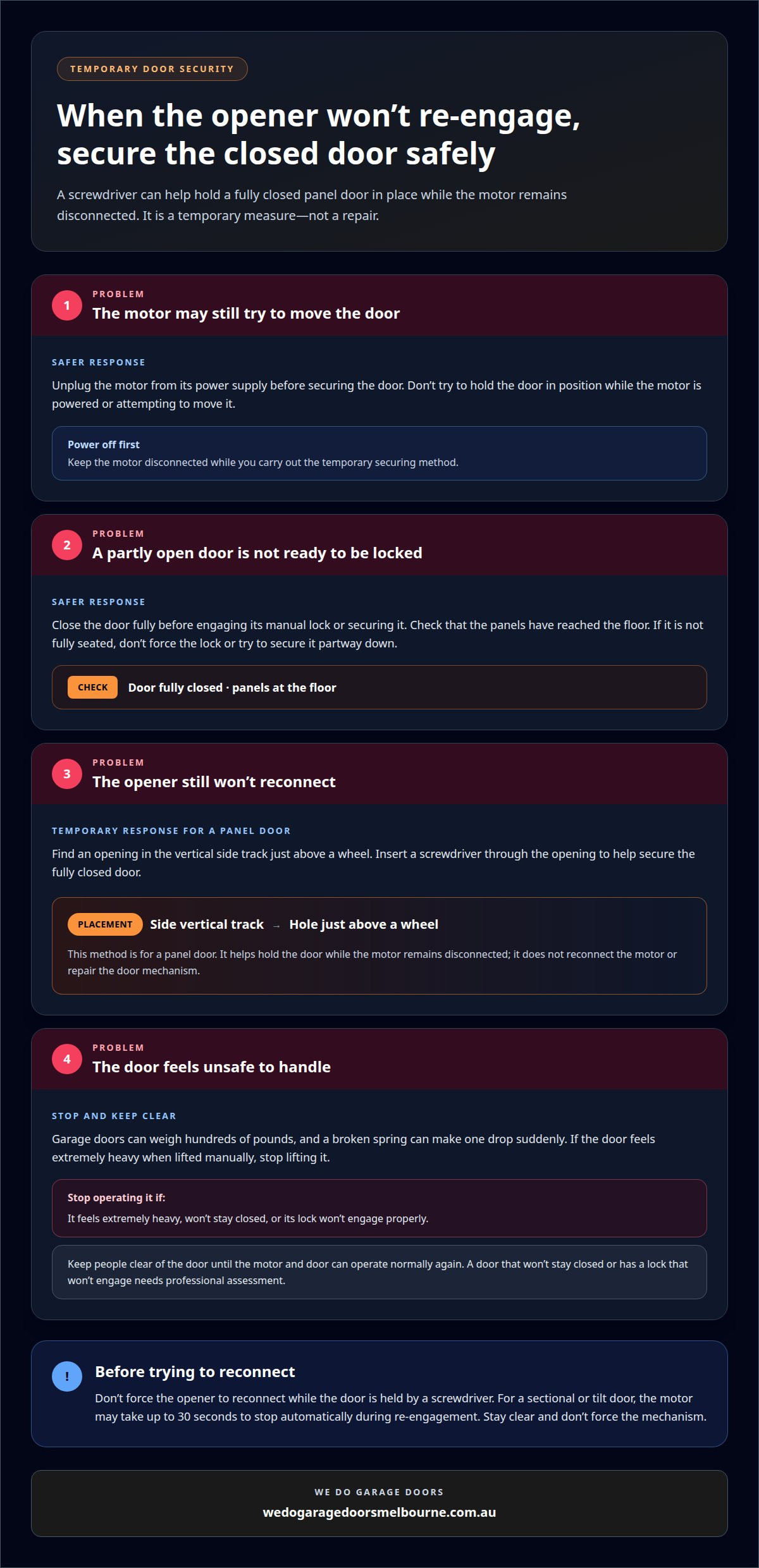
Disengaging the garage door motor
Understanding how to manually lock a garage door starts with safely separating it from the opener. The release method depends on the door and opener type.
Inspect the door first. Look for damage or uneven movement before operating the release. A broken spring can cause the door to drop suddenly. If it feels extremely heavy when lifted manually, stop and don’t try to force it.
Locate the manual release. Find the cord or lever attached to the opener rail, usually marked with a red handle. Make sure you can reach it without standing beneath a moving door. Don’t pull a cord unless you can identify it as the emergency release.
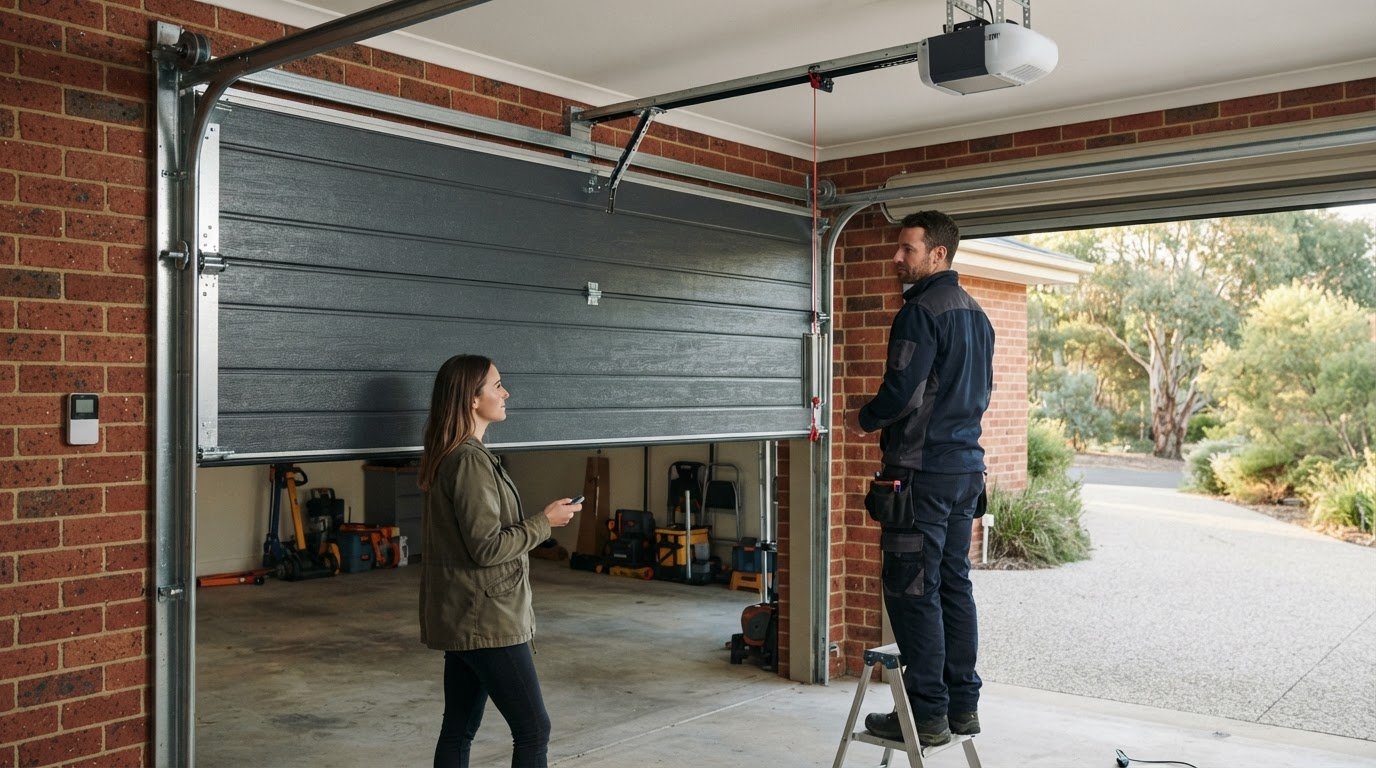
Pull the release once. Pull the emergency release cord down one time to disconnect the door from the opener. You can then operate the door manually, including during a power outage. Keep clear of the door’s path as it moves.
Move the door with care. If it appears safe, lift it by hand and notice whether it moves smoothly. A properly balanced door should move smoothly. Lower it slowly rather than letting it drop, which can damage panels or tracks.
Reconnect the opener using its release control. For a roller door, pull the manual release lever or cord one time. A sectional or tilt door motor may take up to 30 seconds to stop automatically during re-engagement. Stay clear and don’t force the mechanism. If you’re learning how to manually lock a garage door, remember that reconnecting the opener doesn’t fix a persistent fault.
If the motor still won’t re-engage, or the door makes snapping or grinding noises, stop operating it. A persistent fault may require garage door motor replacement, rather than repeated attempts to reconnect the mechanism.
In general, disengaging a garage door motor involves pulling its manual release cord or lever down one time, with one pull as the stated action.
Locking from outside with a handle
Use the exterior handle to operate the side-lock bolt and the key cylinder to release it. The sequence matters: the handle can secure the bolt, but it can’t unlock a bolt held by the release lever.
Close the door fully. Make sure the bottom edge has reached the floor before engaging the manual lock. A door left partly open may leave the bolt out of line with its receiver. Don’t force the handle if the door hasn’t settled into its closed position.
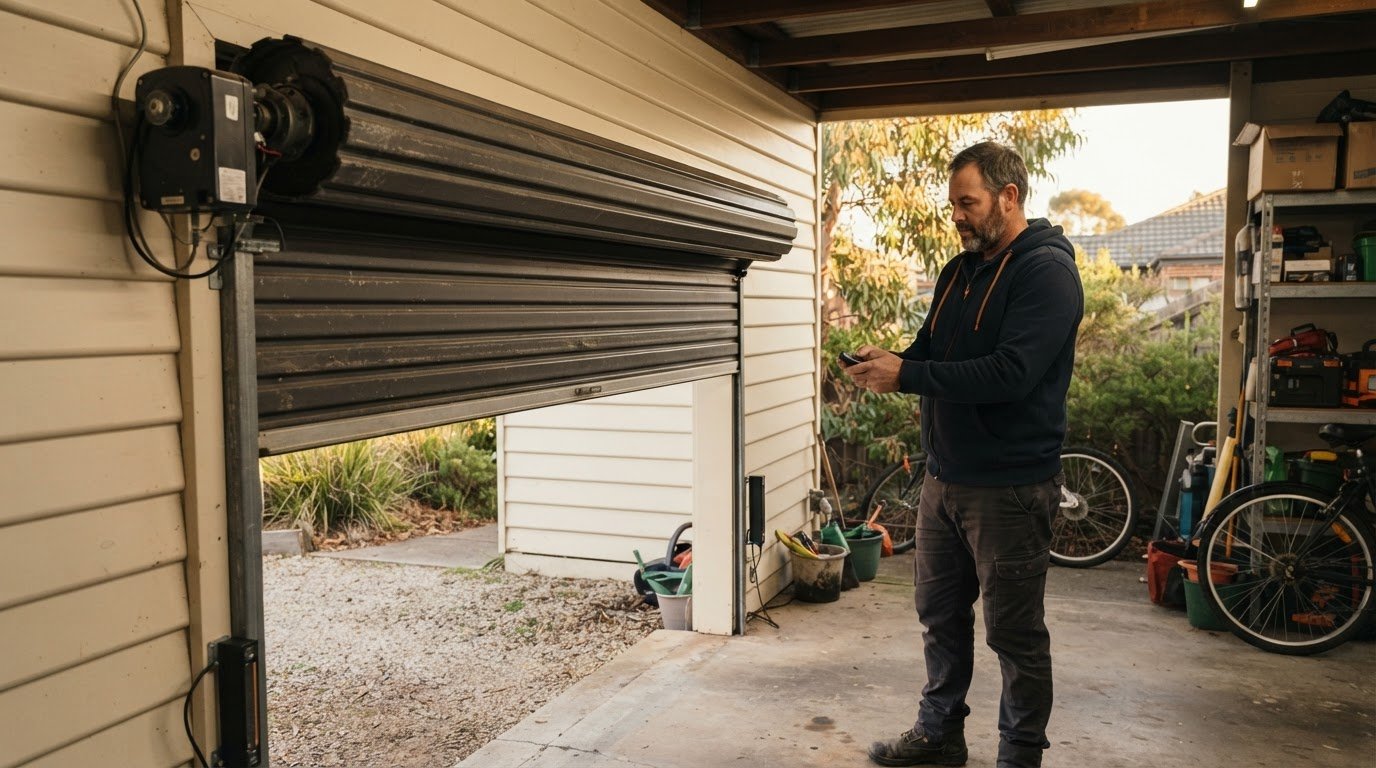
Turn the handle to lock. Rotate the exterior handle 90 degrees. This operates the lever and extends the bolt into the locked position. Use a steady turn, then check that the handle has moved through its full range and the bolt has engaged. Don’t add force if the mechanism stops or feels jammed.
Use the key cylinder to unlock. Insert the key and turn it to activate the release lever. The lever frees the bolt, allowing it to retract. Turning the handle without first releasing the lever won’t unlock the side lock, so avoid repeatedly forcing the handle.
Retract a bolt that stays in place. If the bolt doesn’t spring open after you turn the key, hold the key in the unlocked position. While holding it there, turn the handle to retract the bolt. Once the bolt clears, let the handle return without slamming it.
Stop if the lock won’t engage properly. A bolt that sticks, misses its receiver or refuses to move can leave the door unsecured. Don’t force the key or handle, as this can make the lock harder to operate. A persistent problem needs assessment rather than repeated attempts.
If the handle or bolt remains faulty, arrange garage door repairs to address the lock mechanism and restore reliable operation.
We Do Garage Doors
We Do Garage Doors can help when a faulty lock, opener or door mechanism makes it difficult to secure your garage. Garage door repairs address operating problems, while motor or spring replacement may be suitable if those components are faulty. Smart door control is another option for managing access.
If the door feels unusually heavy, the motor won’t reconnect or the handle lock won’t engage, don’t force the mechanism. These symptoms may point to a fault that needs attention, not another attempt to operate the door manually. The right repair depends on what is preventing the door or lock from working properly.
For help with a garage door that won’t lock or operate as expected, contact We Do Garage Doors.
Keep your garage secure for the long term
Knowing how to manually lock a garage door gives you a practical option when the opener isn’t working. If the lock or motor keeps causing trouble, address the underlying fault instead of relying on a temporary workaround. A door that operates as expected is easier to secure and use in your daily routine.
We Do Garage Doors provides garage door repairs, motor replacement and spring replacement across Melbourne, including Greenvale, Craigieburn, Mickleham, Roxburgh Park and Wollert. The right work depends on what’s affecting the door’s movement or lock. Discuss the problem and next step without trying to diagnose or repair a heavy door yourself.
Contact We Do Garage Doors to talk through a garage door that won’t lock or operate properly. Take the next step towards a door you can use with confidence.
Frequently Asked Questions
How do I secure a garage door after a power outage?
Use the door’s fitted manual lock once it’s fully closed. If you’re inside, operate the internal lock; if you’re outside, use the key cylinder where fitted. Don’t assume the opener will hold the door securely without power. If the door won’t close smoothly or the lock won’t engage, don’t force it. Arrange an assessment before relying on it for security.
How do I secure a garage door from outside without an external lock?
If there’s no external lock or key cylinder, you can’t engage the internal manual lock from outside. Don’t force the handle or improvise with objects in the track, as this could damage the door or leave it unstable. If you can safely access the garage from inside, use its fitted manual lock. Otherwise, arrange a suitable repair or locking solution before relying on the door for security.
Comments