

How to Lubricate Your Garage Door Springs and Bearing Plates
Garage door lubrication is more than a way to quieten a noisy door: it helps moving parts work smoothly. To learn how to lubricate a garage door, use white lithium grease on the springs and bearing plates, applying a light, even coat along each spring. Springs are under extreme tension; attempting a DIY fix can cause serious injury. Don’t adjust or tamper with them.
If your door squeaks or feels rough in operation, it’s natural to wonder whether a little lubrication will fix it. This guide explains why lubrication matters, how to apply it to springs and bearing plates, and how often to maintain the moving parts. You’ll also learn what signs to watch for and when persistent noise or difficulty moving may point to a repair rather than a lubrication issue.
Table of Contents
Why is Lubricating Your Garage Door Important?
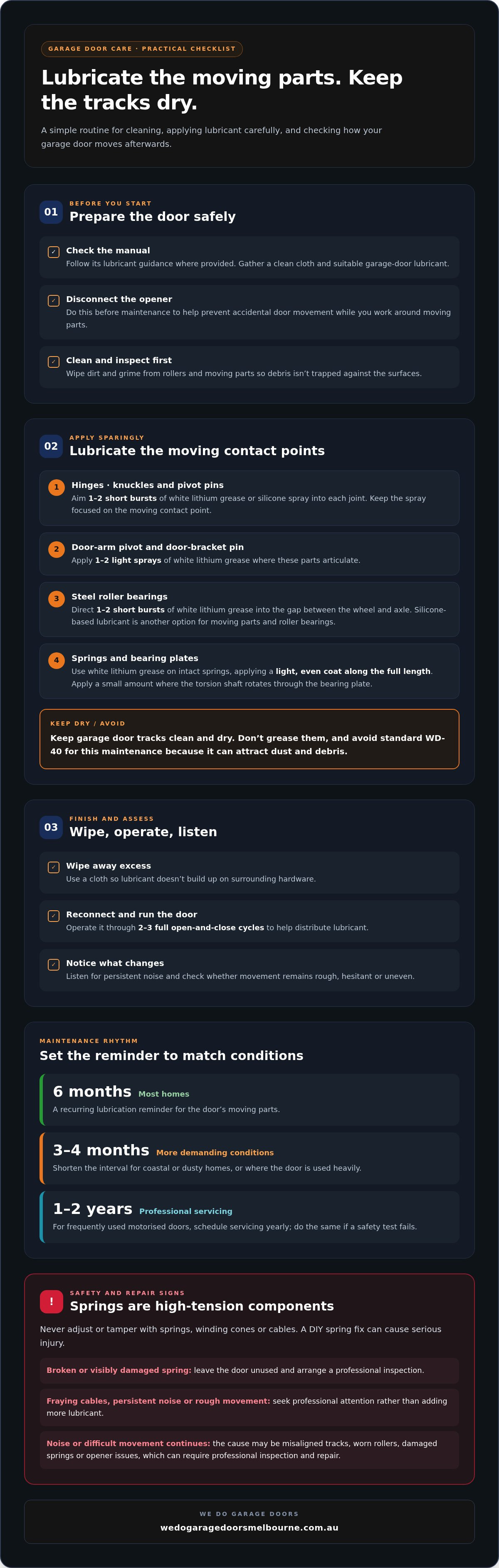
Take care to keep lubricant off the tracks. Apply lubricant to moving contact points on rollers, hinges, springs and bearings. For a safe routine, check the manual, clean parts first and apply lubricant carefully. Disconnect the opener before maintenance, then operate the door afterwards to check its movement.
Check the garage door manual before choosing a lubricant. Follow its product guidance where provided, and gather a clean cloth and suitable garage-door lubricant.
Disconnect the garage door opener before maintenance. This helps prevent accidental door movement while you’re working around hinges, rollers and other moving parts.
Clean the rollers before applying lubricant. Wipe away built-up dirt and grime, then inspect the wheels and bearings so debris isn’t trapped against moving surfaces.
Lubricate each hinge by aiming 1-2 short bursts of white lithium grease or silicone spray into its knuckle and pivot pin. Keep the spray focused on the joint.
Apply 1-2 light sprays of white lithium grease to the garage-door arm pivot and door-bracket pin where they articulate. These pivot points move as the door travels.
For steel rollers, apply 1-2 short bursts of white lithium grease into the bearing gap where the wheel meets the axle. Keep tracks clean and dry, not greasy.
Apply a light, even coat along the full length of torsion or extension springs and to the bearing plates. Springs are under high tension; never adjust or tamper with them.
Wipe away excess lubricant, then reconnect the opener and run the door through 2-3 full open-and-close cycles. Listen for persistent noise or notice whether movement remains difficult.
Lubricating springs and bearing plates
Before touching the spring area, identify whether your door uses torsion or extension springs. Check the door manual for its lubricant recommendation, then use white lithium grease, which resists water and lasts on moving metal parts.
Keep hands and tools away from spring adjustments, winding cones and cables. Garage door springs are under high tension and must not be adjusted or tampered with by homeowners. If a spring is broken, leave the door unused and arrange a professional inspection.
For an intact spring, apply a light, even coat along its full length. Work carefully so the lubricant reaches the coils without flooding the surrounding hardware. A thin coating is the goal, not a heavy layer that can collect dust.
Apply lubricant to the bearing plates where the torsion shaft rotates through the plate. Use a small amount around the moving contact point, keeping the spray away from the wall and any surfaces that should remain clean.
For steel roller bearings, direct 1-2 short bursts of white lithium grease into the gap between each wheel and axle. Silicone-based lubricant is another option for moving parts and roller bearings. Avoid standard WD-40 for this maintenance, as it can attract dust and debris.
After application, wipe away excess grease with a cloth. Operate the door a few times to help distribute lubricant across the coils, plates and bearing gaps, then listen for changes in movement or noise.
Inspect the spring and bearing area during the process. Fraying cables, a visibly damaged spring, or continued rough movement calls for professional attention, not more lubricant. If spring damage is present, spring replacement service is the relevant next step.
Maintenance frequency and signs lubrication is due
Set a recurring reminder to lubricate the door’s moving parts every 6 months for most homes. A regular schedule helps you notice changes early and prevents maintenance from being forgotten between busy household routines.
Shorten the interval to every 3-4 months if your home is coastal, dusty or subject to heavy door use. Salt-laden air, airborne grit and frequent operation can make lubricant wear away or collect debris sooner.
Listen during each opening and closing cycle. A new squeak or persistent rattling can indicate friction around hinges, roller bearings or springs; note where the sound comes from before cleaning and lubricating the relevant moving point.
Watch the door’s movement as it travels. If it hesitates, feels rough or moves unevenly, check for visible dirt around rollers and hinges, then maintain the moving parts. Keep the tracks clean and dry rather than greasing them.
Test whether lubrication has helped by operating the door after application. If noise or difficult movement continues, lubrication may not address the cause. Misaligned tracks, worn rollers, damaged springs or opener issues can require professional inspection and repair.
Arrange professional garage-door servicing every 1-2 years. For frequently used motorised doors, schedule servicing yearly; do the same if a safety test fails. A service can assess wear and operating issues beyond routine lubrication.
Keep a simple maintenance record with the date, symptoms and parts lubricated. For example, note whether a squeak came from a hinge or roller, then compare the door’s movement at its next scheduled check. This makes recurring changes easier to spot.
Why garage door lubrication matters
Pay attention to how the door sounds and moves before maintenance. A squeak at a hinge or a rough roller can point to friction at that moving joint. Identifying the location helps focus lubrication where parts meet, rather than coating hardware indiscriminately.
Lubricate contact points to help moving components travel with less friction. Hinges pivot, roller bearings turn, and springs flex as the door operates. A suitable lubricant on these parts helps them move more smoothly; it won’t correct damaged or misaligned hardware.
Choose lubricant for the component, not simply what’s already in the shed. White lithium grease is recommended for garage-door springs, bearing plates, hinges and steel rollers. Its water-resistant, long-lasting properties help it remain on those parts during repeated door movement.
Keep lubricant off the tracks. Tracks guide the rollers, but grease can hold dirt and debris against their running surface. Clean tracks and keep them dry, while lubricating the roller bearings where the wheel meets the axle.
Use the door’s movement as a practical check after lubrication. Run it through 2-3 full open-and-close cycles, then listen and watch for changes. If a hinge quietens but the door still moves unevenly, friction may not be the only issue.
Don’t keep adding lubricant to a door that remains noisy or difficult to move. Misaligned tracks, worn rollers, damaged springs or opener issues can cause similar symptoms. These faults need inspection and repair, rather than another layer of grease.
Take note of which part makes noise and whether movement changes after lubrication. A recurring scrape near a roller, for example, gives a clearer starting point for diagnosis than treating every component alike. If the door still struggles, arrange garage door repairs to address the underlying problem.
We Do Garage Doors: Garage door repairs
We Do Garage Doors can help when lubrication hasn’t resolved persistent noise, uneven movement or a door that struggles to open. These symptoms can point to damaged springs, worn components or an opener issue that needs repair rather than more lubricant.
For a broken or damaged spring, don’t adjust it yourself. Springs are under extreme tension; attempting a DIY fix can cause serious injury. We Do Garage Doors provides spring replacement and garage door repairs, as well as motor replacement if the opener is at fault. For modern control, smart door systems can be retrofitted to work with your existing door and motor.
Describe what you’ve noticed, such as where the sound occurs and whether the door moves unevenly. That information helps focus attention on the problem. Contact We Do Garage Doors to discuss your garage door repair needs.
Keep your garage door moving with confidence
Make maintenance part of caring for your home, not a response to every new noise. Knowing how to lubricate a garage door helps with routine upkeep, but lubrication can’t fix a fault in the door’s hardware or motor. If a problem continues, avoid repeatedly applying lubricant and have the underlying cause assessed.
We Do Garage Doors offers garage door repairs, motor replacement and spring replacement for issues that need more than routine care. The right next step depends on what the door is doing: a motor problem differs from a spring fault or a movement issue elsewhere in the system.
Share what you’ve noticed and where it happens, so the concern is clear from the outset. Contact We Do Garage Doors to discuss the issue and find a practical way forward. With the right attention, you can feel more confident about using your garage door day to day.
Frequently Asked Questions
Which parts of a garage door should be lubricated?
Lubricate moving contact points, including hinge joints, steel roller bearings, springs and bearing plates. Include the opener rail’s top surface, arm pivots and lock in routine maintenance. For example, apply lubricant to the roller bearing gap, not the track the wheel runs along. Check your door manual for model-specific instructions before selecting or applying lubricant.
What lubricant is best for garage doors: silicone spray, lithium grease, or WD-40?
White lithium grease is a suitable choice for springs, bearing plates, hinges and steel roller bearings. Silicone-based lubricant can also be used on moving parts and roller bearings. Avoid standard WD-40 for this job, as it can attract dust and debris that may clog moving parts. Use a product compatible with your garage door and follow its manual’s lubricant guidance.
How often should a garage door be lubricated?
For most homes, lubricate the relevant moving parts every 6 months. Use a 3-4-month interval if the door is exposed to coastal air, dusty conditions or heavy use. For example, a frequently operated household door may need attention sooner than one used occasionally. Mark the next date after maintenance, then adjust your reminder to suit the door’s conditions.
Can you lubricate garage door torsion springs yourself, and what are the risks?
You can lubricate an intact torsion spring, but don’t adjust or tamper with it. Keep your hands and tools away from winding parts. If a spring looks damaged or broken, stop and arrange a professional inspection rather than attempting a repair yourself.
What should you avoid when lubricating a garage door?
Avoid greasing the tracks, applying excessive lubricant, or using standard WD-40 on moving parts. Grease on tracks can hold dirt and debris where rollers travel, while excess product can spread onto surrounding surfaces. Don’t adjust high-tension springs or work around them with tools. If your manual specifies a lubricant, follow that instruction instead of choosing a product at random.
How can you tell if a noisy garage door needs lubrication or repair?
If a squeak comes from a moving joint and improves after suitable lubrication, friction may have contributed to the noise. Continued noise, jerky movement or difficulty opening can point to an underlying fault. Misaligned tracks, worn rollers, damaged springs or opener issues can all affect operation. If the door still struggles, stop applying more lubricant and arrange an inspection.