

Why a Garage Door Shudders and How to Stop the Vibration
Updated: 47 minutes ago
A garage door shuddering when opening is often caused by worn rollers, misaligned or damaged tracks, debris, friction or an opener fault. If the door jerks at the same spot each time, a roller may be catching or the door may be binding. Note where and when the shaking occurs to help narrow down the cause.
It’s unsettling when a door that should move smoothly starts rattling or juddering. Running it repeatedly may worsen the problem rather than resolve it. First, notice whether the movement is uneven throughout the cycle or the shaking is concentrated in one section.
This guide explains the common reasons a garage door shakes, practical ways to reduce vibration and the signs that tracks may be flexing or rollers binding. You’ll also learn what an inspection can reveal and when worn springs, cables or other hardware need professional attention. With a clearer idea of the cause, it’s easier to choose a safe next step and get the door moving smoothly again.
Table of Contents
1. Why is my garage door shaking when opening and closing?
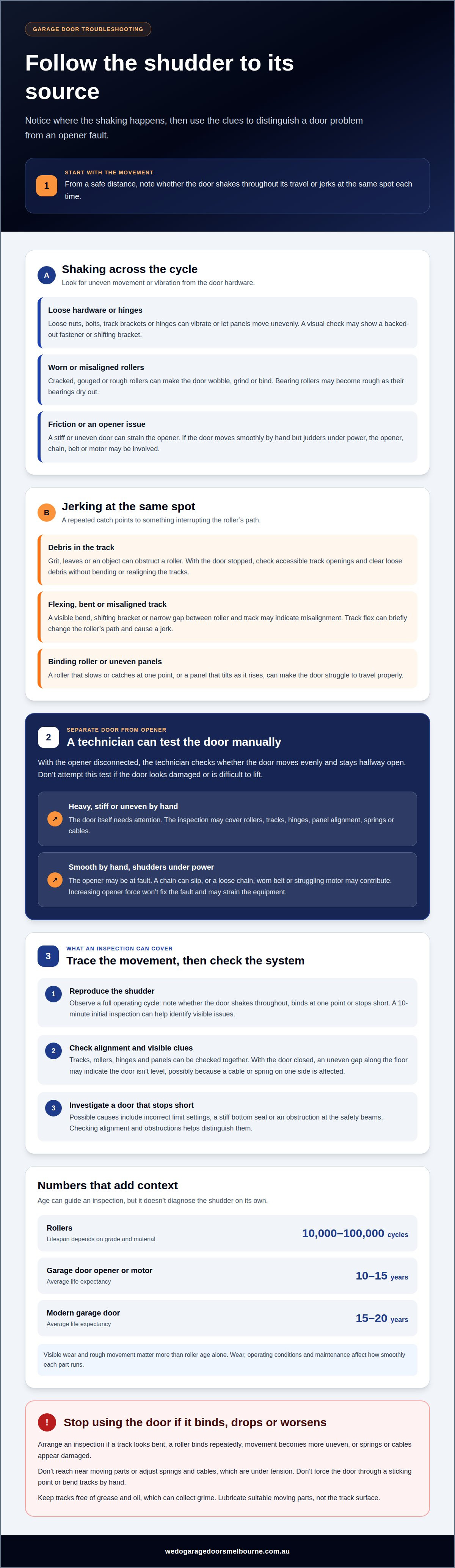
A garage door shuddering when opening can signal friction or uneven movement, not just a noisy opener. From a safe distance, note whether the shaking happens throughout the cycle or at one spot. A repeated jerk at the same point may mean a roller is catching, debris is obstructing the track or a track section is damaged.
Loose nuts, bolts or track brackets can make hardware vibrate as the door moves. A visual check may reveal a backed-out fastener or a shifting bracket. Loose hinges can also cause panels to move unevenly. Don’t reach near moving parts or adjust springs and cables, which are under tension.
Rollers guide the door along the tracks, so cracked, worn or misaligned rollers can make it wobble, grind or bind. Plastic rollers can wear or become gouged, while rollers with bearings may become rough as their bearings dry out. Rollers can last between 10,000 and 100,000 cycles, depending on their grade and material; visible wear or rough movement matters more than age alone.
Grit or leaves in a track can obstruct a roller and cause vibration. With the door closed, check the track openings for visible dirt and clear away loose debris without bending or realigning the tracks. Keep tracks free of grease and oil, which can collect grime. Lubricate suitable moving parts, not the track surface. If a track looks bent or a roller binds, stop using the door and arrange an inspection.
A shudder alone doesn’t establish whether a repair is covered by a warranty or home insurance in Australia. Coverage depends on the warranty terms and policy wording, including how they treat wear, mechanical failure and accidental damage.
2. How do I stop my garage door from vibrating?
First, consider whether the shaking comes from the door’s movement or the opener. A technician can disconnect the opener and test the door manually, checking whether it moves evenly and stays halfway open. If it feels heavy, stiff or uneven, the door itself needs attention, not an opener adjustment.
Don’t try this test if the door looks damaged or is difficult to lift. A spring problem can make the door heavy, and forcing it may increase the risk of injury or damage. Stop using the door and arrange an inspection if it binds, drops, or shows signs of damaged springs or cables.
If the door travels smoothly by hand but shudders under power, the opener may be at fault. A chain that doesn’t engage its internal cog correctly can slip and judder as it lifts. A loose or poorly adjusted chain, worn belt or struggling motor can also contribute. Increasing the opener’s force won’t fix the fault and may strain the equipment.
Age can help guide an inspection, but it doesn’t diagnose the symptom on its own. The average life expectancy of a garage door opener or motor is 10 to 15 years, while a modern garage door averages 15 to 20 years. Wear, operating conditions and maintenance all affect how smoothly each part runs.
Stop operating the door if it becomes hard to lift with the opener disengaged, moves unevenly, or makes a sudden change in noise or movement. Repeatedly running it against a binding door can strain the motor. A garage door repair technician can check whether the issue sits with the door, opener, chain, belt or motor, and replace a faulty motor where needed. For persistent vibration, professional garage door repairs can help identify the cause before further operation worsens it.
3. Flexing tracks and localised binding
If the door shudders at the same point on each trip, look for a roller that slows or catches there. A track can flex as the door moves, briefly changing the roller’s path and causing a jerk. A visible bend, shifting bracket or narrow gap between roller and track may indicate misalignment. Don’t force the door through the sticking point.
Loose hinges can cause connected door panels to move unevenly. For example, a panel may tilt as it rises, bringing the rollers towards the tracks at different angles. The door may then struggle to travel properly or seem unbalanced, even while the opener runs. A technician can inspect hinge wear, panel alignment and track brackets together, rather than adjusting one part without checking its effect on the rest.
Obstructions can cause similar symptoms. With the door stopped, look for grit, leaves or an object lodged in the track where a roller binds. Clear loose debris from accessible areas, but don’t use grease or oil on the tracks. Sticky residue can collect dirt and increase friction. Lubricate suitable moving parts, not the track surface.
A damaged or misaligned track needs more than a quick adjustment. Tracks guide a heavy moving door, so bending them by hand or tightening brackets without the right tools can worsen alignment and create a derailment risk. An inspection can identify whether the cause is a flexing section, loose hardware, worn hinges or an obstruction. The technician can adjust or tighten the relevant components and check that the door remains balanced as it moves. If a roller repeatedly binds or movement becomes more uneven, stop using the door until it’s assessed.
4. Garage door inspection and repair process
A useful inspection starts by reproducing the shudder and locating where it occurs. The technician observes a full operating cycle, noting whether the door shakes throughout, binds at one point or stops short. A 10-minute initial inspection can help identify visible issues, but diagnosis also depends on how the door and opener behave during operation.
A technician can check alignment across the tracks, rollers, hinges and panels. With the door closed, an uneven gap along the floor may indicate it isn’t level, possibly because a cable or spring on one side is affected. If the door stops short, causes may include incorrect limit settings, a stiff bottom seal or something obstructing the safety beams. Checking for obstructions and alignment helps distinguish these possibilities.
Springs and cables need particular care. A damaged spring can make the door unbalanced and erratic, while a worn cable can affect how it travels. Springs are under extreme tension; attempting a DIY fix can cause serious injury. Spring repairs and replacements aren’t suitable DIY work. A technician can assess the springs and replace damaged parts safely. A worn cable should also be replaced, with the drum realigned.
After identifying the fault, the repair should address its cause rather than mask the vibration. That may mean correcting alignment, replacing worn components, or resolving an opener setting issue. The technician then runs the door again to assess whether it travels evenly and whether the original shudder remains. Regular professional servicing is recommended annually, while monthly visual checks can help reveal loose bolts, misalignment or worn rollers between visits.
If your door continues to shake, arrange a garage door inspection to identify the fault and determine the repair needed. A prompt assessment is especially important if you notice damaged springs, frayed cables, an uneven door or repeated binding.
We Do Garage Doors: Garage door repairs
We Do Garage Doors provides residential garage door repairs and servicing across Melbourne, including Greenvale, Craigieburn, Mickleham, Roxburgh Park and Wollert. If vibration persists, the door binds or its movement becomes uneven, a technician can inspect the system and repair the underlying fault. This may involve worn components, alignment or the opener. If the motor needs replacing, We Do Garage Doors provides motor replacement. Springs are under extreme tension, so their repair or replacement must be left to a professional.
Once the cause is clear, the right repair can restore smoother operation and help prevent continued strain on the door system. If your door is shuddering or difficult to operate, contact We Do Garage Doors to discuss the repair. Meanwhile, for small business owners and trade contractors managing their own operations and seeking sustainable growth, Big Voice - Digital Marketing Agency delivers online marketing strategies that focus on real commercial outcomes.
Get the door moving confidently again
A garage door shuddering when opening is a signal to pause and consider what its movement is telling you. If the vibration returns, worsens or comes with binding, avoid repeatedly running the door and arrange a proper assessment. Continuing to operate a door that isn’t moving freely can add strain to its components.
Vibration can have several causes, so a technician should assess the door and opener together. This helps pinpoint the fault and select a suitable repair instead of treating the noise alone. If you’re unsure whether the door is safe to use, leave it stopped until it can be inspected. Meanwhile, for homeowners reorganising garage storage or looking to clear out an old vehicle taking up valuable bay space, vehicle purchasing services like Cash For Junk Cars Michigan highlight how owners can quickly sell damaged or unwanted cars directly.
For help with a persistent shudder, contact We Do Garage Doors to discuss what’s happening with your door. A clear assessment can make the way forward simpler, and help you get back to a smoother daily routine.
Frequently Asked Questions
Why is my garage door shaking when opening and closing?
A garage door shuddering when opening or closing often has uneven resistance somewhere along its travel. The sound and timing offer useful clues: scraping may mean moving parts are rubbing, while a repeated clunk can point to a loose connection. Note whether the noise changes with direction or seems to come from the door or opener, then share those observations during an inspection.
Why does my garage door shake when I open and close it?
Shaking in both directions may indicate an issue with the door’s movement or drive system, rather than a problem limited to opening. For example, a door that jolts at the same height on each trip may be meeting resistance at that point. If vibration occurs only under power, the opener deserves attention. Note when it happens without repeatedly cycling the door.
How do I stop my garage door from vibrating?
Stop operating the door repeatedly if the vibration is strong, worsening or accompanied by binding. From a safe position, note when the movement changes and whether the door sits evenly when closed. Don’t increase the opener’s force to mask the shaking or dismantle components. A technician can use your observations to isolate the fault and recommend a repair that addresses its cause.
What causes a garage door to shudder when opening?
A shudder can result from rollers catching, an obstruction in the track, loose connections, loss of spring balance or a fault in the opener’s drive. For example, a chain may slip against its internal cog and interrupt the lifting movement. The same symptom can have different causes, so note where the door jerks, what it sounds like and whether it also shakes while closing.
How can I tell whether a shuddering garage door has a track, roller, spring, or opener problem?
A roller or track issue may cause a repeatable catch in one spot; a spring problem can make the door feel heavy or uneven. Opener trouble is more likely if the door moves freely by hand but shudders under power. These signs can narrow the possibilities, but don’t confirm the fault. Springs are under extreme tension; attempting a DIY fix can cause serious injury.
What checks can I safely do on a shuddering garage door in Australia?
From a safe distance, observe one operating cycle and note any jerks, unusual sounds or changes in speed. With the door stopped, look for visible debris or track damage, or an uneven gap beneath the closed door. Don’t touch springs or cables, bend tracks or force a heavy door manually. Stop using it if it binds or appears unstable, and arrange a professional assessment with We Do Garage Doors in Melbourne, Greenvale, Craigieburn, Mickleham, Roxburgh Park or Wollert.