

Garage Door Grinding Noise When Opening: Causes and Fixes
At 6:30 on a brisk Melbourne morning, you press the remote button, only for a harsh, metal-on-metal shriek to echo down the driveway and wake the neighbours. Dealing with a harsh garage door grinding noise when opening isn't just a frustrating disruption to your daily routine; it's an urgent distress flare from the mechanical hardware. Grinding always signals severe friction, and letting it go unchecked can quickly burn out your opener motor.
It's completely understandable to feel a spike of dread when that racket starts, particularly if you aren't sure whether spraying lubricant onto the tracks will solve the problem or void your motor warranty entirely. You shouldn't have to stress over costly emergency repairs or wonder which component has failed. In this guide, you'll discover how to identify the exact parts causing the friction, master safe DIY lubrication techniques suited to our shifting Victorian weather, and recognise when high-tension parts need a qualified technician.
Below, we break down the most common mechanical culprits behind the sound and outline the practical steps needed to restore smooth, whisper-quiet operation to your home.
Table of Contents
What Causes a Garage Door Grinding Noise When Opening?
A sudden mechanical crunch is never just background noise; it is an immediate cry for help from your hardware. Hearing a garage door grinding noise when opening typically points to direct metal-on-metal contact or stripped drive gears inside the automated unit. Residential assemblies absorb significant operational stress, opening and closing over 1,000 times each year. Understanding how garage door mechanical systems function under load helps pinpoint why these harsh sounds emerge. When friction builds unchecked, your automated opener is forced to drag dead weight, pushing the internal motor toward premature burnout.
Grinding vs Screeching: Identifying the Specific Sound
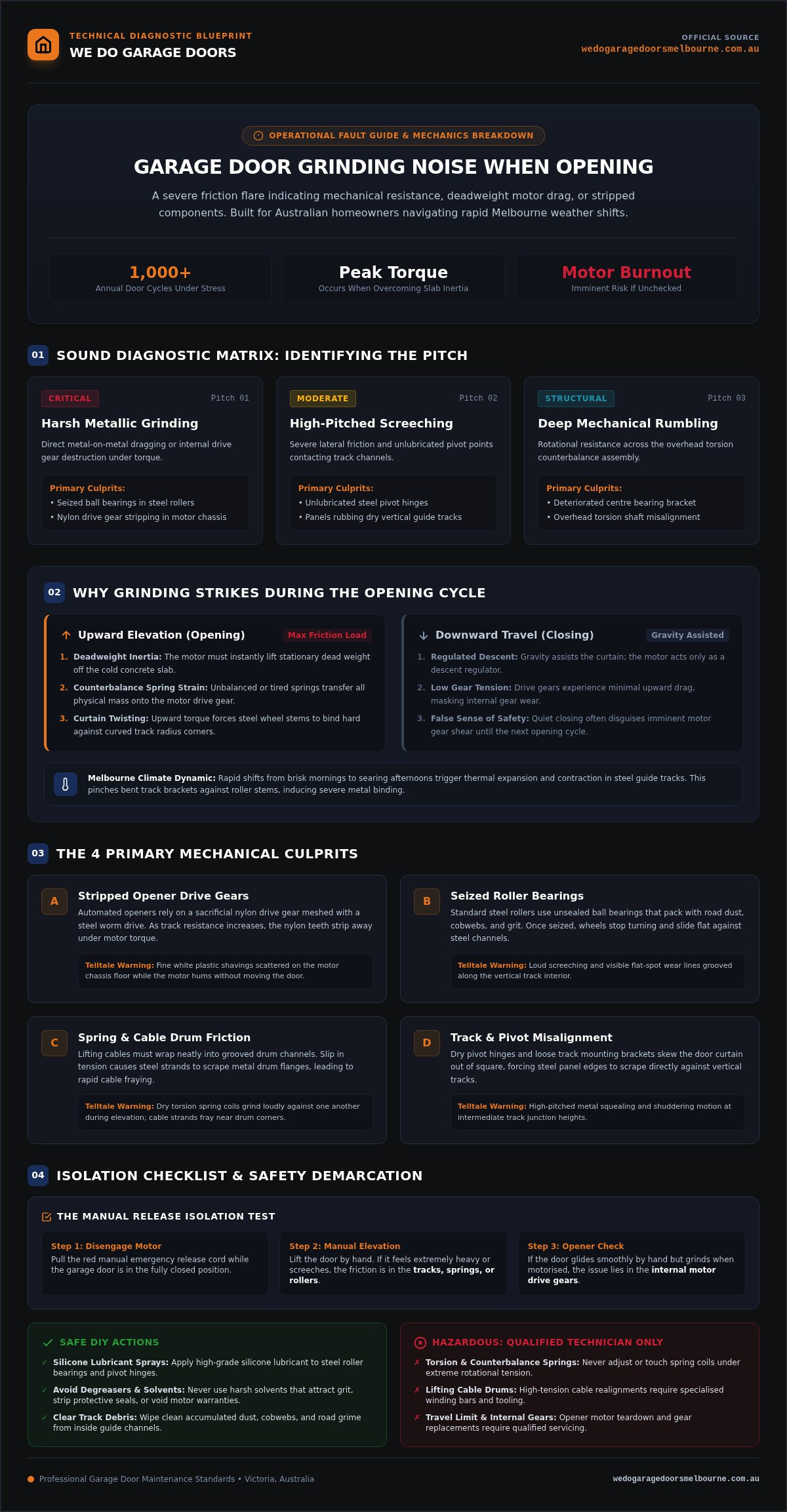
Tuning your ear to the exact pitch helps distinguish an opener drive problem from a hardware failure:
Harsh metallic grinding: Often caused by seized ball bearings inside worn steel rollers, or nylon drive gears stripping inside the motor chassis as internal teeth sheer away.
High-pitched screeching: Usually stems from unlubricated steel pivot hinges or door panels rubbing against dry, misaligned vertical guide tracks.
Deep mechanical rumbling: Frequently signals that the centre bearing bracket on the overhead torsion spring shaft has deteriorated, creating heavy rotational resistance.
Why the Noise Happens Specifically During the Opening Cycle
You might wonder why your door stays relatively quiet while descending yet groans loudly on the way up. The reason comes down to peak motor torque. When closing, gravity assists the curtain, allowing the motor to simply regulate the descent. During the opening cycle, however, the system must overcome initial deadweight inertia straight off the concrete floor slab.
If your counterbalance springs lose tension or slip out of balance across changing Melbourne weather cycles, the motor takes the brunt of that physical weight. The drive gear teeth strain against the chain or screw drive under maximum load. This intense upward resistance twists the door curtain slightly off-level, forcing steel wheel stems to bind hard against the track radius.
The 4 Most Common Culprits Behind Garage Door Grinding
Tracking down the exact component triggering a garage door grinding noise when opening prevents small friction points from evolving into catastrophic mechanical failures. When moving parts fall out of alignment or run dry, the resulting drag places immense strain on your entire automated assembly. In line with industry technical standards, components must maintain precise clearances to operate reliably under operational loads.
Stripped Opener Drive Gears and Trolley Assemblies
Most residential automated openers rely on a nylon drive gear paired with an internal steel worm drive. When physical resistance builds along the door tracks, this sacrificial nylon gear takes the brunt of the motor's output torque. Over time, the teeth strip down completely, shedding fine white plastic shavings across the motor housing floor. If your opener motor hums loudly while the door barely moves, explore professional garage door motor replacement Melbourne options before the unit burns out entirely.
Worn Roller Bearings and Track Inefficiencies
Standard steel rollers utilise unsealed ball bearings that naturally accumulate road dust, cobwebs, and airborne grime. Once these bearings seize, the steel wheels stop rotating entirely, dragging flat against the metal tracks with an ear-splitting shriek. Rapid temperature swings across Melbourne exacerbate this issue. Shifting from a crisp morning to a searing afternoon causes steel tracks to expand and contract. This subtle movement pinches bent track brackets against roller stems, creating severe friction points.
Torsion Spring and Cable Drum Friction
Lifting cables must wind neatly onto grooved drums located at the top corners of your garage opening. When cable tension slips, the steel strands begin scraping against the metal drum flanges, causing rapid fraying. Similarly, dry torsion spring coils grind against one another as they contract and expand during door elevation. Counterbalance systems operate under dangerous, extreme tension. Be sure to review our comprehensive garage door spring replacement Melbourne guide before inspecting high-tension parts yourself.
If your door continues to shriek despite basic checks, booking a prompt diagnostic customer service call with a local specialist at We Do Garage Doors will ensure each moving component is restored to optimal alignment.
Safe DIY Fixes vs Hazardous Repairs: What You Can Touch
Hearing a harsh garage door grinding noise when opening often tempts homeowners to grab whatever aerosol can is sitting on the workbench. While routine maintenance is essential for extending hardware longevity, understanding where safe DIY ends and severe mechanical danger begins protects your home and family. Basic cleaning and targeted lubrication are well within reach for most homeowners, but high-tension assemblies demand strict caution.
The Golden Rules of Garage Door Lubrication
Applying the wrong lubricant is one of the quickest ways to worsen mechanical grinding. Standard WD-40 is a solvent and degreaser, not a true lubricant; spraying it onto bearings washes away factory grease and leaves metal parts unprotected. Similarly, thick automotive grease acts like a magnet for airborne dust, grit, and garden debris, forming an abrasive paste that grinds components down.
Follow these practical rules for safe lubrication:
Use the correct formula: Apply a non-tacky silicone spray or dedicated garage door lubricant directly into roller bearings and hinge pivot pins.
Keep track channels dry: Wipe the inside running surfaces of the steel guide tracks with a clean, dry rag. Never spray lubricant directly inside the tracks, as this causes rollers to slide and skid rather than spin cleanly.
Wipe away excess overspray: Clean up any drips immediately to prevent floor slips and avoid attracting fine dust.
When DIY Stops: High-Tension Danger Zones
Certain garage door components carry extreme physical loads capable of causing catastrophic injury. The bottom corner brackets on your door curtain are bolted directly to the high-tensile lifting cables. Never attempt to unbolt, loosen, or tap these fasteners, especially those marked with red safety heads. Releasing them under load can cause the steel cable to snap with bone-shattering force.
Torsion springs mounted above the door opening also require specialised winding bars and professional torque management. If your visual inspection reveals snapped cables, warped track brackets, or a torsion spring binding against its shaft, step back from DIY attempts. The team at We Do Garage Doors provides dedicated diagnostics and solutions through our expert garage door repairs Melbourne service, restoring whisper-quiet performance without compromising household safety.
Troubleshooting Checklist: How to Isolate the Grinding Sound
Isolating the root cause of a garage door grinding noise when opening requires a methodical approach. By separating the mechanical door hardware from the automated motor drive, you can pinpoint whether the racket stems from track friction or an internal opener fault. Making this distinction early on saves you from replacing parts that are working perfectly well.
Step 1: The Manual Balance and Travel Test
Start by pulling the red emergency manual release cord down and toward the motor head. Only do this when the door is in the fully closed position to prevent heavy panels from crashing down unexpectedly. Once the trolley unlatches, raise the door curtain by hand.
Notice how the door behaves through the movement:
Smooth mid-point hover: Lift the door waist-high (roughly one metre off the ground) and let go gently. If the counterbalance springs are tuned correctly, the door should hover in place with minimal movement.
Heavy downward pull: If the door slams back toward the floor, your springs have lost essential tension. Running an automatic opener against this deadweight is a direct cause of a garage door grinding noise when opening, as the motor gears struggle against unbalanced mass.
Resistance or binding: If manual lifting feels rough, stiff, or catches at specific heights, the issue sits squarely within your tracks, rollers, or hinges rather than the electric motor.
Step 2: Inspecting Rollers, Hinges, and Track Channels
With the door curtain disconnected from the motor, inspect each mechanical junction along both vertical guides. Carefully spin every roller wheel by hand. Each roller should spin freely inside its housing without wobbling, flat spots, or gritty resistance.
Next, inspect the hinge brackets connecting your panel sections. Loose hinge bolts allow individual panels to sag, causing the metal edges to rub directly against the tracking. Take a standard spirit level and check the vertical plumb of both tracks. Foundation settling and reactive clay soils across Melbourne suburbs often pull wall brackets out of square, pinching rollers inside the channel.
Incorporating these visual checks into an annual garage door service Melbourne routine keeps mechanical resistance low and hardware quiet. If your door feels unusually heavy or binds during manual operation, request a diagnostic inspection with We Do Garage Doors to rebalance your system before further motor strain occurs.
Professional Garage Door Repair and Maintenance in Melbourne
Resolving persistent mechanical drag takes more than a quick spray from an aerosol can. While basic wipe-downs keep grit at bay, a recurring garage door grinding noise when opening requires qualified mechanical calibration. Professional servicing tackles the underlying root causes, such as structural binding and uneven counterbalance tension, protecting your opener's internal gears from terminal failure and restoring whisper-quiet travel.
What to Expect During a Professional Service Call
A comprehensive service call systematically diagnoses every component bearing operational weight. Our master technicians follow a detailed multi-point inspection process designed to catch minor wear before it causes major breakdowns:
Precision track realignment: Resetting track geometry to factory tolerances ensures roller stems sit dead centre without rubbing against steel guides during thermal contraction.
Torsion spring counterbalance adjustment: Measuring active rotational torque and adjusting spring quarter-turns relieves excessive deadweight from the automated opener.
Cable and drum reset: Checking cable seating prevents steel strands from climbing drum flanges and snapping under uneven tension.
Opener force limit calibration: Fine-tuning electronic force thresholds guarantees that automatic safety reversal systems engage correctly under Australian safety standards.
Restoring Whisper-Quiet Operation Across Northern Melbourne
Operating as an independent local business since 2018, We Do Garage Doors delivers dedicated garage door repairs, motor replacements, and spring replacements tailored to the Victorian climate. Rapid seasonal shifts, paired with shifting clay soils, regularly alter track geometry across northern growth corridors. Our mobile service vans carry specialised replacement hardware, including high-cycle sealed nylon rollers that eliminate the screech of metal-on-metal friction entirely.
We provide prompt diagnostic customer service calls and rapid emergency repair services across Melbourne, including Craigieburn, Greenvale, Mickleham, Roxburgh Park, and Wollert. Addressing a garage door grinding noise when opening early prevents an unexpected door failure from leaving your car trapped inside or compromising home security. Booking a dedicated service visit ensures master door technicians inspect your system thoroughly, delivering dependable craftsmanship and long-term peace of mind.
Restore Quiet, Reliable Performance to Your Garage Door
A harsh garage door grinding noise when opening is never an issue to brush aside. Whether the sound stems from seized roller bearings dragging along steel guides or internal opener gears straining against an unbalanced curtain, tackling mechanical friction early protects your motor from terminal failure. Safe wiping and silicone lubrication keep daily wear manageable, but shifting track geometry and uncoiling springs require precise mechanical calibration to safeguard your equipment.
You don't have to put up with early-morning shrieking or worry about sudden breakdowns leaving your vehicle stranded. As an independent local business operated by master garage door technicians since 2018, We Do Garage Doors delivers specialised residential repairs across Melbourne, Craigieburn, Greenvale, Mickleham, and Wollert. We perform comprehensive safety testing and motor protection with every diagnostic visit, ensuring your setup runs smoothly through every season. Ready to enjoy whisper-quiet mornings again? Book a customer service call with We Do Garage Doors today and let our friendly team restore effortless, reliable travel to your home.
Frequently Asked Questions
Why does my garage door make a grinding noise only when opening?
A garage door grinding noise when opening happens because lifting the curtain requires maximum motor torque and counterbalance assistance to overcome stationary deadweight. When descending, gravity assists the movement, masking underlying friction. If your torsion springs have lost proper tension or roller bearings have seized, the opener drive gears experience intense strain pulling the door upward, creating an aggressive metallic grind that disappears during closing cycles.
Can I use regular WD-40 on my grinding garage door tracks?
No, you should never spray regular WD-40 on your garage door tracks or rollers. Standard WD-40 acts as a degreaser and solvent rather than a lasting lubricant, effectively washing away protective bearing grease. It also leaves behind a sticky film that attracts airborne dirt and garden debris. Instead, wipe your steel tracks clean with a dry rag and lubricate roller bearings using a dedicated, non-tacky silicone spray.
Is it safe to use my garage door while it is grinding?
Operating a door that makes heavy grinding noises is unsafe and risks rapid mechanical failure. Grinding indicates severe physical friction, meaning parts like steel rollers or torsion springs aren't moving smoothly. Continuing to cycle the automated opener forces the motor to drag extra deadweight, which can snap lifting cables, strip internal drive gears, or burn out the electric motor entirely. Disconnect the opener and seek professional advice promptly.
What happens if I ignore a grinding garage door motor?
Ignoring an automated motor that grinds under load inevitably leads to complete mechanical breakdown. The internal drive gears, often made from sacrificial nylon, will strip completely until the motor runs freely without lifting the panels. Continued operation also risks overheating the internal electrical windings, turning what could have been a simple bearing replacement or counterbalance realignment into a complete garage door motor replacement.
How do I know if my garage door opener drive gear is stripped?
A stripped drive gear typically presents two obvious physical signs: the electric motor runs and hums normally, but the door panels refuse to budge, and you will notice a pile of white plastic shavings beneath the motor casing. When internal gear teeth shear away, the motor shaft simply spins in place, making a loud, continuous buzzing or whining sound instead of engaging the chain or belt drive.
Can cold Melbourne weather cause my garage door to grind?
Yes, cold Melbourne mornings can easily trigger a garage door grinding noise when opening. Plunging temperatures cause steel tracks to contract slightly, narrowing the clearances where roller stems sit. At the same time, factory grease inside bearing assemblies thickens in frosty weather, creating heavy initial drag. Homes built on reactive clay across northern suburbs like Craigieburn and Wollert also face seasonal ground shifts that pull tracks out of square.
How often should a residential garage door be professionally serviced?
Residential garage doors should receive a professional service once every twelve months to maintain optimal safety and mechanical balance. Because the average door operates well over a thousand times a year, routine checks by a qualified technician ensure torsion springs retain correct tension, track alignments stay true, and safety auto-reverse systems comply with Australian standards. Regular preventative servicing stops small friction spots from becoming expensive emergency repair bills.


Comments