

The Dangers of DIY Garage Door Spring Repair: Why Tension Matters for Melbourne Homeowners
You're heading out for the morning school run in Wollert when you hear a loud bang, and suddenly, your garage door is going nowhere. It's incredibly frustrating to find your car trapped inside, and your first instinct might be to grab the toolbox and tackle the problem yourself to save time and money. However, the dangers of DIY garage door spring repair are often underestimated by even the most capable home handymen. These springs are under immense tension, holding the weight of your entire door; a single slip can lead to serious injury or costly damage to your home's structure.
We understand that unexpected repair costs and the confusion of identifying torsion versus extension springs can be overwhelming. That's why we've put together this guide to help you understand why this particular job is a high-risk gamble and how to safely manage a broken spring without putting yourself in harm's way. We'll explore the specific physical risks involved, explain exactly what to do the moment a snap occurs, and show you how a professional service provides the long-term security and peace of mind your family deserves.
Table of Contents
Understanding the High-Tension Mechanics of Your Garage Door
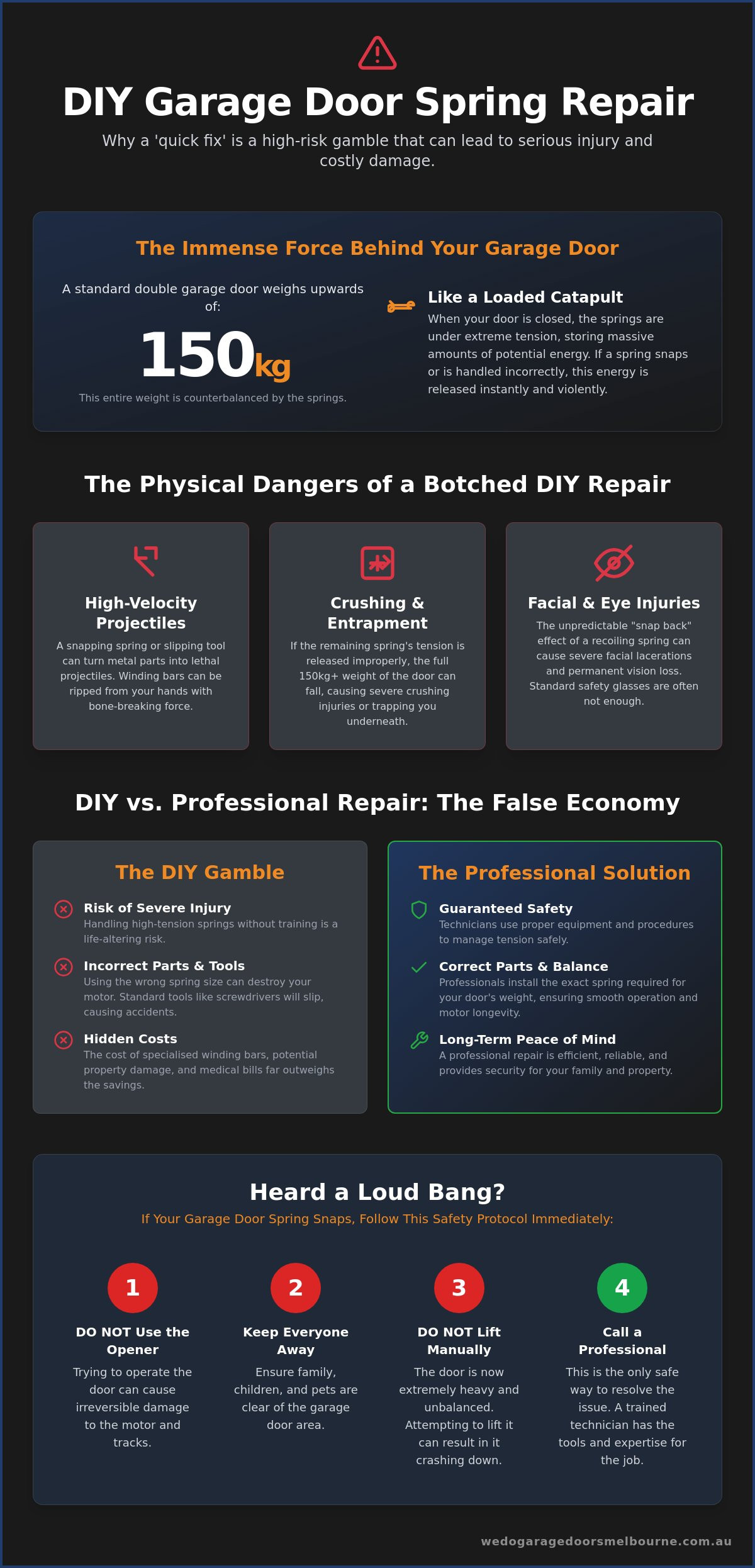
If you've ever watched your garage door glide open with the press of a button, you might assume the small motor mounted on the ceiling is doing all the heavy lifting. In reality, that motor is merely the conductor of an orchestra; the real power comes from the springs. To understand the dangers of DIY garage door spring repair, you first need to grasp the sheer amount of energy these components store. A standard double garage door in a Melbourne suburb can weigh upwards of 150kg. Lifting that much weight manually would be impossible for most homeowners, which is why your system relies on "potential energy" to do the work for you.
Think of a garage door spring like a loaded catapult. When the door is closed, the spring is stretched or twisted to its limit, holding massive amounts of force in reserve. The moment the door begins to move, that energy is released to counteract the weight of the steel or timber panels. If a spring snaps or a DIYer loses control of the tension, that stored energy doesn't just disappear. It converts instantly into kinetic energy, turning metal parts into dangerous projectiles that can cause significant damage to your property or yourself.
This level of mechanical tension isn't limited to your garage; your vehicle's safety system relies on similar high-pressure components, and you can explore Car Suspension Repair to learn how specialised workshops manage these critical parts.
Torsion Springs vs. Extension Springs
Most modern homes in Greenvale or Craigieburn utilise torsion springs. These are mounted on a metal shaft directly above the door opening and work by twisting to create torque. Older tilt-style doors often use extension springs, which are located along the side tracks and stretch out as the door closes. These older systems are particularly risky because they often lack internal safety cables. If an extension spring breaks without a cable, there is nothing to stop it from flying across the garage. Identifying your specific garage door mechanics is a critical first step before you ever consider touching a piece of hardware.
The Role of the Winding Bar
One of the most common mistakes we see is homeowners attempting to adjust tension using a standard screwdriver or a pair of pliers. Torsion springs require specialised winding bars designed to fit perfectly into the winding cone. A screwdriver is slightly tapered and lacks the grip needed to hold the torque. If it slips while the spring is under tension, the bar can be ripped from your hand with enough force to break bones or cause severe facial injuries. The exact force required to hold a spring under tension is equal to the full weight of the door panels, meaning you are essentially wrestling with 150kg of raw pressure using nothing but your physical grip.
The Physical Dangers of DIY Garage Door Spring Repair
While the mechanical theory behind a spring change might seem straightforward, the physical reality is far more volatile than most people realise. The dangers of DIY garage door spring repair aren't just about getting your hands dirty; they involve managing forces capable of causing life-altering injuries. When a high-tension steel coil snaps or slips during a botched adjustment, it releases its stored energy in a fraction of a second. This velocity turns metal shards and winding bars into lethal projectiles that can travel at speeds your reflexes simply cannot match.
Safety data provided by the U.S. Consumer Product Safety Commission highlights the inherent risks of automatic door systems, noting that thousands of injuries occur annually due to mechanical failures and improper maintenance. Beyond the springs themselves, the hardware components like cables, drums, and brackets are all under the same immense strain. If a bolt is loosened prematurely or a cable is frayed, the entire system can "explode" with metal fragments flying in unpredictable directions.
Facial and Eye Injuries from Projectile Coils
Standard safety glasses from the local hardware shop are rarely enough to stop a high-velocity steel fragment. The "snap back" effect occurs when a spring recoils after a break, often whipping around the central shaft. This unpredictable path makes it nearly impossible to stay in a "safe zone" while working. We've seen instances where DIYers have suffered severe facial lacerations or permanent vision loss because they were positioned directly in the line of fire during a slip.
Crushing Injuries and the "Falling Door" Scenario
Modern sectional doors are designed to be perfectly balanced, but this balance is lost the moment a spring fails. If you attempt to release the tension on the remaining functional spring without properly securing the door panels, you risk a "falling door" event. A 150kg door dropping without resistance can crush limbs or pin a person to the garage floor. Working alone under such a heavy overhead hazard is a gamble that rarely pays off. If your door is sticking or making a loud grinding noise, it's far wiser to organise professional garage door repairs than to risk a crushing accident.
Limb entrapment is another significant risk, particularly near the "pinch points" between door sections. As the door shifts unexpectedly, fingers can be caught in the hinges or the steel cables that run along the tracks. These injuries are often more than just a bruise; the sheer weight involved can lead to broken bones or worse. Maintaining a safe distance and using specialised locking tools is the only way to mitigate these risks effectively.
DIY vs. Professional Repair: The False Economy
It's tempting to think a DIY fix is a quick win for the household budget, especially when you're staring at a broken spring and an immobile car. However, the dangers of DIY garage door spring repair extend beyond physical safety into your hip pocket. Many Melbourne homeowners don't realise that the "savings" from doing it themselves often vanish once they factor in the cost of specialised tools. You can't just use a standard toolkit; you'll need specific winding bars, high-grade locking pliers, and precise spanners. Buying these for a one-off job is the first step into a false economy that rarely pays off.
Sourcing the correct parts is another hurdle that leads to the "buy it twice" risk. Garage door springs aren't a one-size-fits-all product. They are engineered based on the specific weight and height of your door. Finding a supplier willing to sell professional-grade springs to the public is difficult, and many online marketplaces sell inferior parts that don't meet Australian safety standards. The International Door Association strongly advises that these high-tension components should only be handled by trained technicians who have the equipment to verify the spring's integrity before installation.
Time is your most valuable resource, and a professional repair usually takes less than an hour. For an inexperienced homeowner, this same task can easily swallow an entire weekend. Between researching the mechanics, sourcing parts, and the actual struggle of the repair, the stress involved is significant. When you choose a professional, you're also buying a warranty. If a DIY spring snaps a month later, you're back at square one, but a professional service ensures the job is done right the first time.
The Risk of Incorrect Spring Sizing
Using a spring that is "close enough" can be a disaster for your garage door motor. If the spring tension is too weak, the motor has to strain to lift the heavy door panels, leading to premature burnout. If it's too strong, the door may fly up or fail to close properly. Replacing a burnt-out motor is a far more expensive exercise than a simple spring change. Precision is vital because even a minor imbalance puts unnecessary stress on the entire track system.
The Value of Professional Calibration
Balancing a door is a skilled craft that requires a fine touch and technical mastery. It isn't just about tightening a bolt; it's about ensuring the door stays level and moves effortlessly. We include a comprehensive safety check with every garage door spring replacement Melbourne homeowners book with us. This proactive approach identifies worn cables or misaligned tracks before they become emergency issues, providing the long-term reliability and peace of mind your family needs.
What to Do When Your Garage Door Spring Snaps
A broken spring often announces itself with a sound like a gunshot echoing through your home. It's a jarring experience that usually happens at the worst possible time, like when you're backing out for the morning commute. Your first priority must be safety. While your inner handyperson might want to investigate, the dangers of DIY garage door spring repair mean that the safest course of action is to step back and follow a structured protocol to protect your family and your property.
Should the incident result in impact damage to your vehicle, professional services like Five Star Dent Removal can provide the expert paintless dent repair needed to restore your car's appearance.
Following these immediate steps will help you manage the situation until a professional arrives:
Stop using the door immediately: If you hear that loud crack, do not press the remote button again. Trying to force a door with a snapped spring puts immense strain on the motor, which can lead to an expensive replacement job.
Visually inspect from a distance: Look at the horizontal shaft above the door from a safe distance. If you see a clear gap in the coil, the spring has failed.
Secure the area: Ensure children and pets are kept away from the garage. A door with a broken spring is unstable and could shift or drop unexpectedly.
Contact a local technician: A professional safety assessment is the only way to ensure the door is stable and the correct replacement parts are ordered.
How to Identify a Broken Spring
Most Melbourne homeowners report a "loud bang" coming from the garage, even if they weren't in the room at the time. If you didn't hear the break, you'll likely notice the "struggling motor" sign. The opener will hum or strain, but the door will only lift a few centimetres before stopping because it no longer has the spring's assistance. A quick visual check will usually reveal a 50mm gap in the torsion spring, indicating it's no longer capable of holding tension.
Securing Your Home While Waiting for Repair
If your door is stuck partially open, it presents a significant security risk for your home. However, you should never pull the emergency release cord on a door with a broken spring. Without the spring's tension to balance the weight, the door will crash down instantly, potentially causing serious injury or crushing anything in its path. If you need to secure your home quickly, our emergency garage door repair Melbourne service can help you safely lower and lock the door. For doors that are already closed, you can engage the manual slide bolt on the inside of the track to keep the garage secure until we arrive.
To get your garage back in working order without the risk, contact our team for a professional inspection today.
Why Melbourne Homeowners Trust We Do Garage Doors
Finding yourself stuck in "garage jail" with a car trapped behind a heavy door is a major hassle that requires a prompt and professional response. We've spent years helping families in Greenvale, Craigieburn, and Roxburgh Park regain access to their homes safely and efficiently. While the dangers of DIY garage door spring repair are significant, our master technicians bring the specialised equipment and technical mastery needed to handle high-tension components without the gamble. We treat every home as if it were our own, ensuring that your door isn't just fixed, but restored to a state of effortless operation and total security.
Our team understands the specific door brands and hardware configurations commonly found across Victoria. This local knowledge allows us to arrive with the correct parts already in the van, avoiding the long wait times associated with national franchises or generic part orders. We prioritise a seamless process that takes you from a state of frustration to one of ease, providing the long-term satisfaction that comes from a job done right the first time.
Fast Response for Northern Suburbs
We take great pride in being a proactive part of the northern suburbs community. Whether you're in Mickleham, Wollert, or the surrounding areas, choosing a local tradie means you get a technician who truly cares about their reputation in the local area. We've been serving the Melbourne community since 2018, building a history of reliability and honest advice. When you call us, you aren't just a job number; you're a neighbour who needs a skilled hand to restore peace of mind to their daily routine.
Comprehensive Safety Inspections
A spring failure is often a symptom of wider wear and tear within your garage door system. When we visit your home, we don't just swap out the broken coil and leave. We perform a thorough safety assessment of the entire door. This includes checking the condition of your lifting cables, ensuring the rollers are moving smoothly, and verifying the overall health of your motor. By addressing these smaller issues early, we help you avoid the dangers of DIY garage door spring repair in the future and extend the lifespan of your entire installation. Book your professional spring replacement today to ensure your garage remains a safe and secure entry point for your home.
Secure Your Home and Your Safety Today
Your garage door is a complex piece of machinery, and while the urge to fix it yourself is understandable, the dangers of DIY garage door spring repair are simply too high to ignore. Between the extreme tension of the coils and the precision required for a perfectly balanced door, a professional approach is the only way to ensure your home remains safe and functional. We've explored how attempting a quick fix can lead to broken components, wasted weekends, and serious physical injury that far outweighs any perceived savings.
Since 2018, our master technician led team has been providing reliable, high-quality solutions to families across Greenvale, Craigieburn, and the northern suburbs. We offer emergency 24/7 support to ensure you're never left stranded with a trapped vehicle or an unsecure house. Instead of risking a high-tension gamble, let us handle the technical heavy lifting with the specialised equipment your door requires.
Get a Professional Spring Safety Check in Melbourne to restore your door's smooth operation today. We're here to help you get back to your daily routine with total confidence and ease.
Frequently Asked Questions
Is it safe to open a garage door with a broken spring manually?
It's highly unsafe to attempt lifting your garage door manually once a spring has snapped. Without the spring to counter the door's weight, you are essentially trying to deadlift up to 150kg of steel or timber. This can lead to severe back injuries or cause the door to crash down unexpectedly if it slips from your grip, potentially crushing anything in its path.
Can I replace just one garage door spring if only one is broken?
While it's possible, we strongly advise against replacing only one spring. Most garage doors use a pair of springs installed at the same time, meaning they have the same cycle rating and have endured the same wear. If one has reached its breaking point, the other is usually not far behind. Replacing both at once ensures your door remains perfectly balanced and saves you the cost of a second service call a few months later.
How much does it cost to have a professional replace garage door springs in Melbourne?
The cost for a professional spring replacement in Melbourne depends on several factors, including the size of your door, the wire gauge required, and whether you have a torsion or extension system. While it's tempting to look for the cheapest option, a professional service includes the cost of high-quality parts, specialised labour, and a safety warranty. We recommend requesting a specific quote to ensure you get the correct springs for your door's weight.
How long do garage door springs typically last in the Melbourne climate?
Most standard springs are rated for approximately 10,000 cycles, which usually equates to seven to twelve years of normal household use. In Melbourne, significant temperature fluctuations can cause the metal to expand and contract, which eventually leads to fatigue. Homeowners in coastal areas might also find that salt air accelerates corrosion, making regular lubrication essential for reaching the full lifespan of the hardware.
What tools are required for a garage door spring replacement?
Professional technicians use specialised winding bars, heavy-duty locking pliers, and specific spanners to manage the torque. One of the primary dangers of DIY garage door spring repair is the use of incorrect tools, such as screwdrivers or pipe wrenches. These common household items are prone to slipping under tension, which can result in the tool being thrown at high velocity or the spring unwinding violently.
Can a broken garage door spring cause the door to fall suddenly?
Yes, a broken spring is a major safety hazard that can cause the door to fall without warning. If the spring fails while the door is open or in motion, the motor may not be able to hold the weight, leading to a rapid and uncontrolled descent. This is why you should never stand under a moving door and should avoid disengaging the emergency release cord if you suspect a spring is broken.
Why did my garage door spring snap in the middle of the night?
Springs often snap at night because the metal contracts as the temperature drops, which increases the tension on the coils. If a spring is already fatigued and near the end of its functional life, this slight increase in physical stress is often enough to cause the final break. This results in the characteristic loud bang that many Melbourne homeowners report hearing during a cold snap.
Are there any DIY garage door repairs that are actually safe for homeowners?
Homeowners can safely handle basic maintenance tasks that don't involve high-tension components. Cleaning the tracks, lubricating the hinges and rollers, and replacing the batteries in your remote are all excellent ways to keep your system running smoothly. However, anything involving the springs, cables, or bottom brackets involves extreme forces and should always be left to a master technician to ensure your safety.


Comments